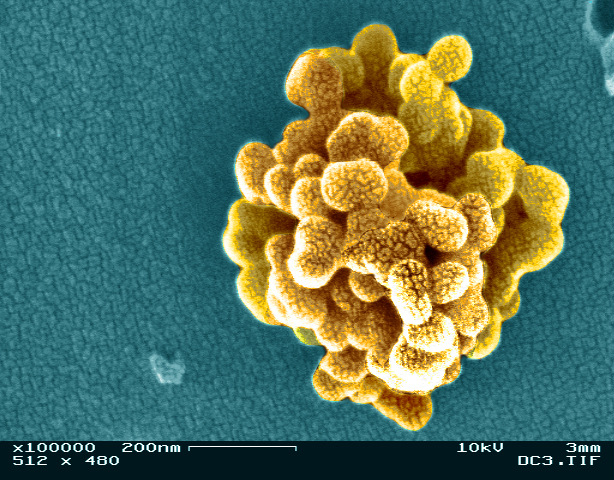

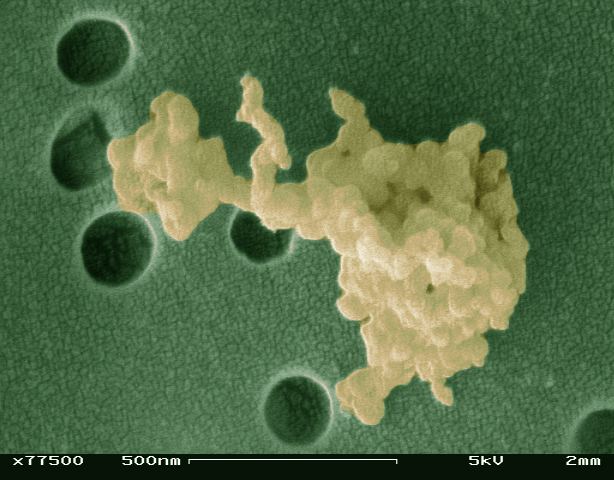
Imaging and Analysis of Ultrafine Environmental Particles
University of Rochester - April 2004
Opt507 - by David Chalupa
Introduction:
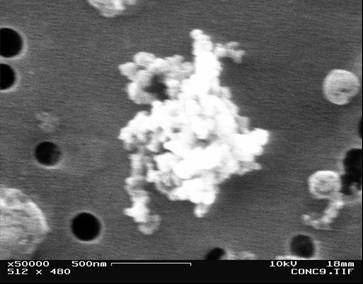
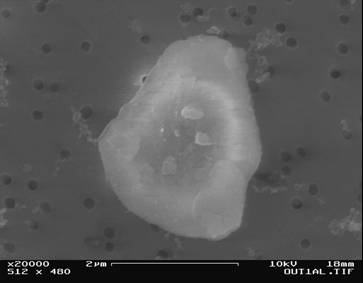
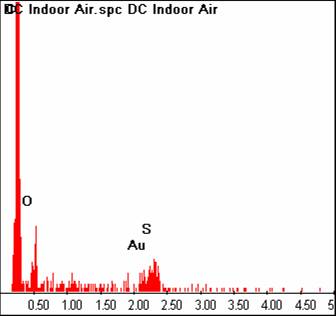
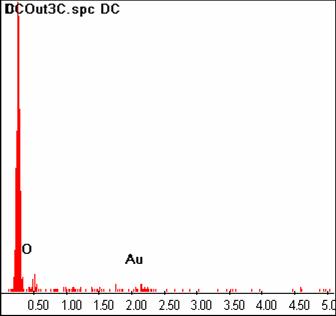
Environmental air samples were collected from four different sources: Indoor, Outdoor, Concentrated Ambient Particles (CAPs), and lab generated carbon. The goals of this project were: To verify particle sizes, Get some compositional information, and to Identify differences in the morphology of each group. Several different imaging/sizing methods were used to best describe the particles (SEM, TEM, Electrical Mobility Separation (in-flight sizing)). X-ray spectrometry (EDAX) was used to get some compositional information.
Sources:
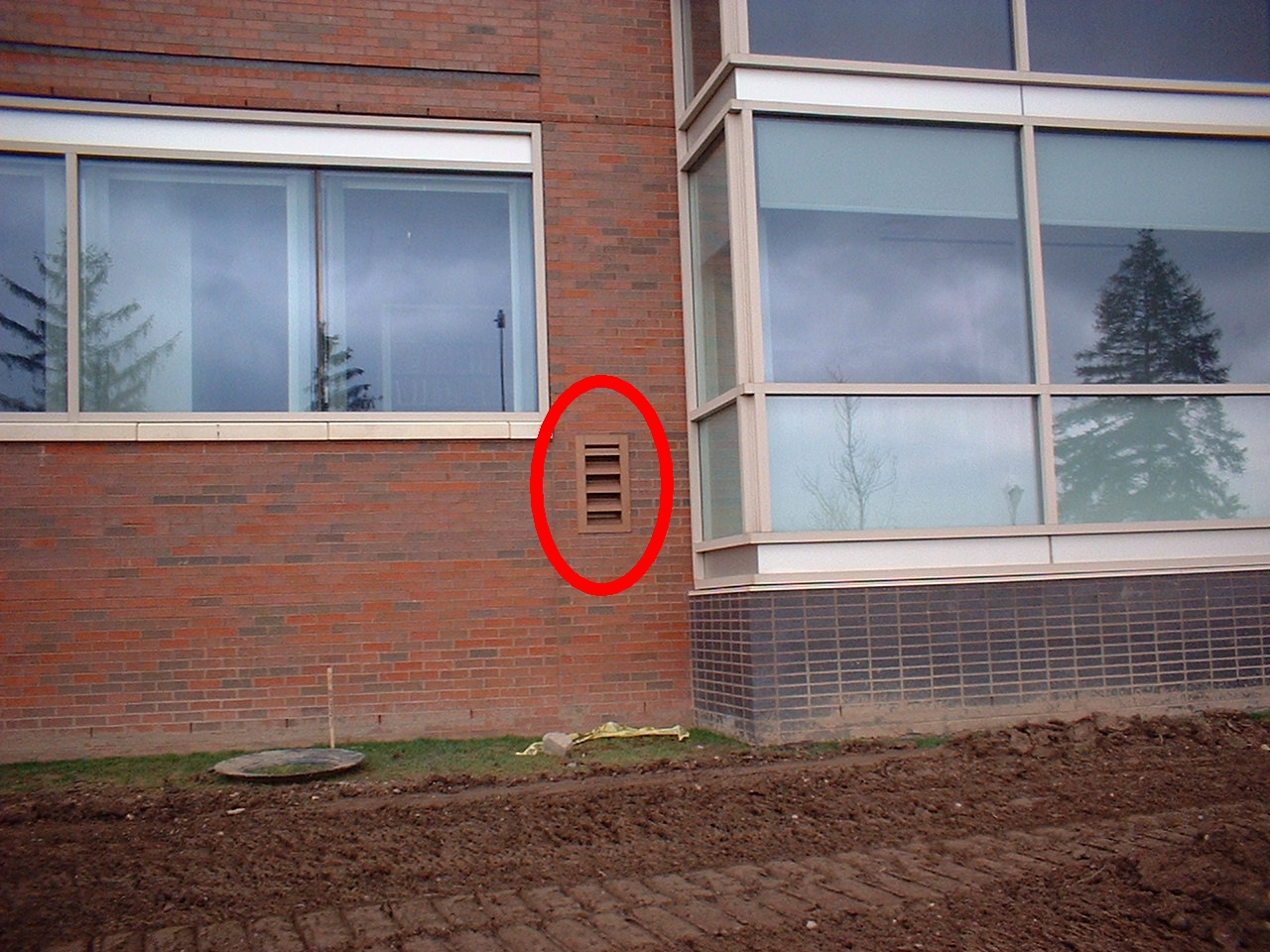
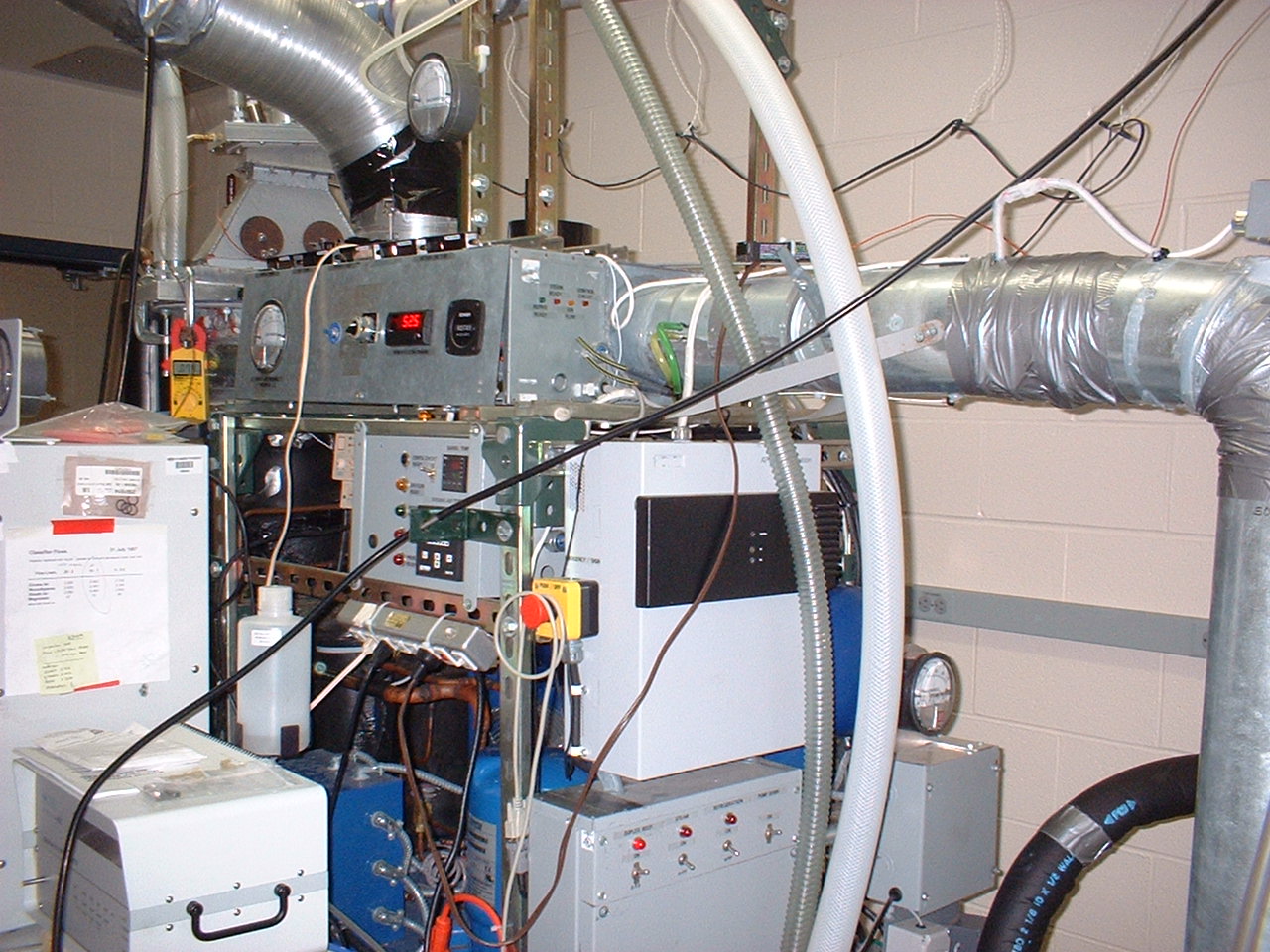
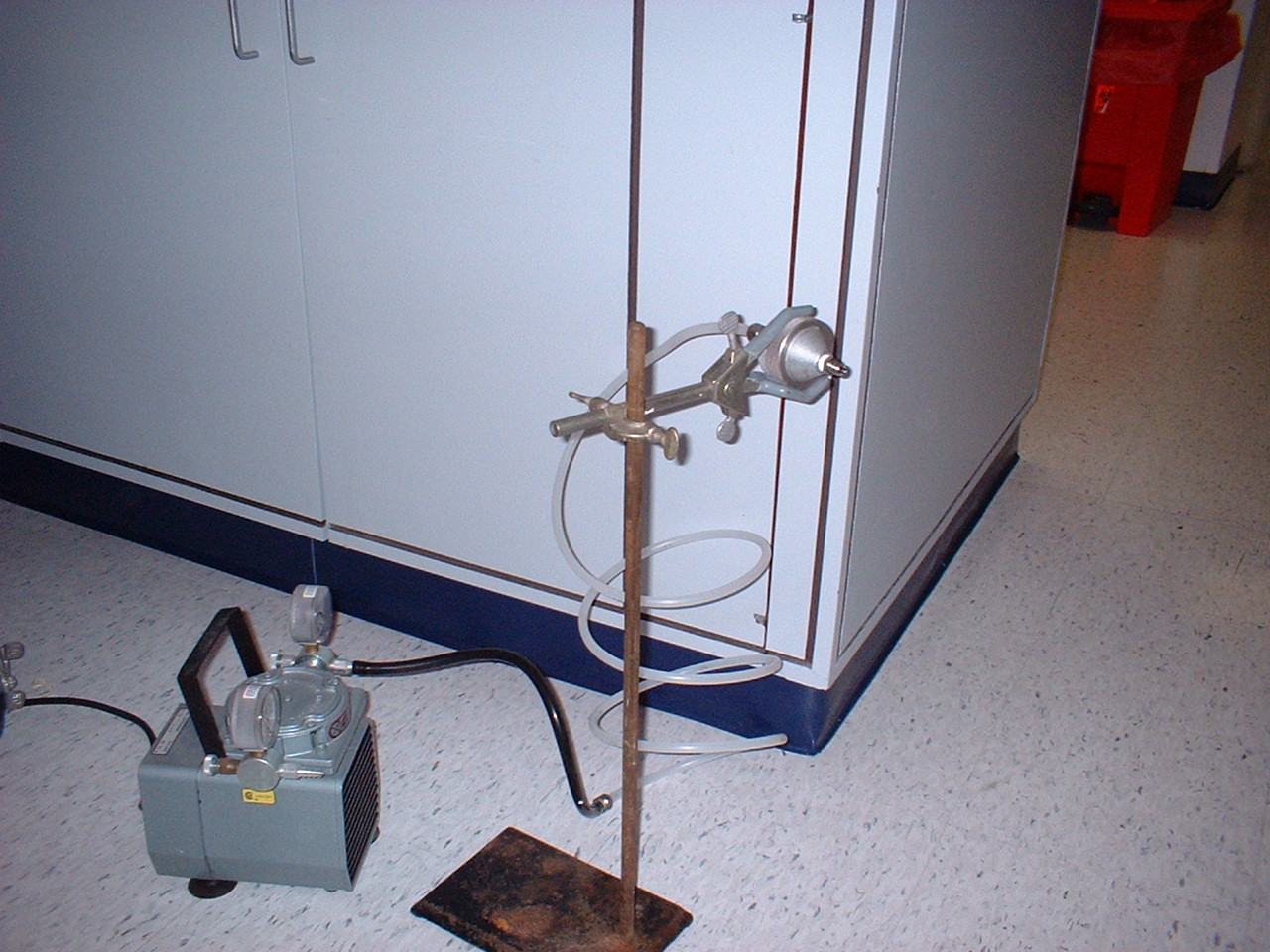
Particle Concentrator:
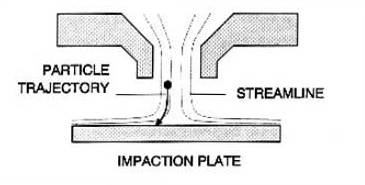
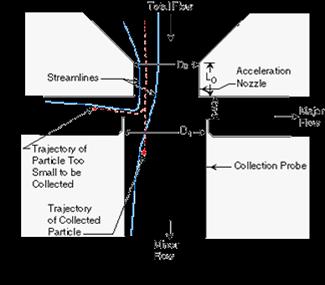
The particle concentrator was developed as a joint effort from Harvard University and the Environmental Protection Agency (EPA). It collects ambient air at a high inital flowrate of 2000 L/min. The particles are then conditioned with condensate, separated with two high-volume virtual imapactors, and dried until only the ultrafine particles (<1 micron) are retained at a concentrated number. A concentrating factor of 30 times is possible.
In-flight Sizing:
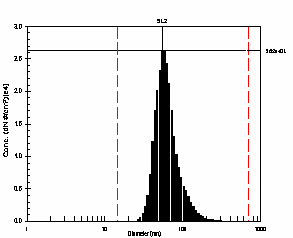
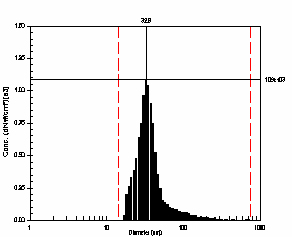
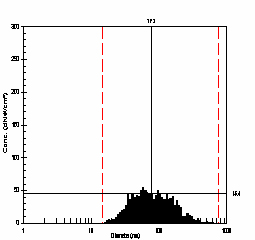
Collection Data:
Collection Time (Hrs.)
# Conc. (p/cm3)
(x10^4)
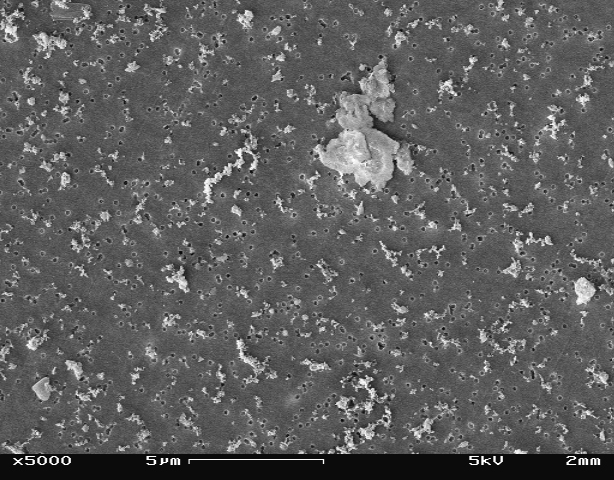
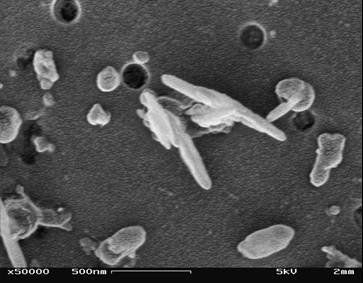
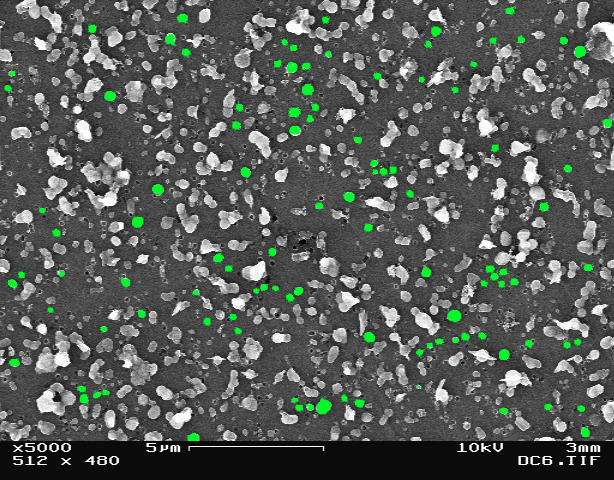
Low Mag. SEM (Secondary Electron) Images (5,000x):
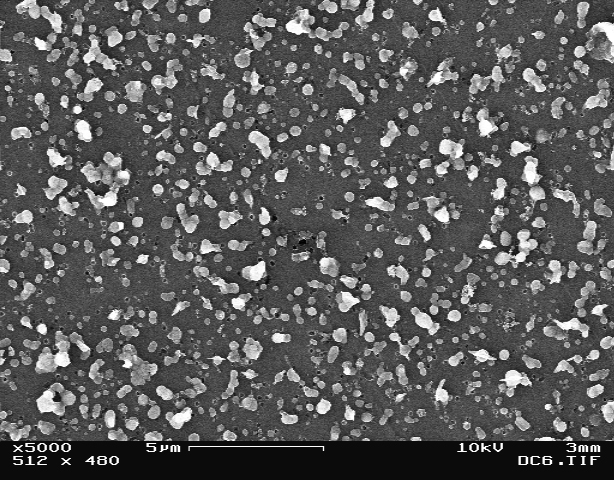
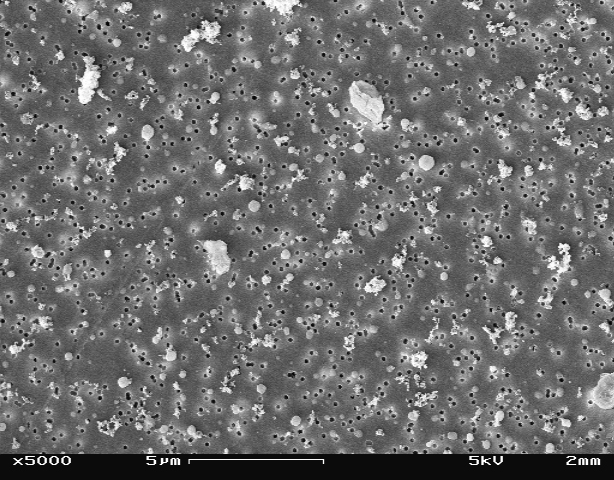
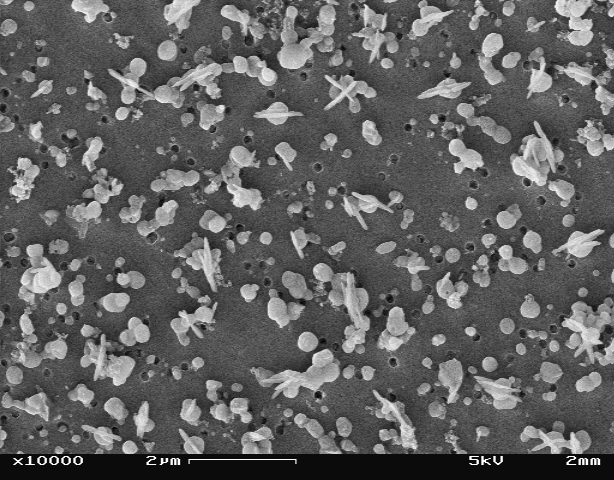
Medium Mag. SEM (Secondary Electron) Images (10,000x):
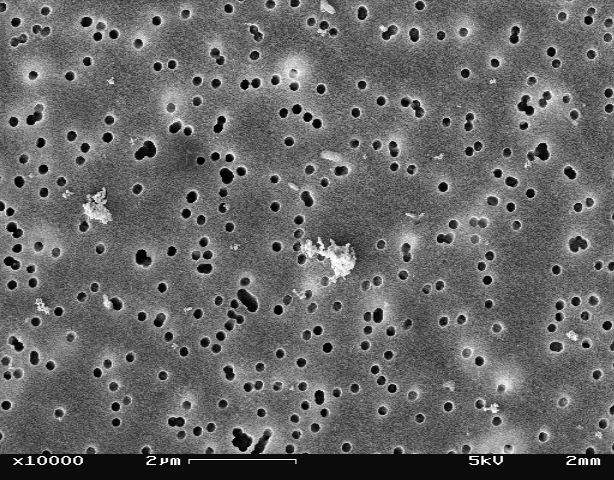
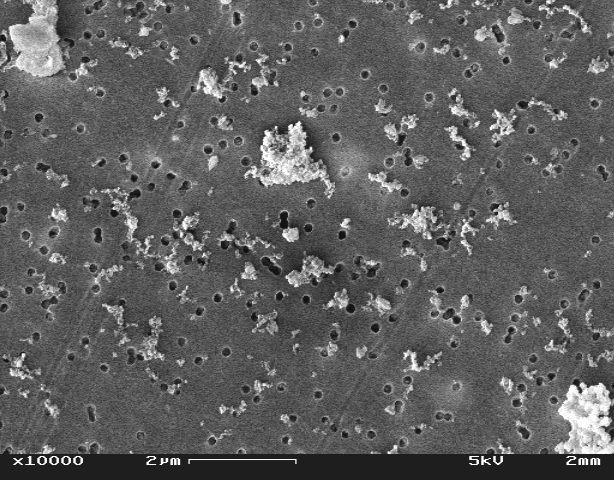
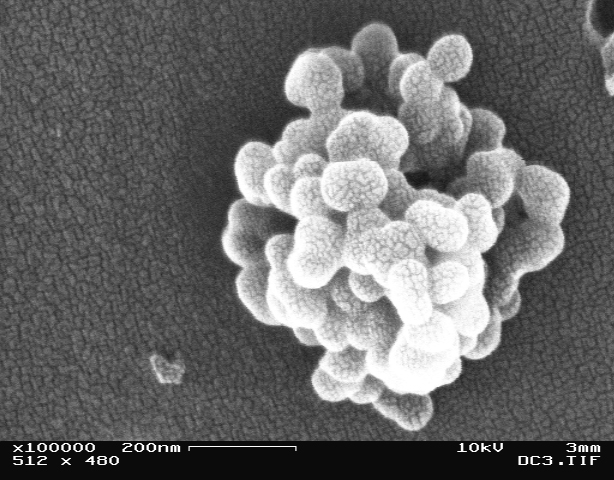
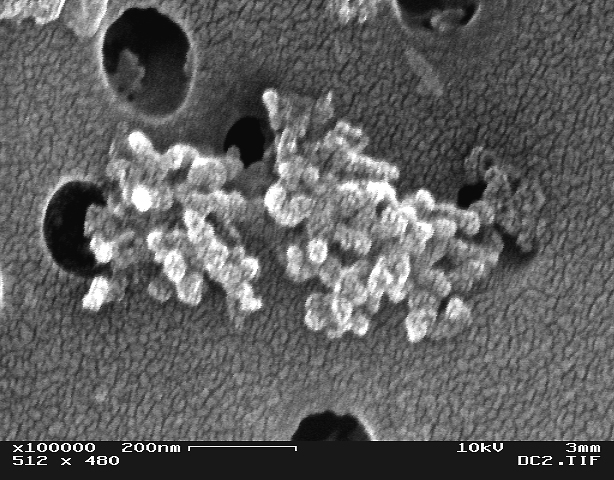
High Mag. SEM (Secondary Electron) Images (100,000x):
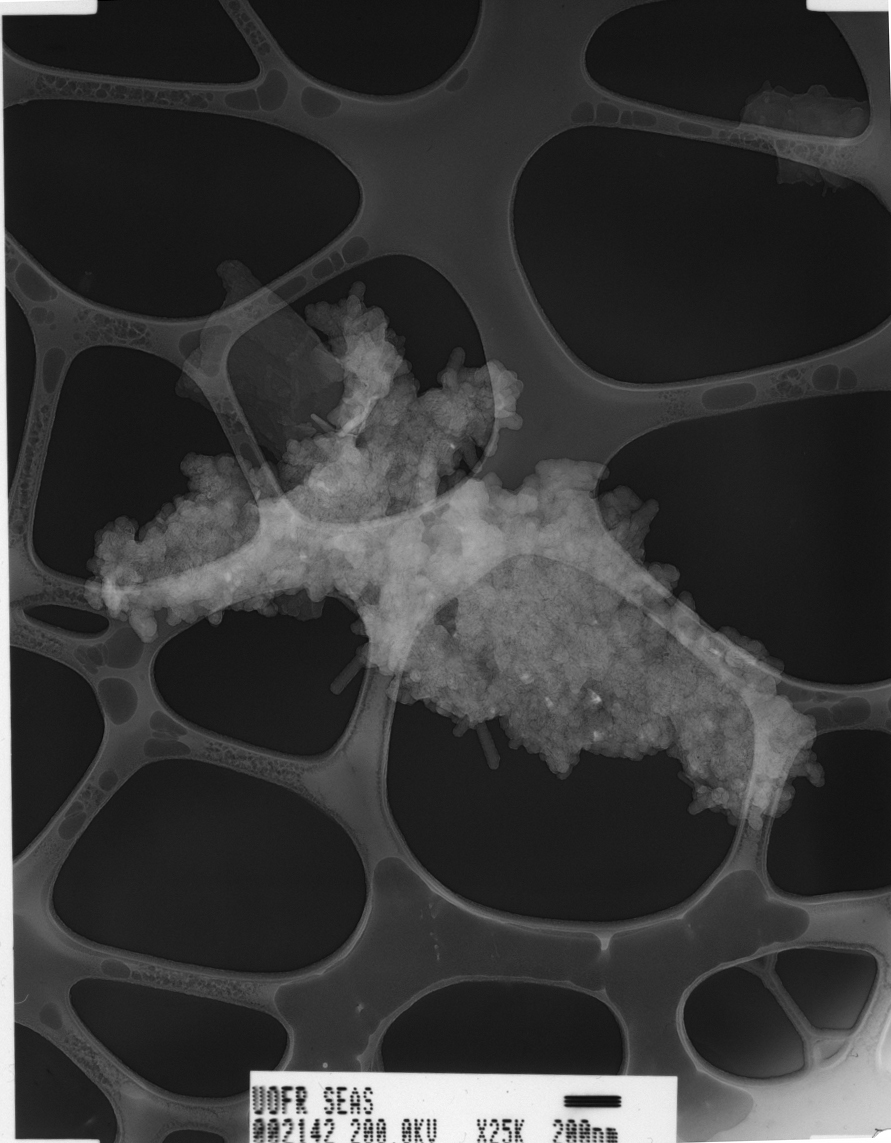
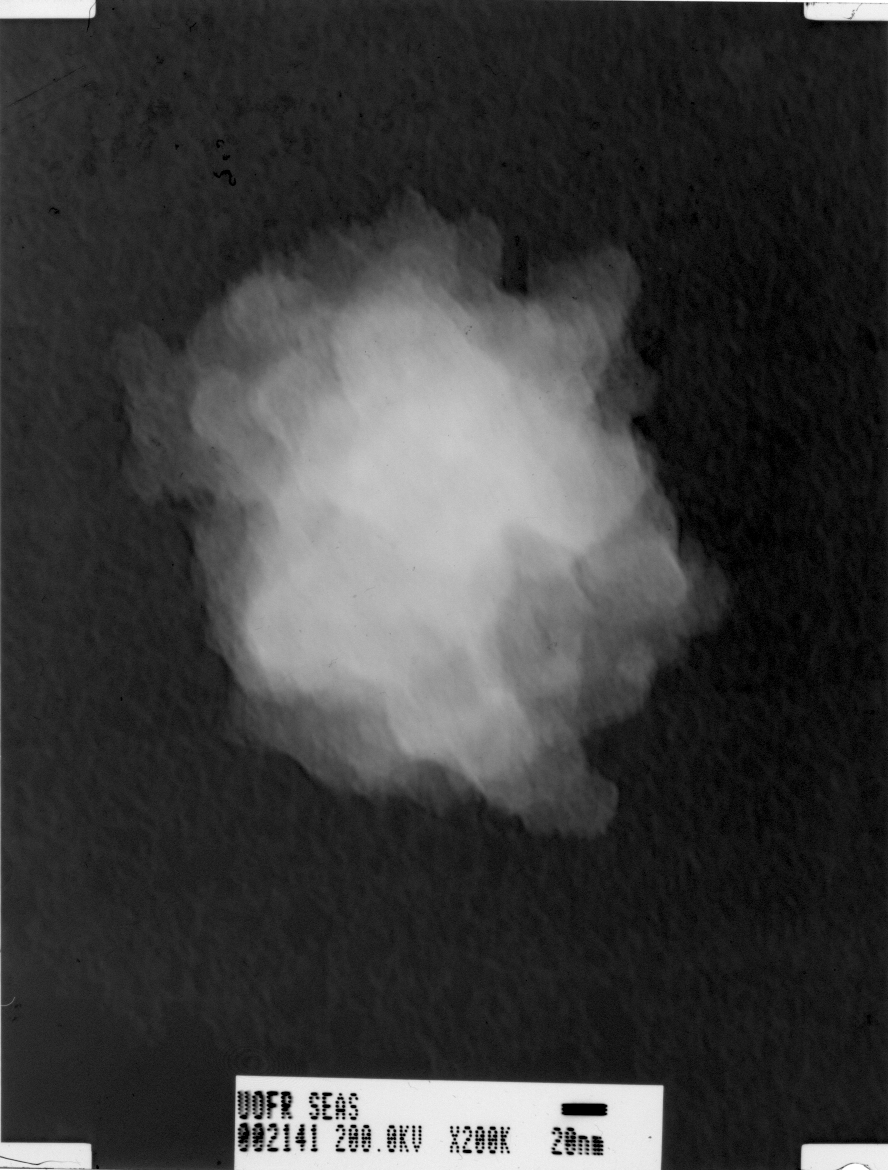
High Mag. TEM (Transmission Electron) Images of CAPs:
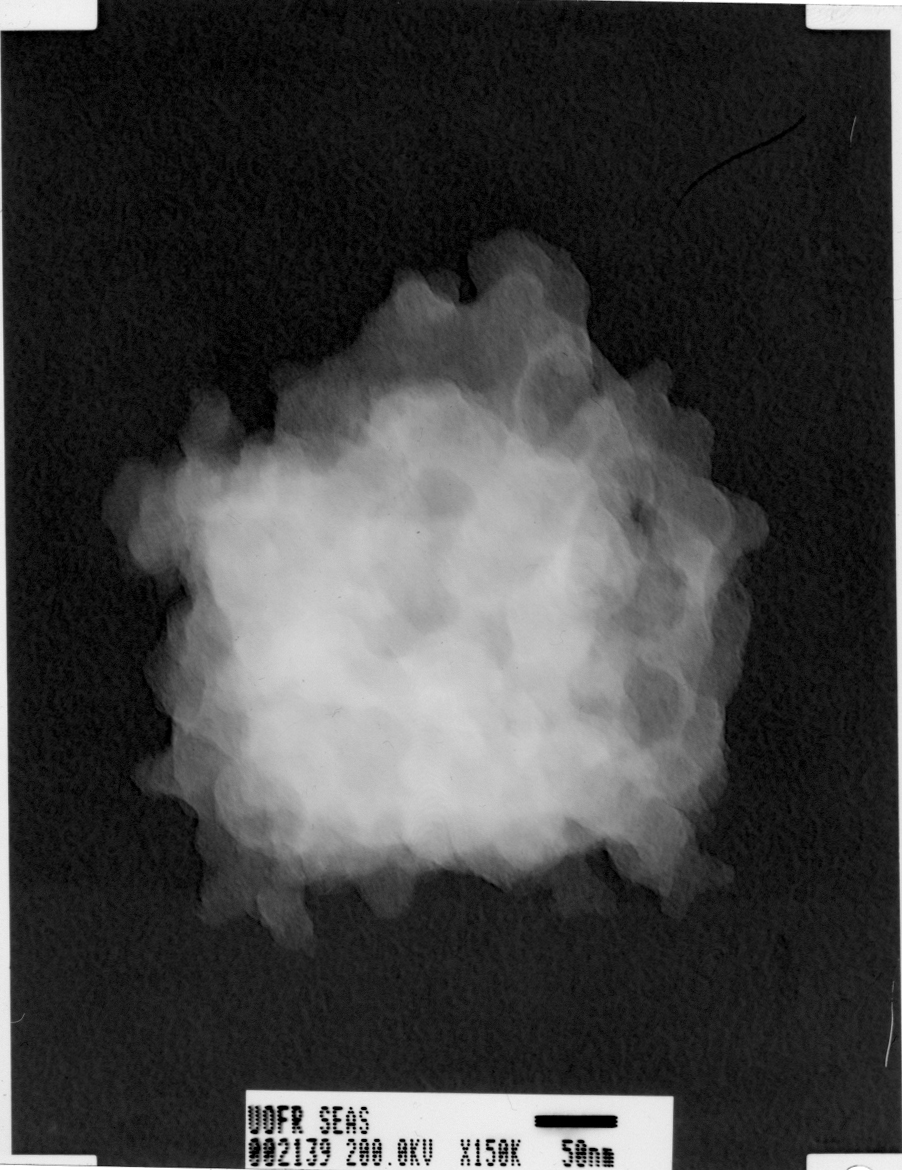
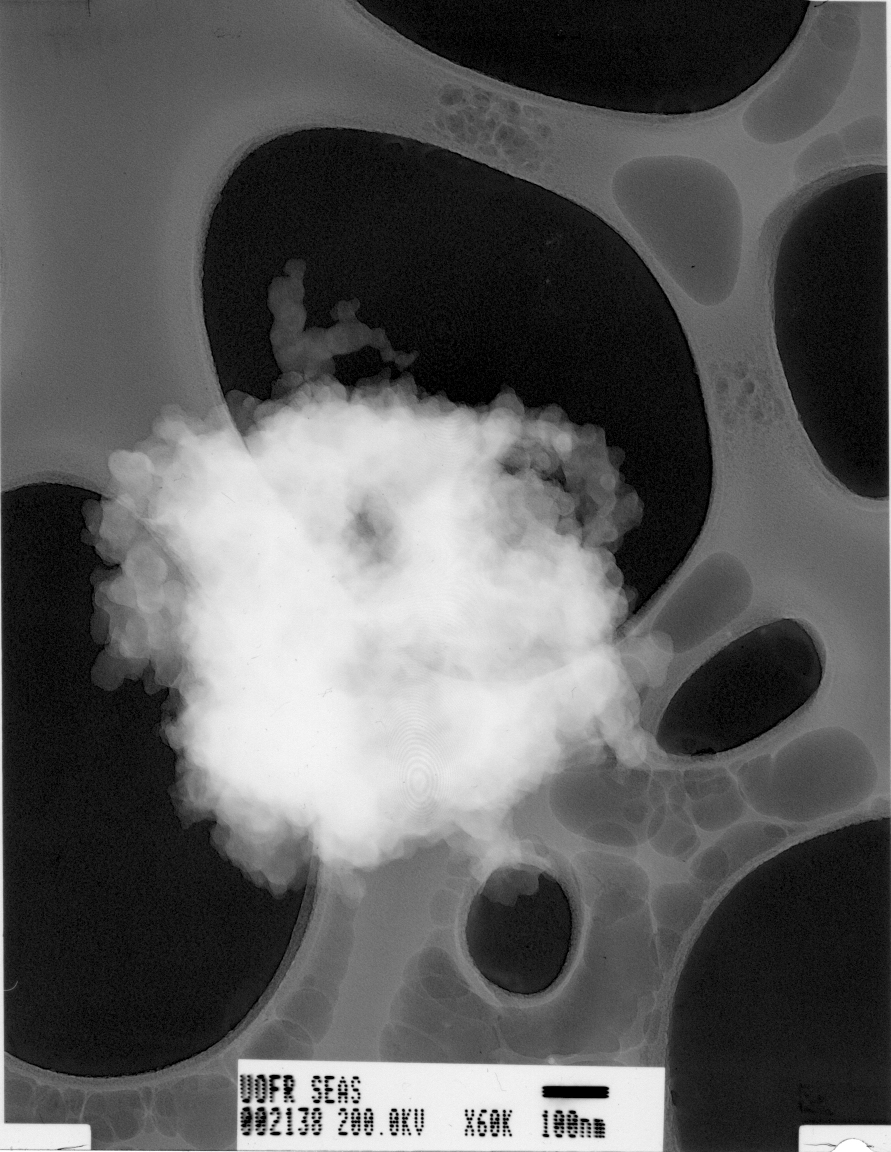
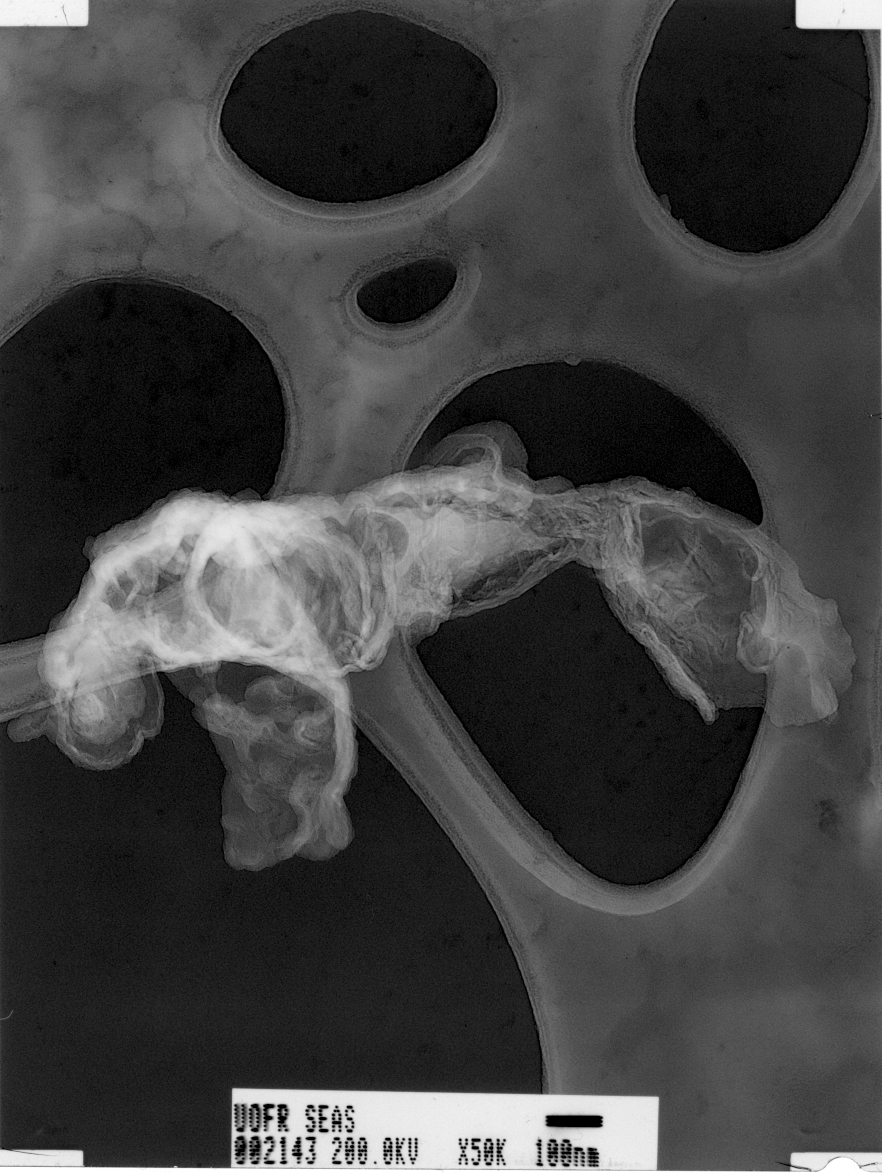
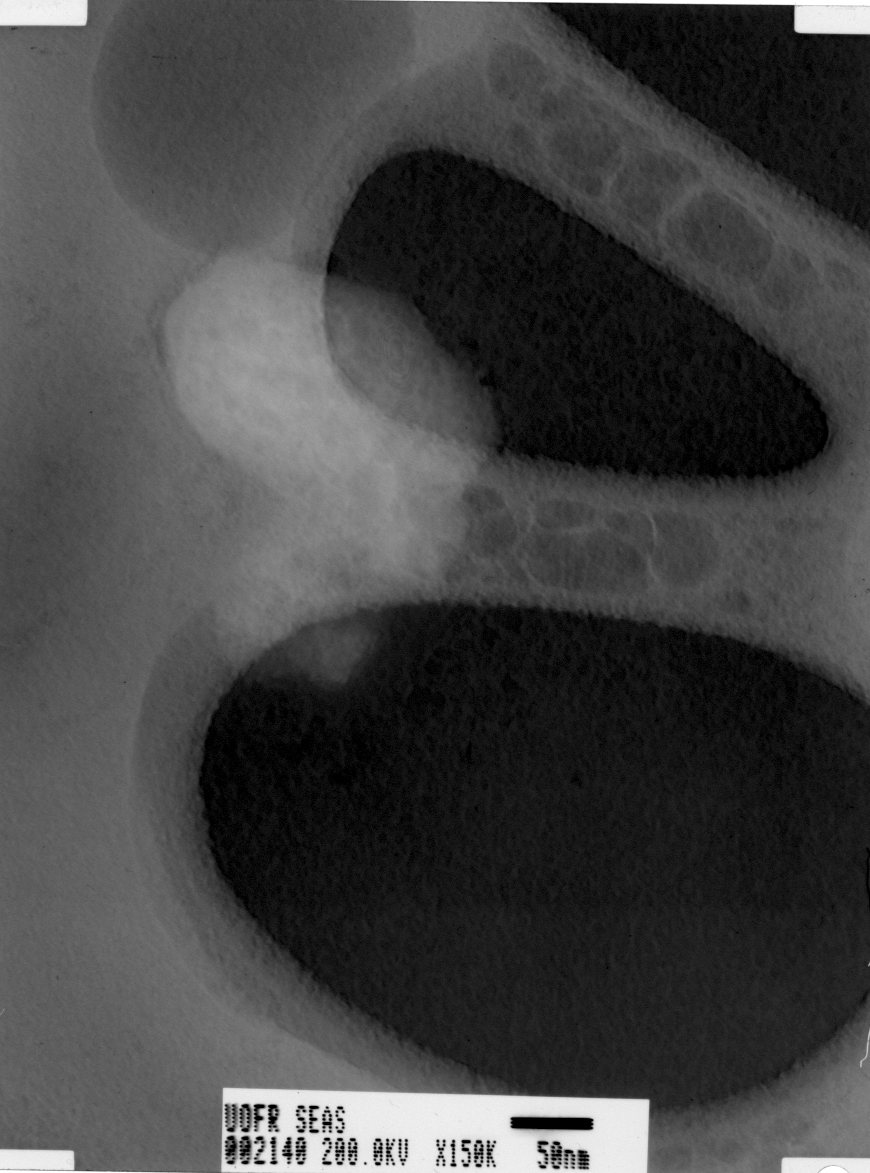
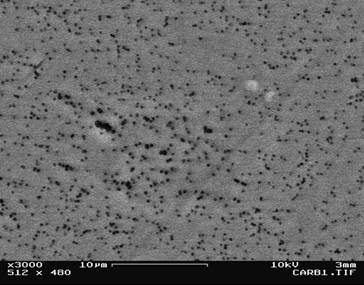
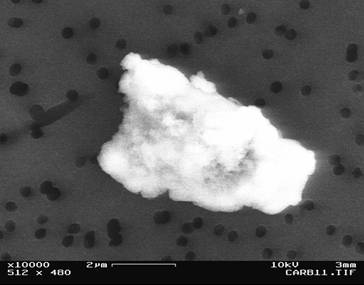
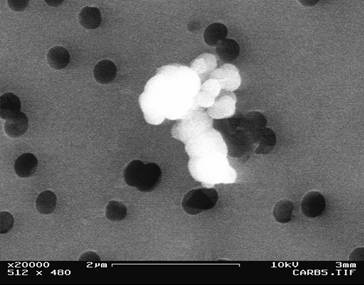
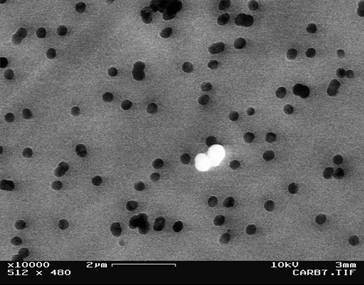
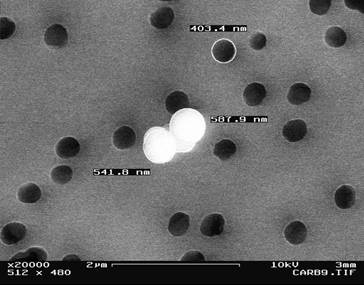
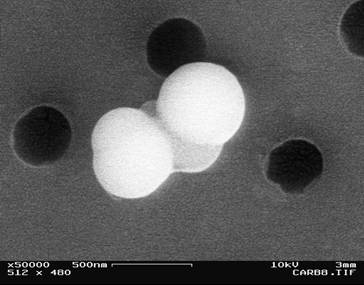
SEM (Secondary Electron) Images of lab generated carbon:
X-ray Spectometry (EDAX):
Samples
* (Number indicates abundance of element found in the environment)
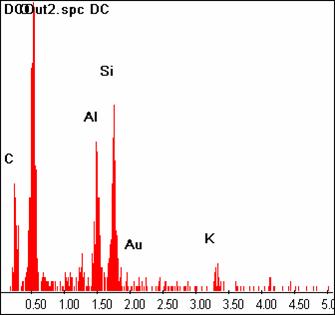
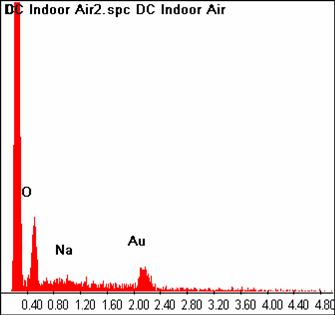
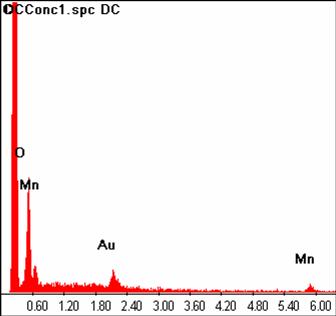
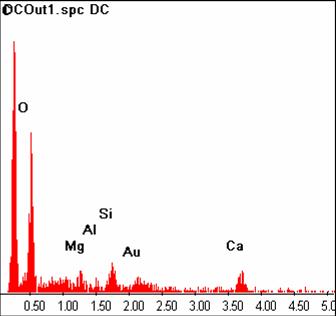
Results/Discussion:
- Paritcle sizes were generally verified.
- Particle content was mainly organic with some metals present, as expected.
- Indoor air was quite different from outdoor air in morphology and composition.
- Further geometrical/fractal analysis would help quantify the effects of concentrating particles.