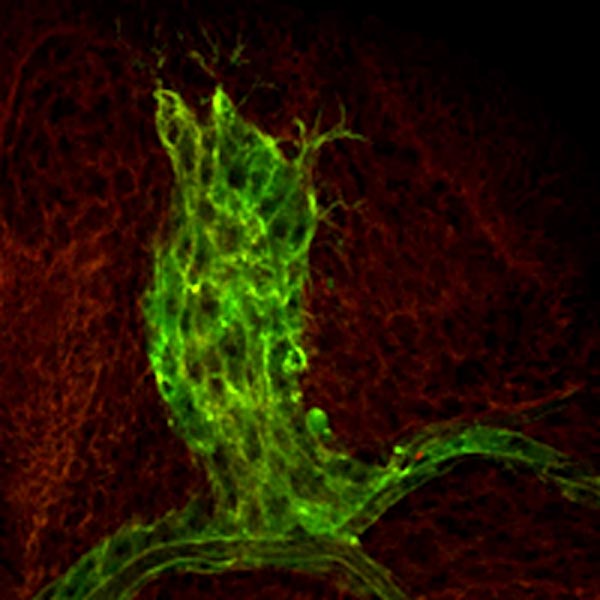
This small creature was looked from every possible angle in terms of research, in my project I would like to present the Drosophila melanogaster as an Art by electron microscopy.
|
INTRODUCTION |
|
Drosophila melanogaster is a fruit fly, a little insect about 3mm long, of the kind that accumulates around spoiled fruit. It is also one of the most valuable of organisms in biological
research, particularly in genetics and developmental biology. Drosophila has been used as a model organism for research for almost a century, and today, several thousand scientists
are working on many different aspects of the fruit fly. The fruit fly is so popular, it would be almost impossible to list the number of things that are being done with it. Originally, it was
mostly used in genetics, for instance to discover that genes were related to proteins and to study the rules of genetic inheritance. More recently, it is used mostly in developmental
biology, looking to see how a complex organism arises from a relatively simple fertilized egg. Embryonic development is where most of the attention is concentrated, but there is also
a great deal of interest in how various adult structures develop in the pupa, mostly focused on the development of the compound eye, but also on the wings, legs and other organs. This small creature was looked from every possible angle in terms of research, in my project I would like to present the Drosophila melanogaster as an Art by electron microscopy. |
|
|