
Examination
and
Characterization of Suspected
Extraterrestrial Debris and Possible Impact Particles
Diego A Vasquez
Department of Earth and Environmental Sciences
OPT407: Electron Microscopy
Introduction
SEM
Methodology
TEM
Methodology
Results
and Discussion
Conclusion
References
Electron microscopy serves as a good sophisticated analytical technique for provenance studies of sediment samples because it provides quantitative and qualitative data required for relative trace metal concentrations, elemental ratios and morphological components. Detection and characterization of extraterrestrial material resulting from impacts, explosions and other infiltrations of astronomical origin have an important place in the scientific community, particularly because the extensions of said events have significantly shaped our physical world. Out of the various analytical approaches to examine samples from suspected ET origin, optical analysis by means of Transmission Electron and Scanning Electron Microscopes serve as reliable investigative techniques.
The ability to examine elemental, isotopic and/or atomic characteristics in addition to high-quality visual data is crucial in planetary geology/cosmochemical research. Peculiar microscopic deformation and melting features that result when extraterrestrial bodies and particles enter our atmosphere or collide with our surface engrave unique geochemical signatures in the affected material. Cosmic clues to look for using electron microscopy include: magnetic minerals and microspherules with distinct elemental concentrations, altered melt particles (impact breccia) and carbon impactites. One exceptionally clear indicator present in sediment samples of extraterrestrial origin which does not occur naturally in any terrestrial environment and which has only been found in association with confirmed impact events, is Nickel-bearing magnetite1.1-20 micron magnetic Iron Oxide crystals with significantly higher concentrations of Nickel are precise ET markers which have served as indisputable proof, such as seen in many samples from the infamous K/T boundary (Dinosaur extinction) where large concentrations of these peculiar minerals have been found in the very restricted stratigraphic distribution1.
Additional “cosmic spinels” resulting from recrystallization and melting of incoming material with anomalously high Ni, Mg, Al and Cr compositions combined with low or nonexistent abundances of Titanium distinguish these minerals from terrestrial counterparts2. Also, another peculiar characteristic of cosmic spinels is their common skeletal or honeycomb morphology, which is indicative of rapid cooling from a vapor cloud after impact2. Similarly, by examining magnetic microspherules and inspecting the elemental ratios of major and minor trace elements present within them we can distinguish between ET and terrestrial microspherules. Distinction of these microspherules can be done by using some elemental ratios between Fe versus Ti, Cr, Mn, Co and Ni 3.
The
primary purpose of this project focuses on investigating
sediment samples in search of microspherules with unusual compositions
and
magnetic particles with anomalously higher abundances of relatively
unoxidized
trace metals, especially high-Nickel spinels. Samples from two
suspected impact
events (Younger Dryas and Tunguska event) plus sediment from possible
comet
debris from
While examining the samples, we initially used the backscatter electron detector to help distinguish our particles of interest from the rest of the magnetic grains. The grains we were in search of generally had higher atomic numbers, which emit more backscattered electrons and appear brighter than the surrounding grains, thus making it easier to pinpoint our grains of interest. After focusing in on specific selected grains, the x-ray spectroscopy detector was utilized to determine rough quantitative elemental compositions. Selected individual grains were also imaged using a mix of in-chamber secondary electron detection and backscatter electron detection. Micrographs and x-ray microanalysis results are further discussed in this project.
As part of the electron microscopy analysis we also included Transmission Electron Microscopy, primarily to look for nanodiamonds, especially an extremely rare type known as hexagonal nanodiamonods (or N-diamonds) which do not occur naturally on Earth and have only been found in association with impact-related sites and synthetically produced in laboratories; making N-diamonds a definite proof of impact4. Carbon impactites and other carbon allotropes that can serve as potential tracers include fullerenes, nanotubes and amorphous carbon. The samples that we utilized for this technique were carbonaceous residue from sediments of the End Pleistocene that were prepared by performing acid digestions with HCL and HF acids, which demineralized them (removed siliceous content) and left only the organic residual. These organic residue samples were further prepared by performing Size Exclusion Chromatography (SEC) in which we separated the samples according to molecular weight, size and shape in order to purify and filter out the particulates. After performing the SEC we prepared the chromatographed samples onto carbon grids for future TEM work. Three of these samples were prepared and analyzed by Transmission Electron Microscopy.
SEM DISCUSSION
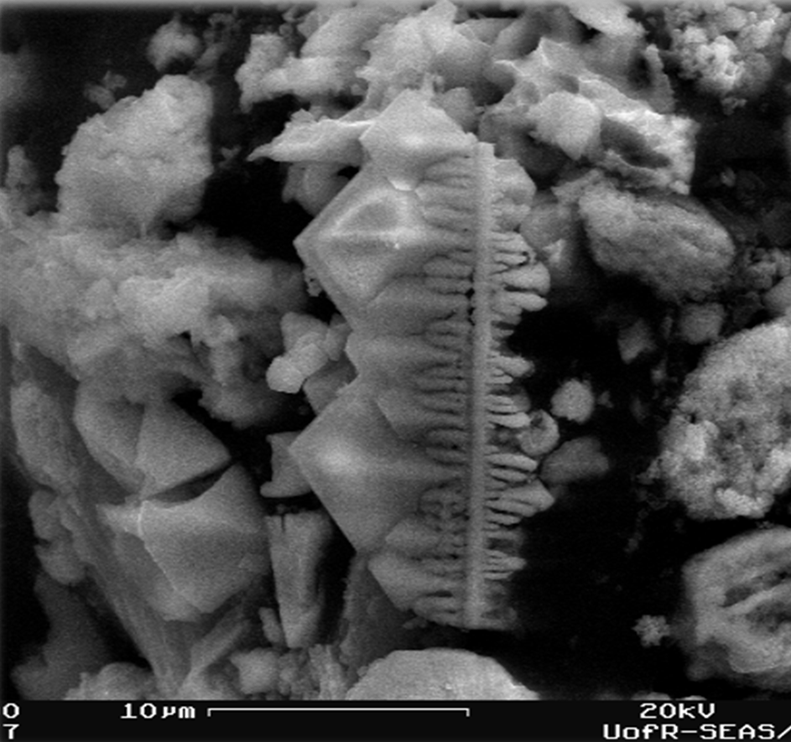 |
To
the left is an SEM micrograph that was taken for a
previous project but which illustrates the ideal grain that we would
look for.
It is a high-Nickel magnetic spinel grain from the known K/T boundary;
it is
distinguishable by its characteristic morphology and unique chemical
composition.2 |
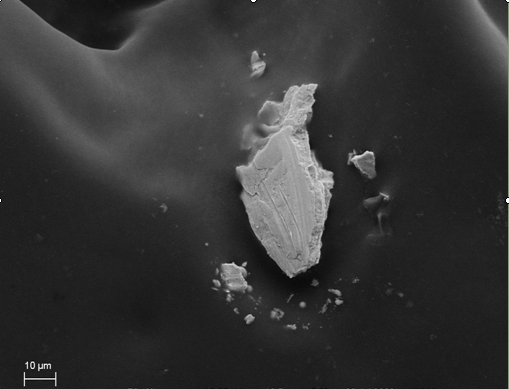
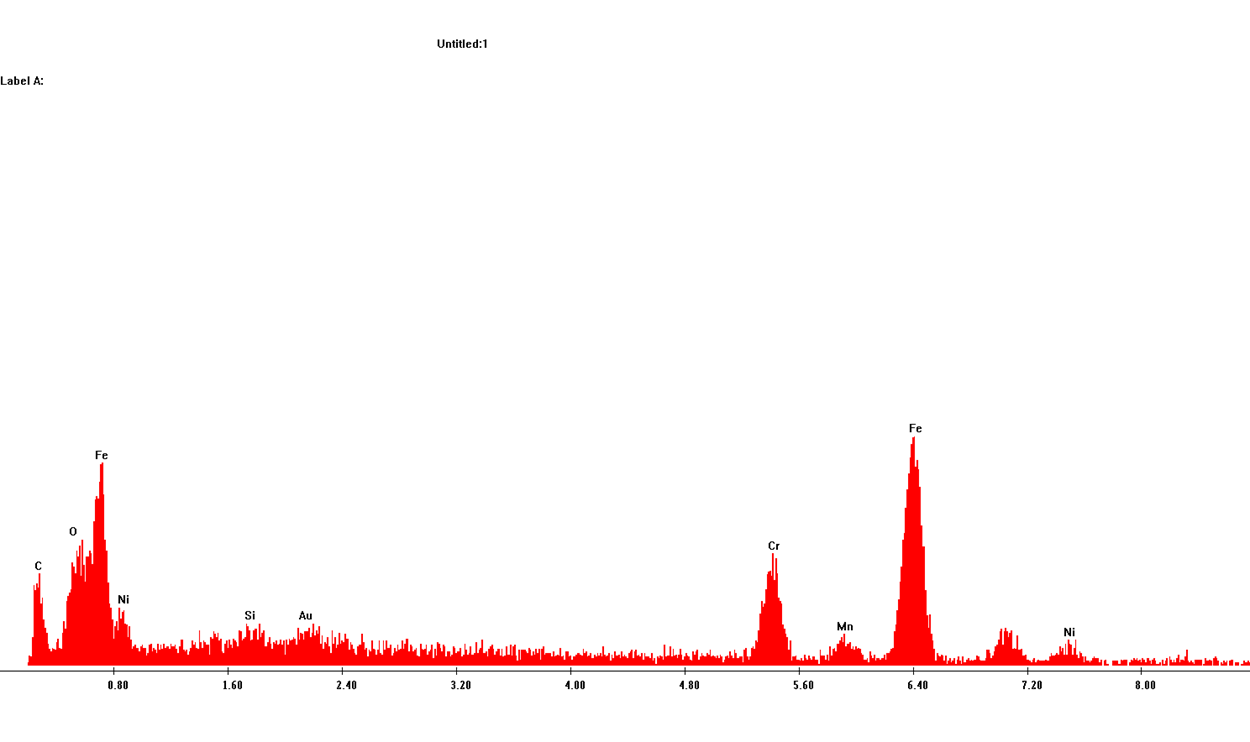
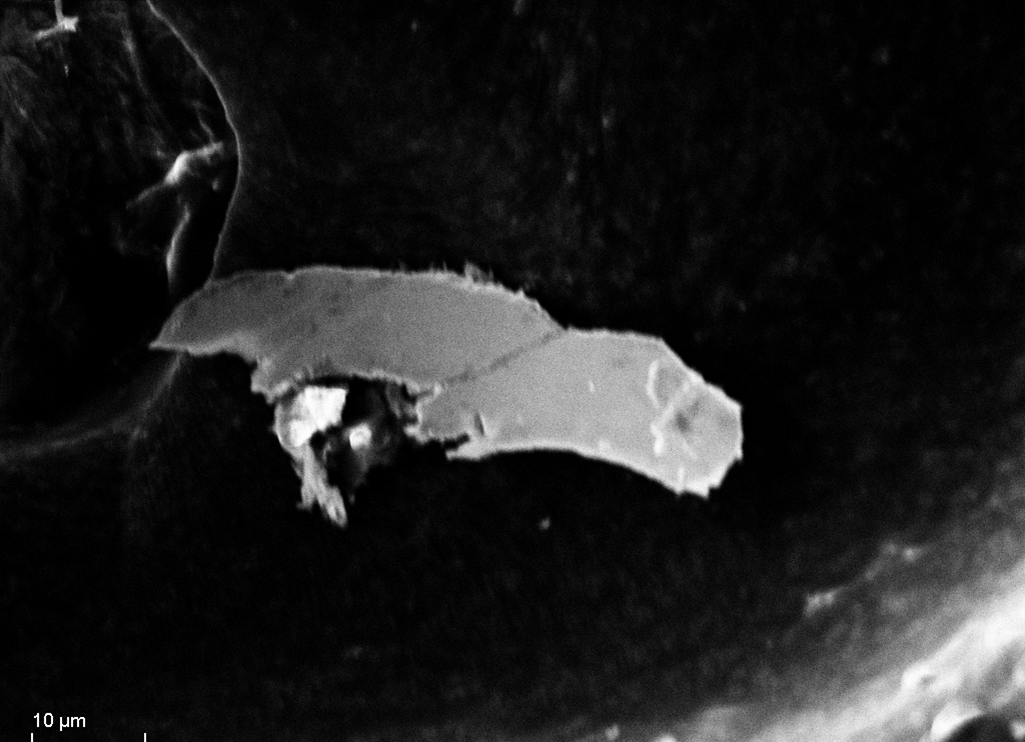
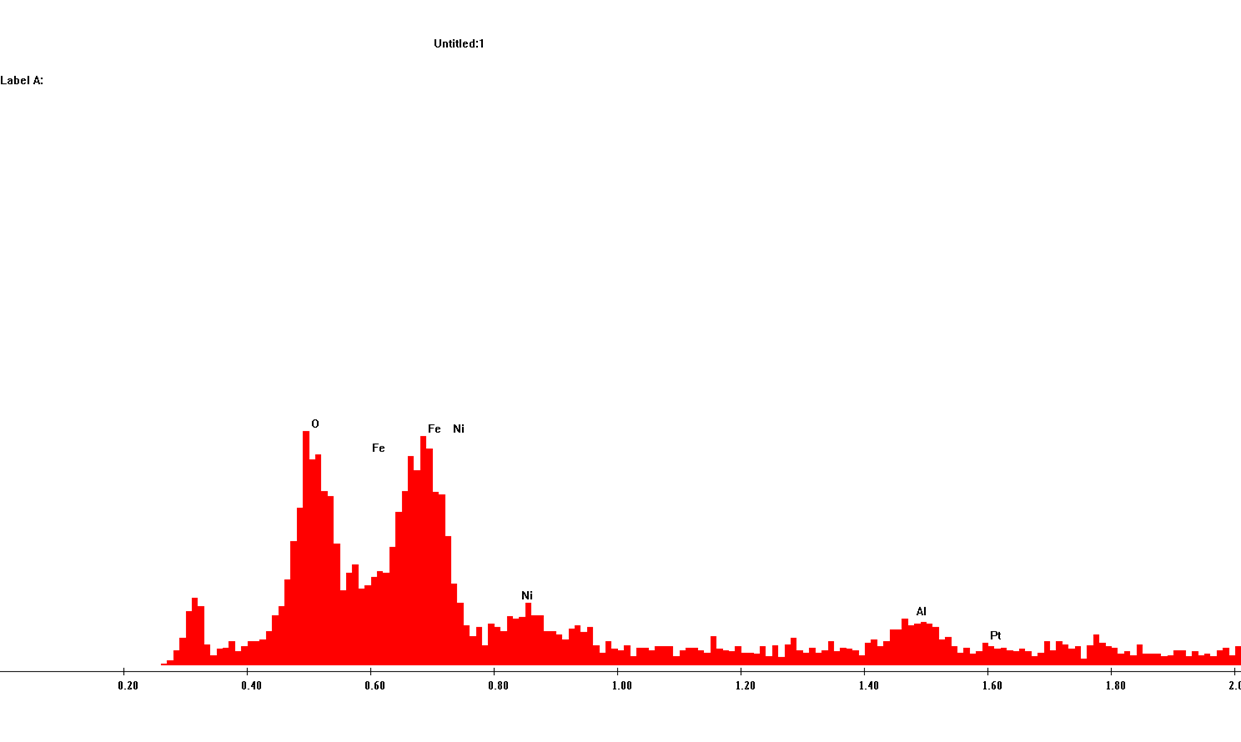
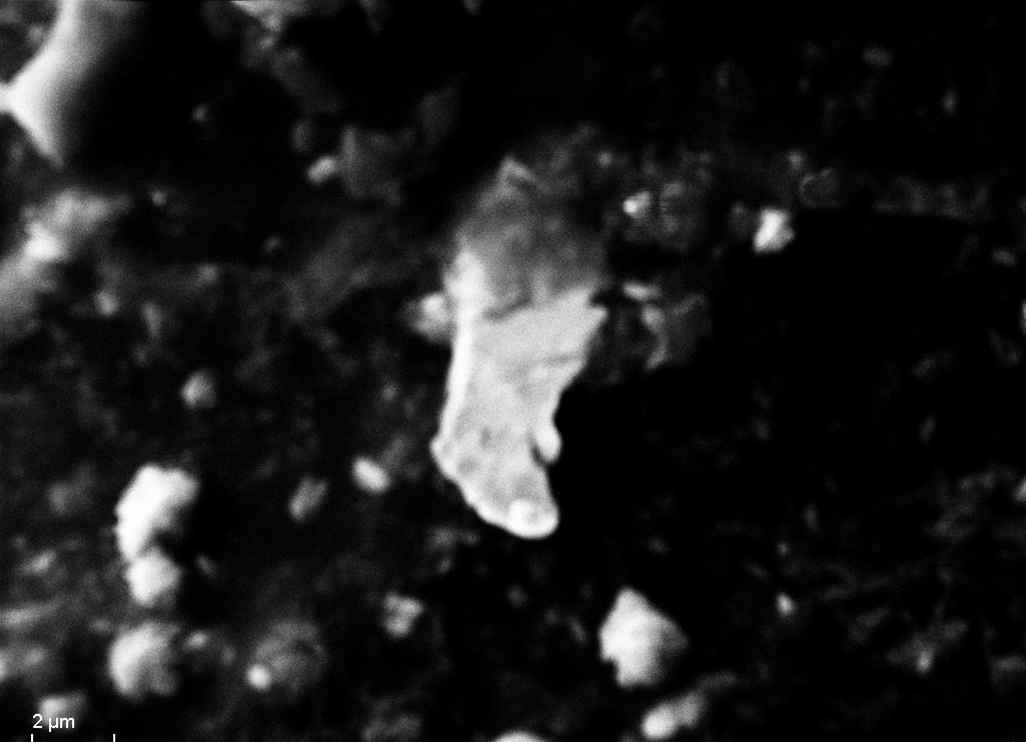
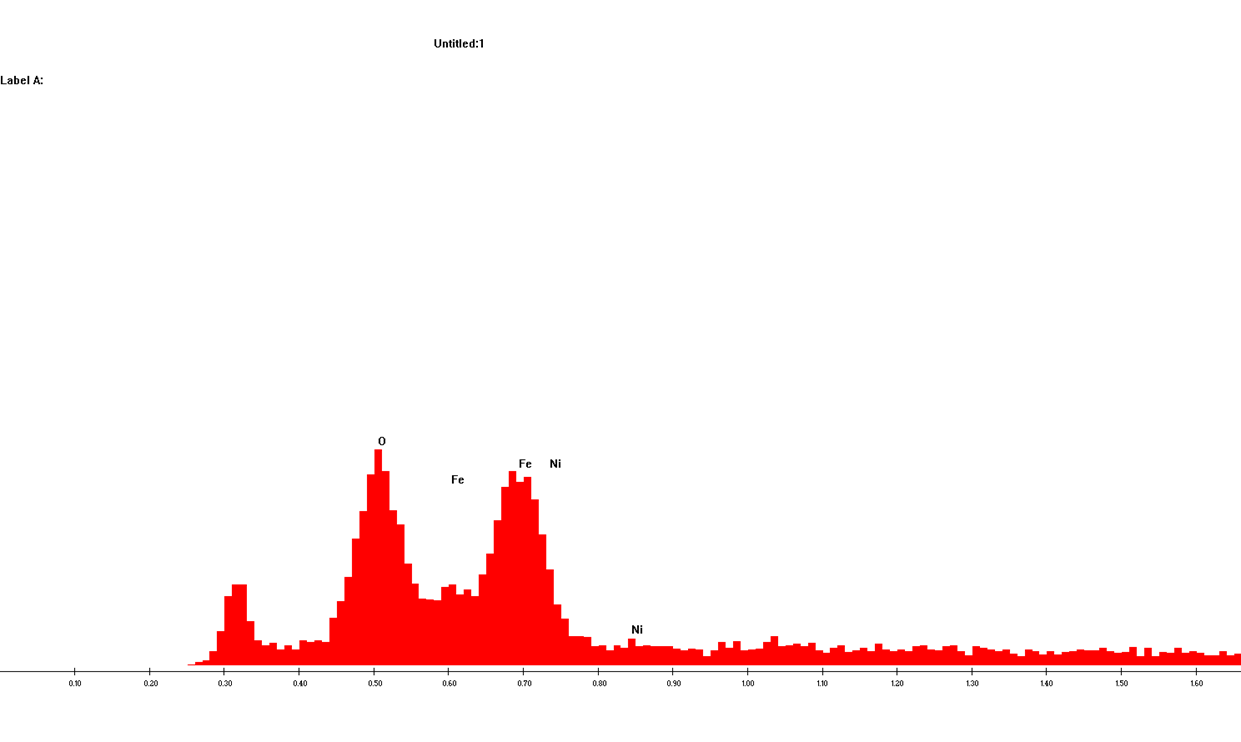
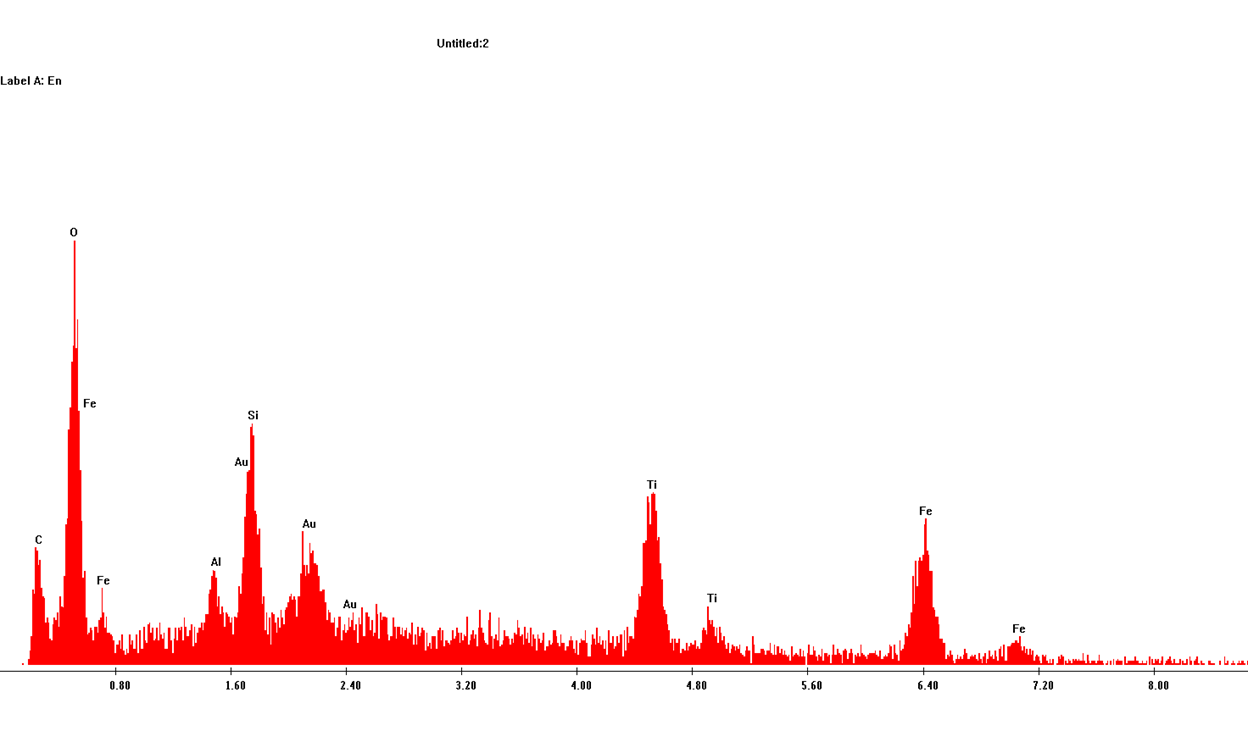
The following are suspected cosmic spinel grains with anomalously higher concentrations of Nickel*, Magnesium, Chromium and with low or zero abundances of Titanium. Abundances of these grains have only been found in known impact boundary layers, including the Late Eocene comet shower/impact and in the infamous K/T boundary extinction event5. In order to provide the most accurate quantitative representation we have included micrographs with high-resolution of the metallic grains, x-ray spectra and percent weight composition charts.
 |
Elem
Wt
% C
K
25.92
O
K
11.33
SiK
0.92
AuM
2.85
CrK
11.04
MnK
1.79
FeK
41.41
NiK
4.74
|
 |
Element Wt
%
OK
41.04 NiL
30.25 AlK
5.98
PtM
7.64 TcL
2.61 FeK
12.48 Total 100 |
 |
Element
Wt % O K
17.7 FeL
70.19 NiL
12.11 Y L
0 RuL
0 AgL
0 Total 100 |
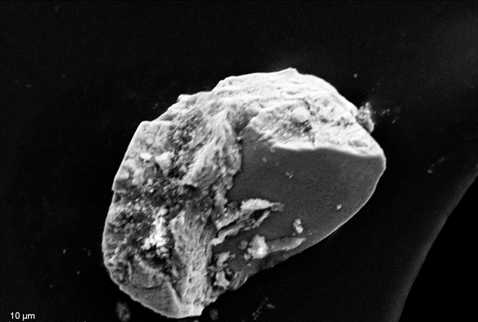
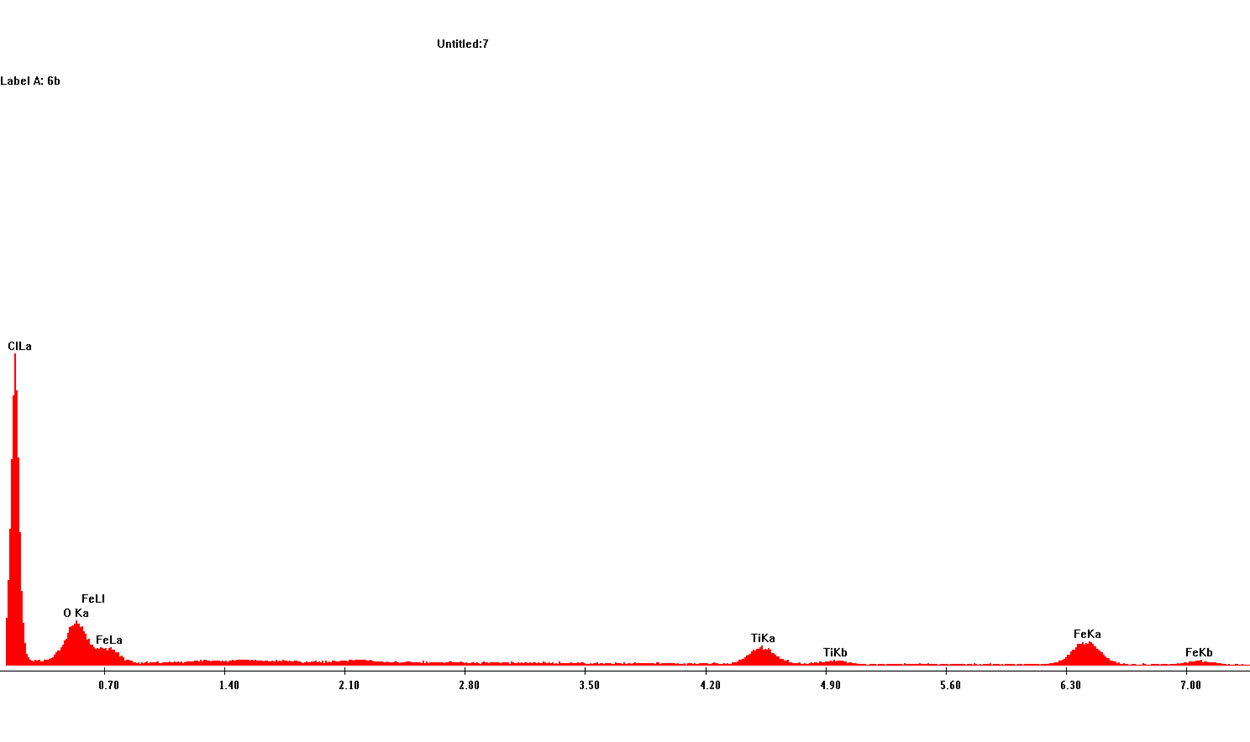
For comparison, the following SEM micrographs are “background” spinels of more than likely terrestrial nature with abundances typically found in crustal environments.
 |
Elem Wt
%
C K 22.36
O K 34.31
AlK 2.09
SiK 5.90
AuM 8.68
TiK 10.82
FeK 15.83
Total 100.00 |
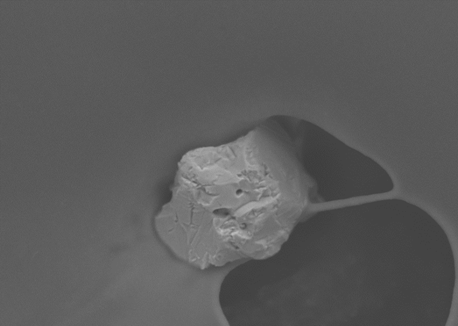 |
Elem Wt
%
O K 42.15
TiK 14.96
FeK
42.88
Total 100.00
|
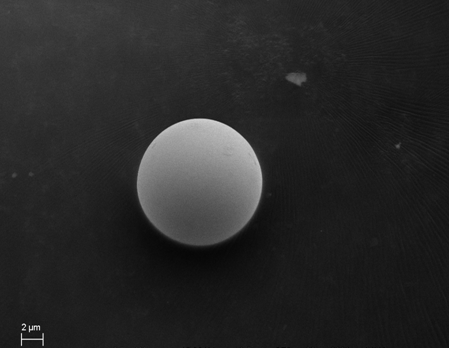
Magnetic
microspherules have also been used as ET markers,
abundant quantities have been found in
 |
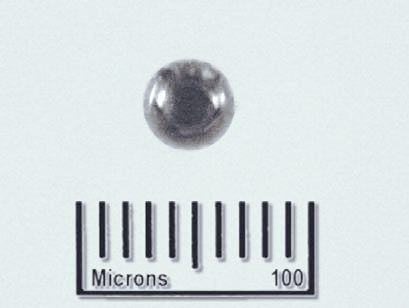 |
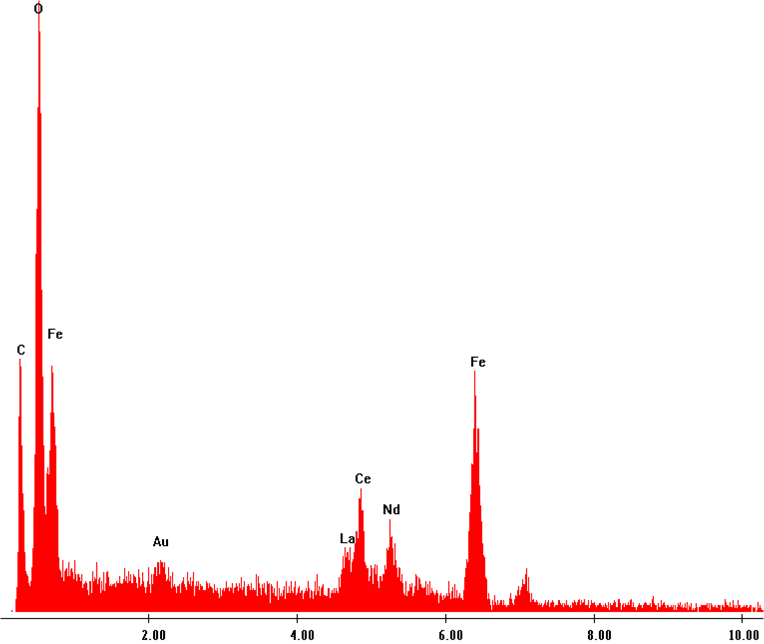
These rounded particles are of extraterrestrial origin, mainly solidified components of meteoroids that are formed when entering the Earth’s atmosphere at super-high velocity or hypervelocity resulting from an explosion. Abundances of cosmic spherules in samples could be strong indicators of increased meteoroid infiltrations in our atmosphere8.
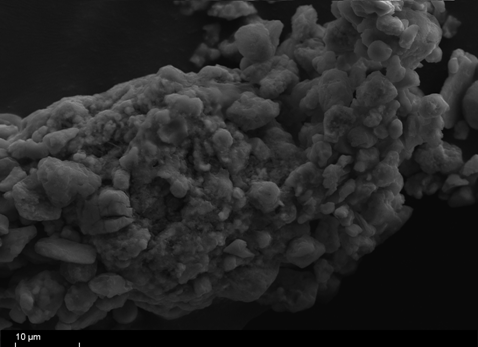
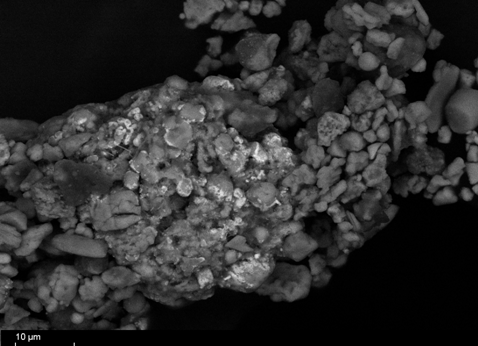
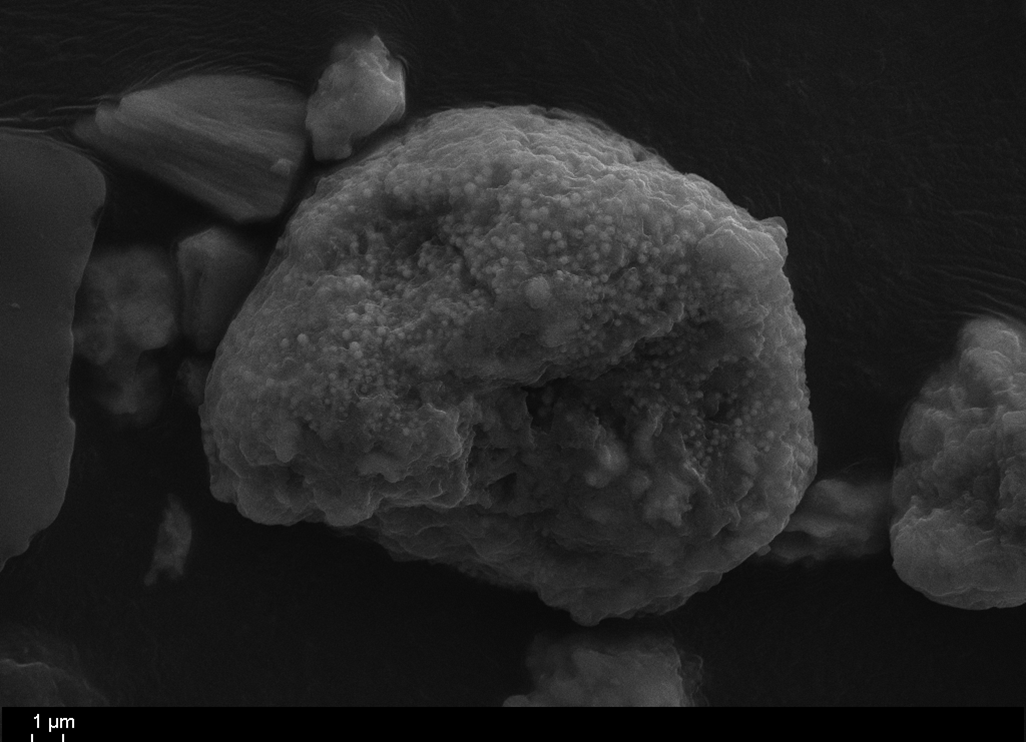
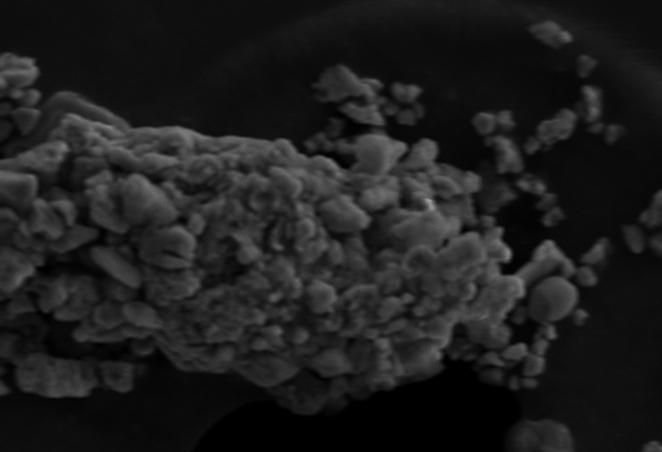
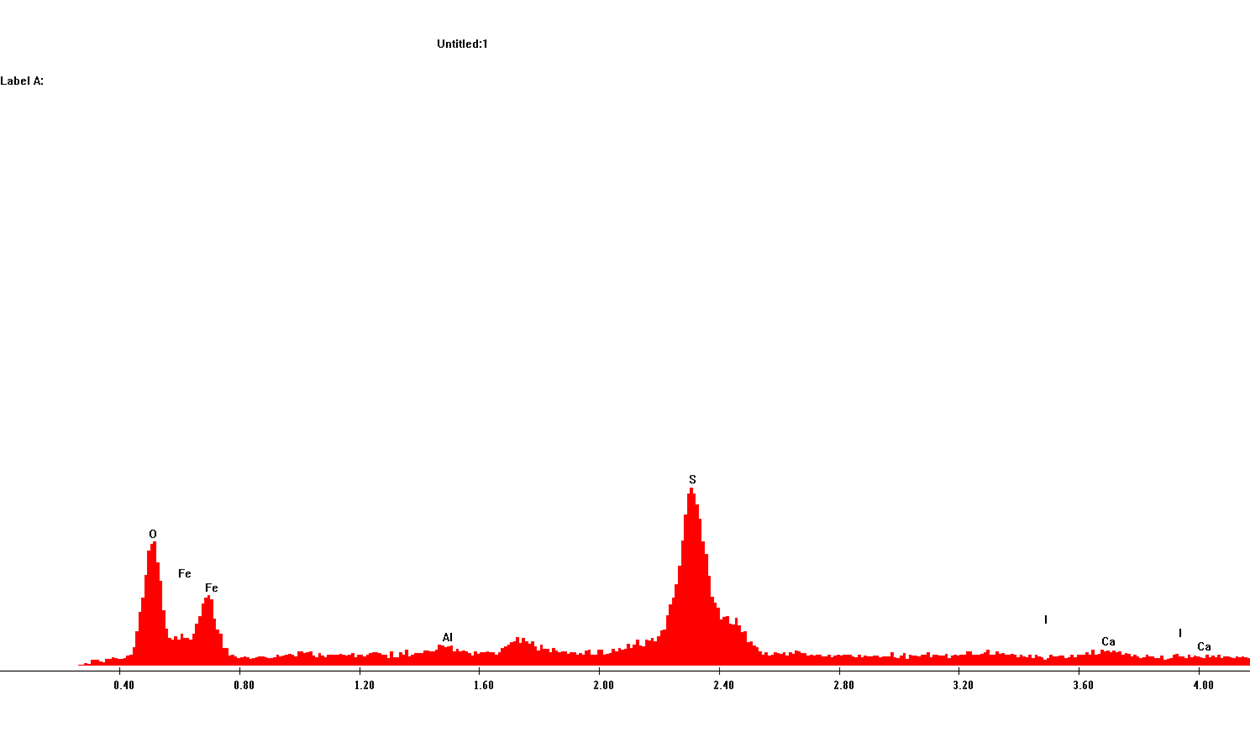
The next micrographs are of possible Iron-Sulfide breccia melt particles resulting from violent atmospheric/terrestrial collision of ET material associated with impacts. In addition to x-ray spectra analysis, micrographs of secondary electron detection (left) and backscatter electron detection (right) are included.
 |
 |
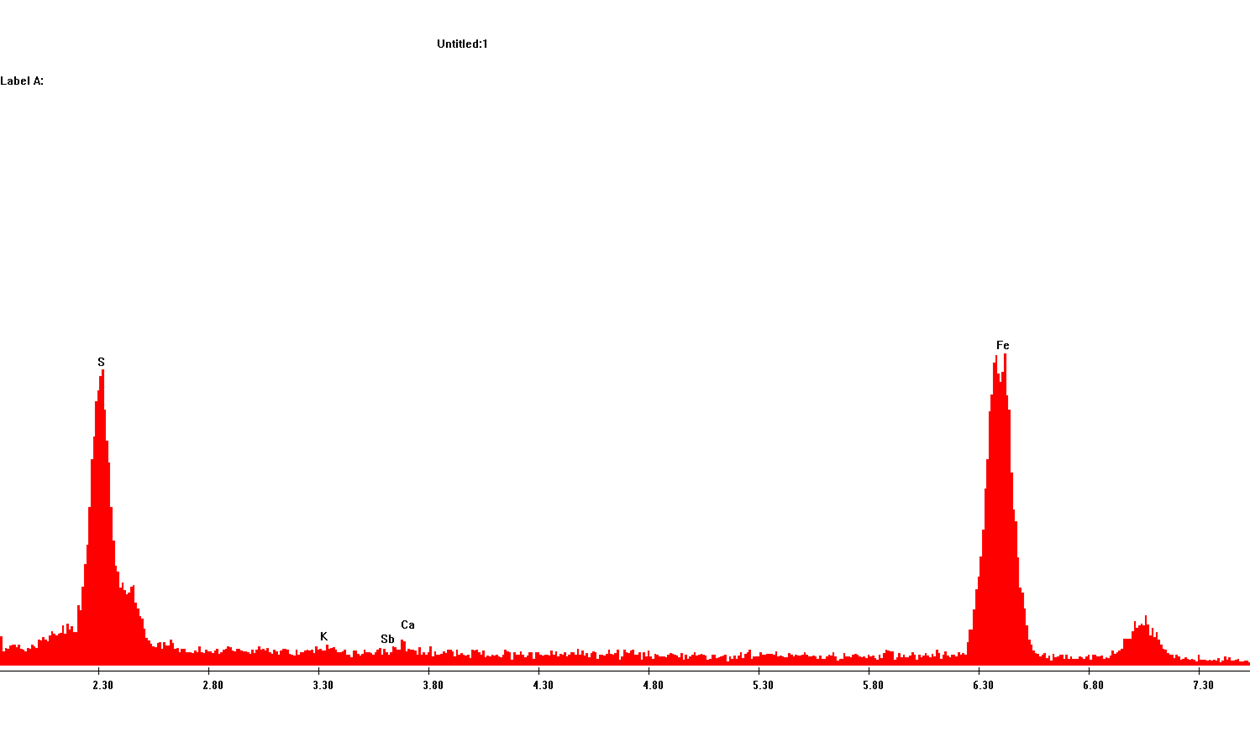
[As part of our broader-scale research project, supplemental data that we have collected and analyzed, by the use of mass spectrometers, has suggested that Fe-Ni-Sulfide minerals serve as carrier phases for extraterrestrial siderophile Platinum Group Elements]
 |
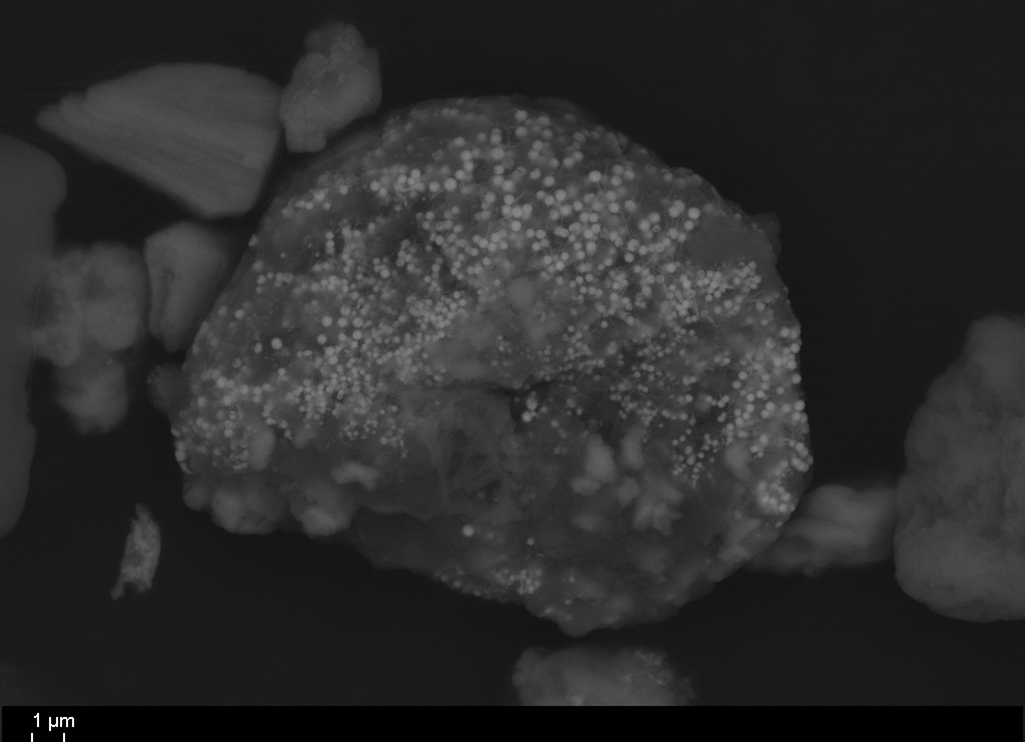 |
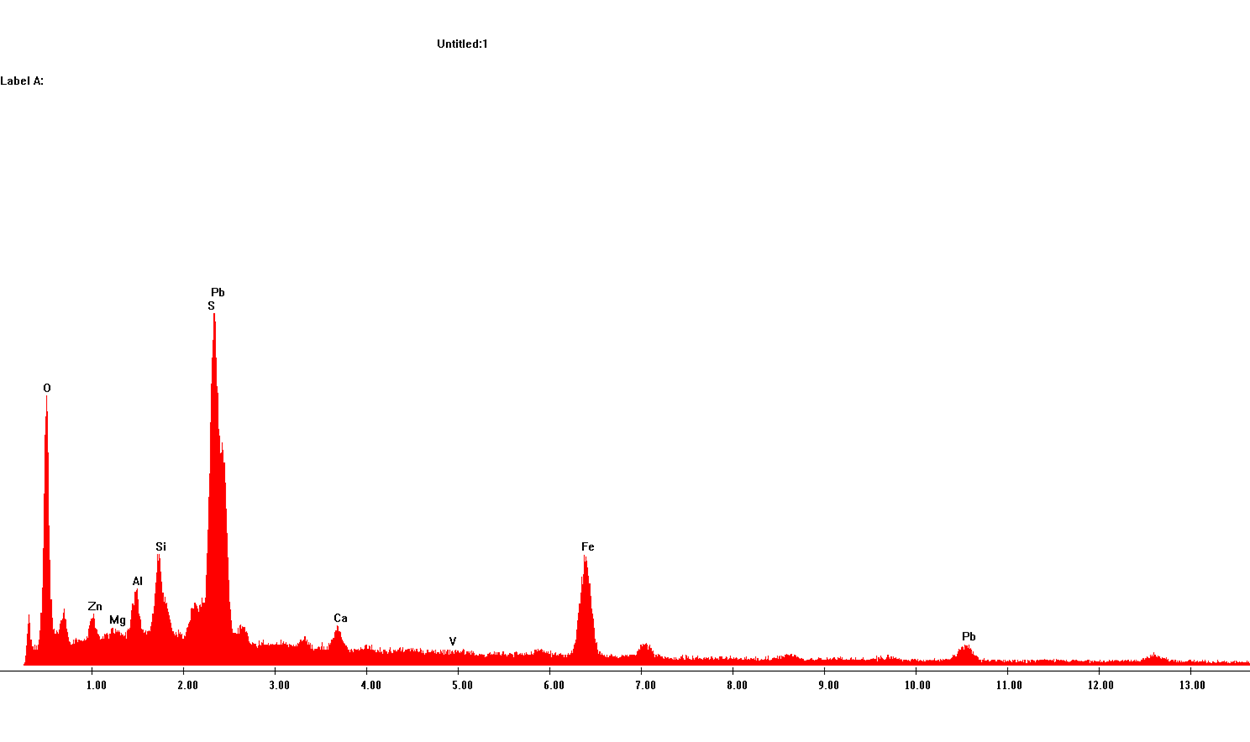
In the micrograph(s) above (especially in the backscattered micrograph) we can clearly see the Pb particles retained within the Sulfur-rich Iron Oxide grain, which could also be indicative of impact melt particles.
 |
 |
TEM DISCUSSION
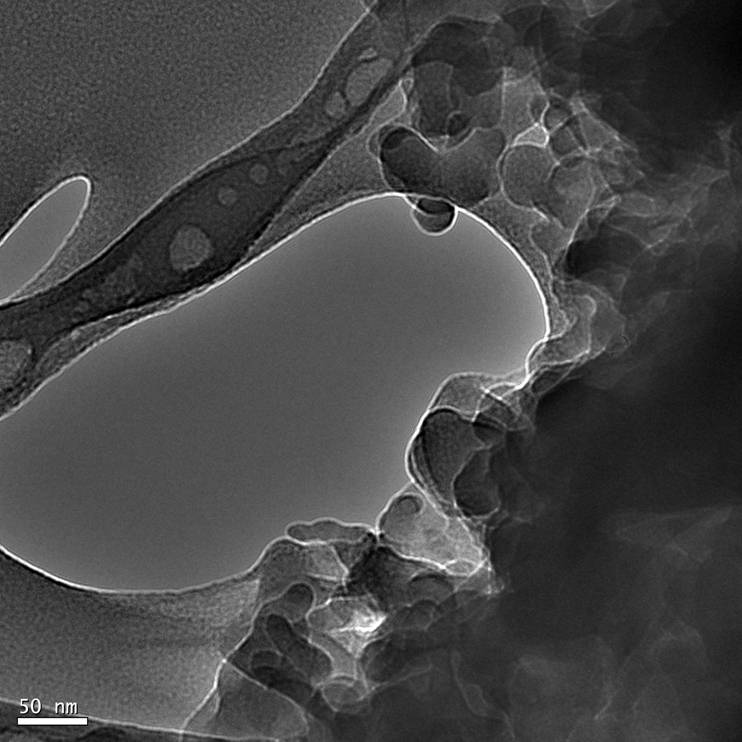
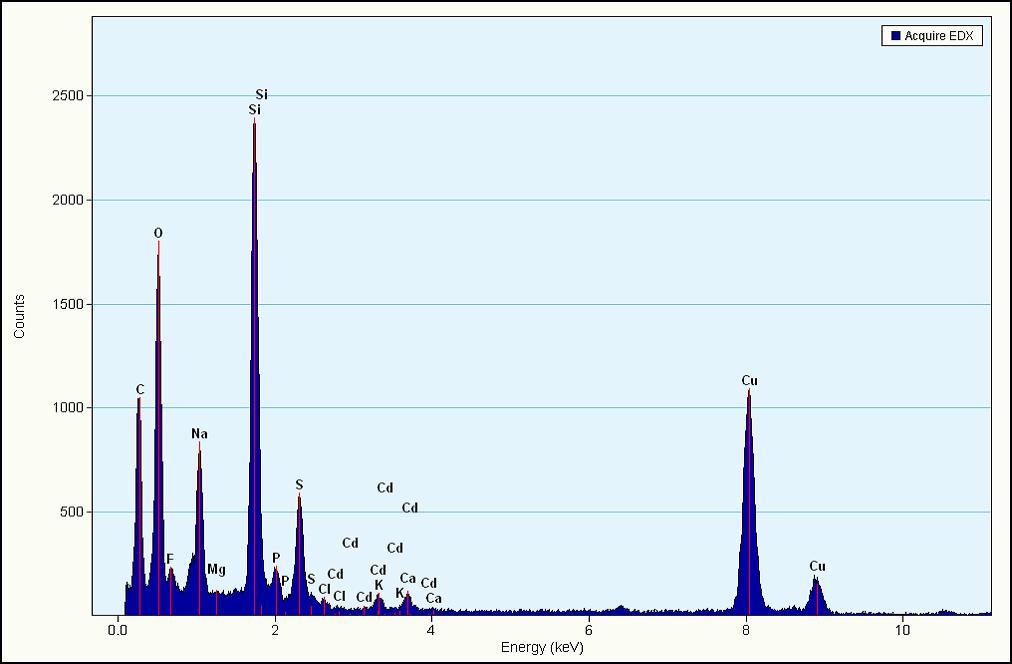
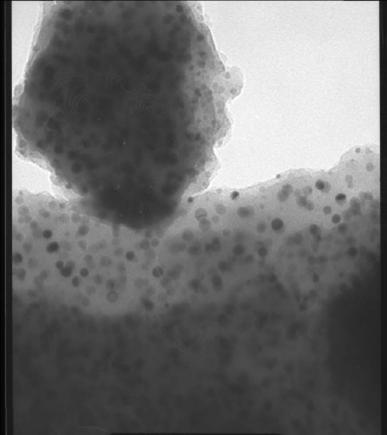
We examined three carbon grids containing organic carbonaceous residue from the acid digestions of some of the End Pleistocene samples using the Transmission Electron Microscope, but unfortunately we were not able to find any carbonaceous material of interest, it turns out that nanodiamonds are quite problematic to find and generally require overwhelming amounts of time to discern. The following micrograph and x-ray spectra from the TEM is what we commonly found in the carbon grids, we were aiming to find allotropes of carbon and other different types of amorphous carbon but generally just found material such as this one, which is probably just part of the eluent agent that we used in the Size Exclusion Chromatography procedure.
 |
 |
Conversely, the following TEM micrograph from a previous research project includes what we ideally would like to find, possible nanodiamonds ranging from 2-500nanometers within the matrix of carbon spherules from sediment layers of the Younger Dryas Stratigraphic layer4.
CONCLUSION
This project is part of a much larger-scale investigation encompassing various suspected impact layers. This electron microscopy data in addition to supplemental geochemical and isotopic research data may very well serve as concrete evidence to prove that the suspected impact events were actually triggered by ET intrusions. The SEM resultant data do provide some substantial information that is generally considered acceptable evidence of ET material, while on the other hand, the TEM data we retrieved is rather inconclusive, we were not able to detect any carbonaceous material of interest. The strongest indicators are the high-Nickel Iron Oxide grains we examined and the possible impact melt breccia particles. More work on the samples from these events needs to be done in assessing this long-term research project, but the electron microscopy techniques described do indeed serve as invaluable resources for the corresponding analysis.
1. Zanda, Brigitte, Monica Rotaru, and
Roger H. . Hewins. Meteorites
Their Impact on Science and History.
Please enter any comments, criticisms, questions, etc. below.
Your name:
Email address: