Materials and Methods
The instrument used for this analysis is the Zeiss Auriga CrossBeam SEM-FIB of the Institute of Optics at the University of Rochester.
Samples were imaged by normal methods with secondary and backscatter electrons. Additionally, EDS spectra were recorded. All samples were lightly milled with a mortar and pestle, put on sample stubs with carbon tape, then sputter-coated with gold at 10 mA for 150 seconds total to prevent charging. Some decoration artifacts are evident due to the long coating time.
Optical micrographs were taken on the Leica DMRX of the Laboratory for Laser Energetics at the University of Rochester.
Results
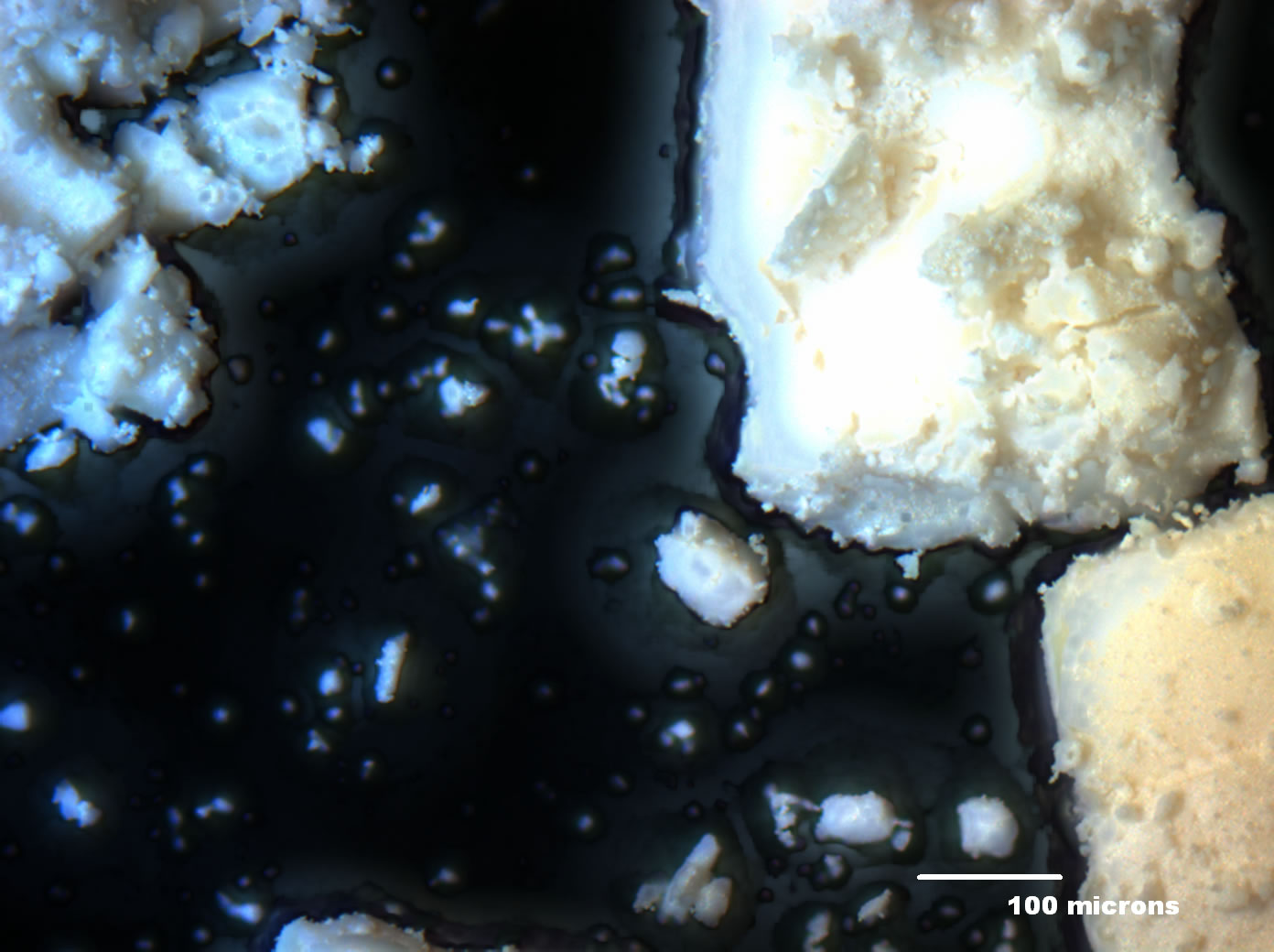
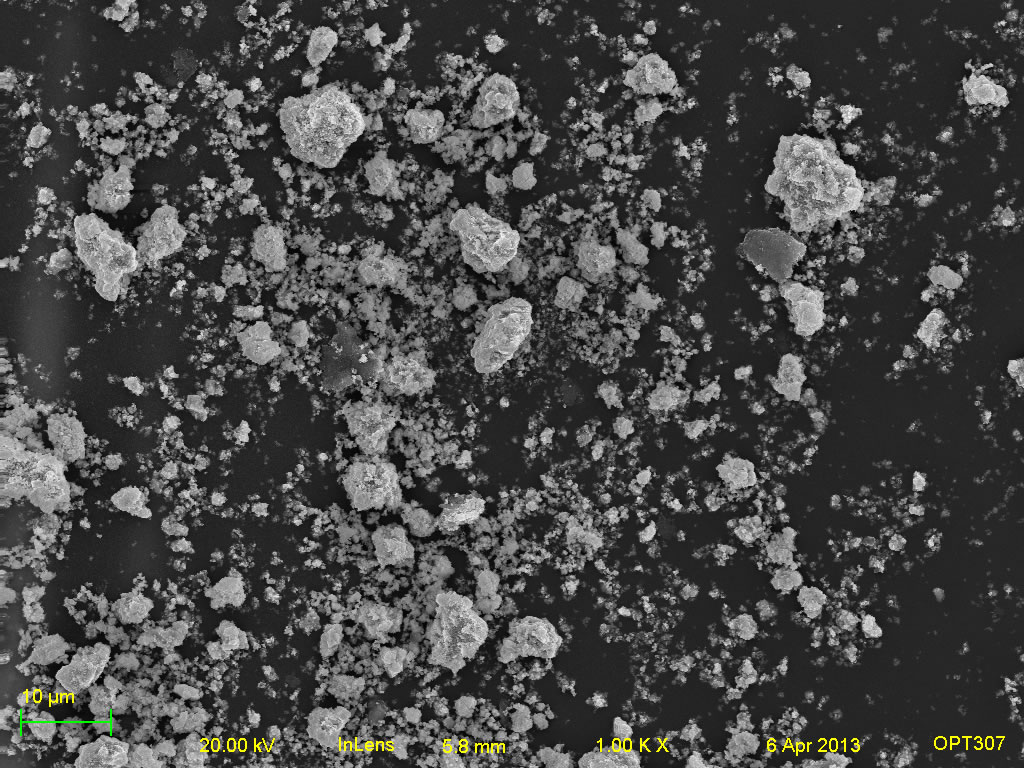
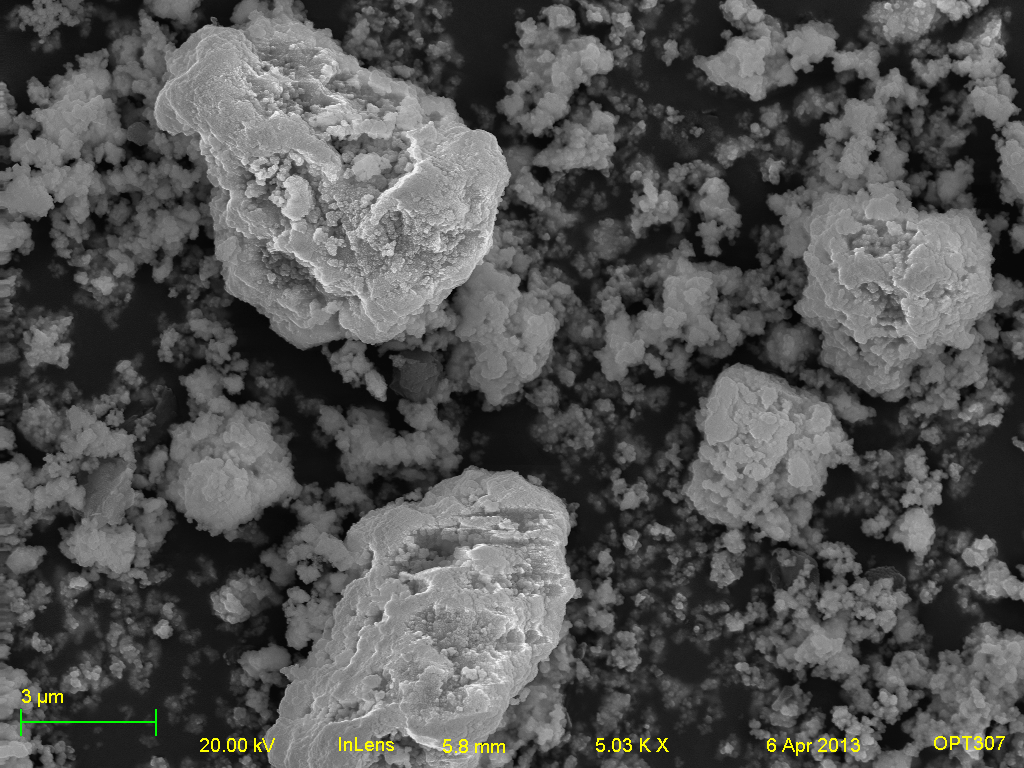
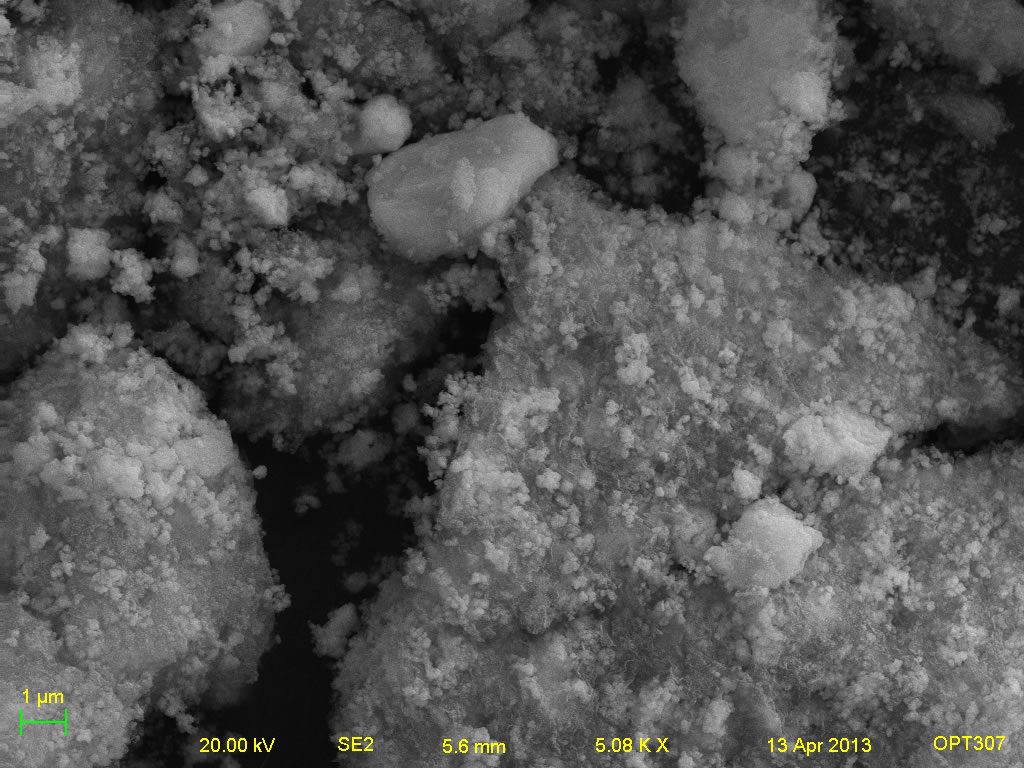
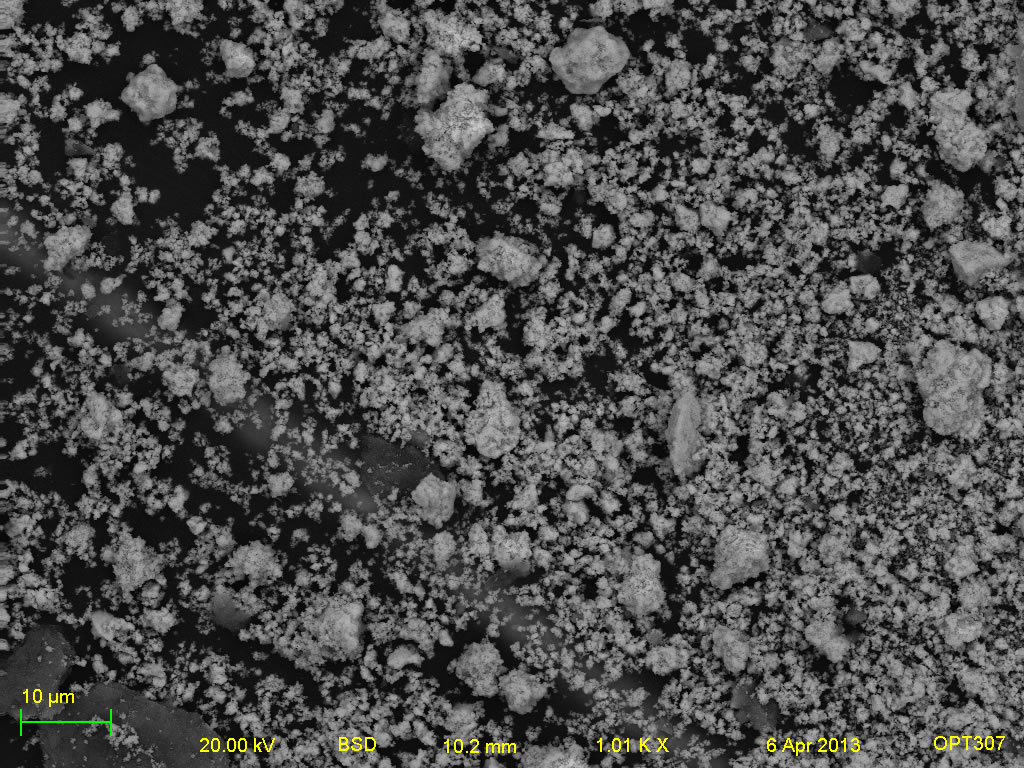
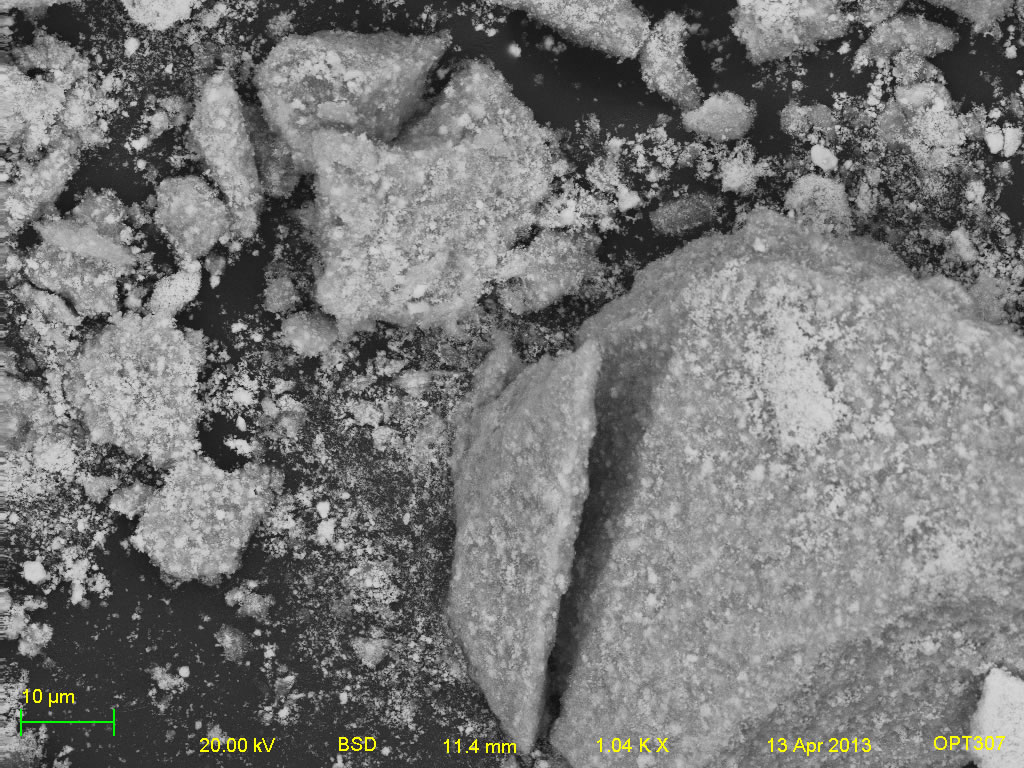
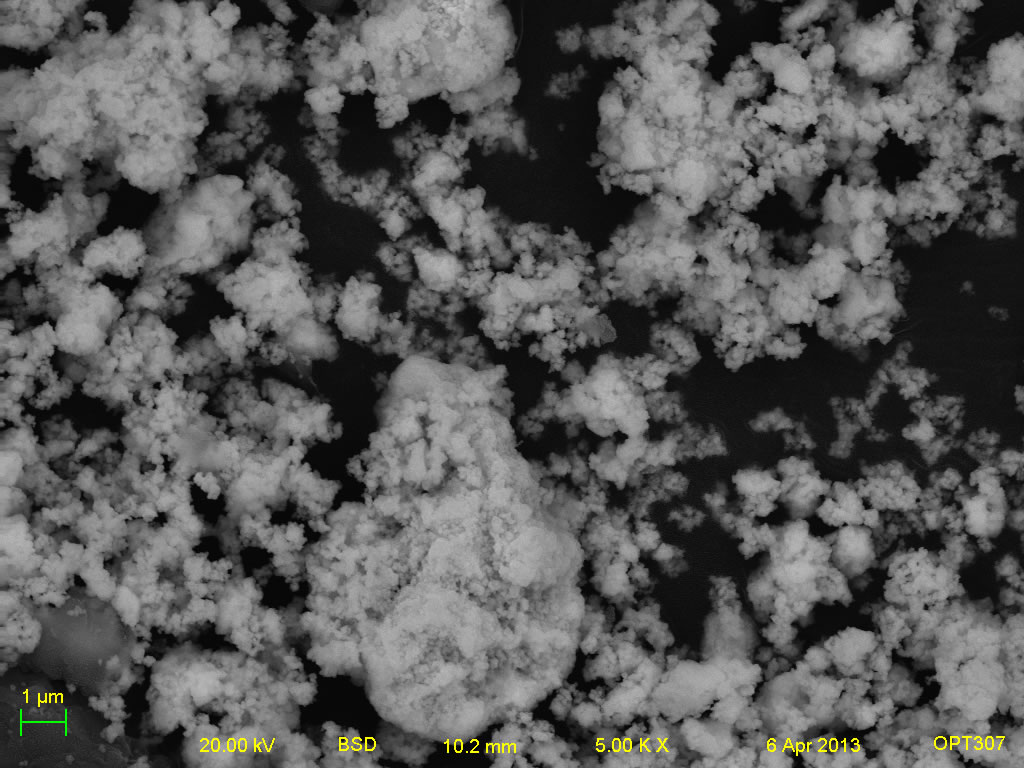
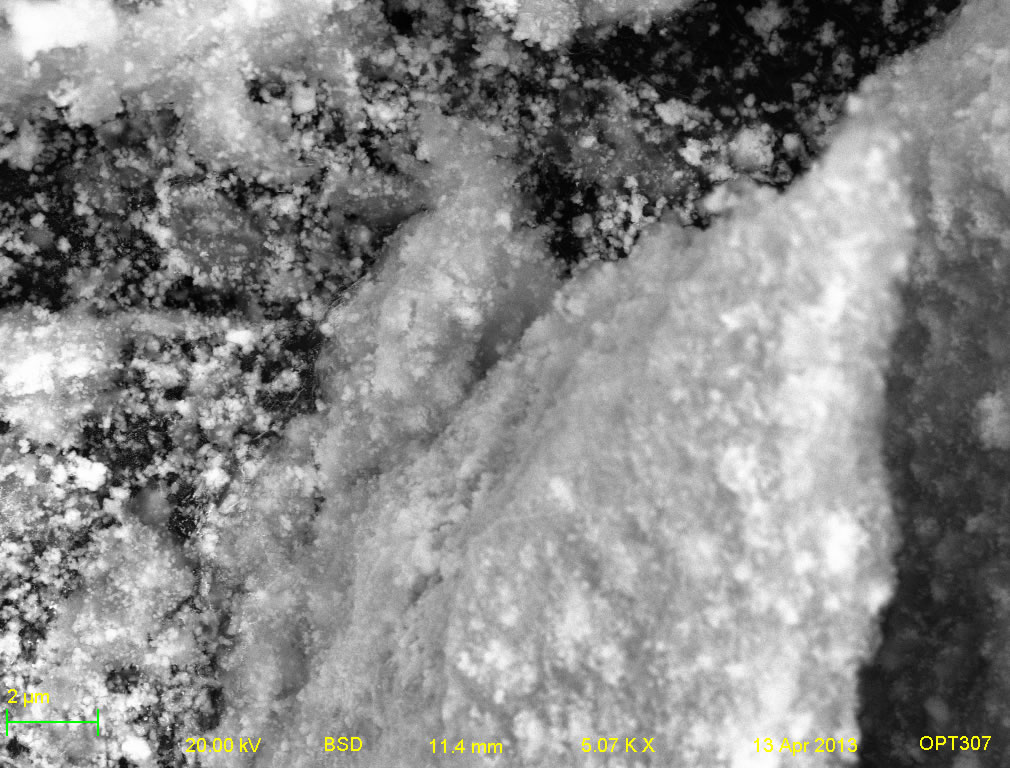
The resultant data consists of optical micrographs, secondary and backscatter electron images, and EDS spectra. All impressions are subjective and qualitative in nature; however, results are in good agreement with expectations.
Fresh and Spent Polishing Abrasive
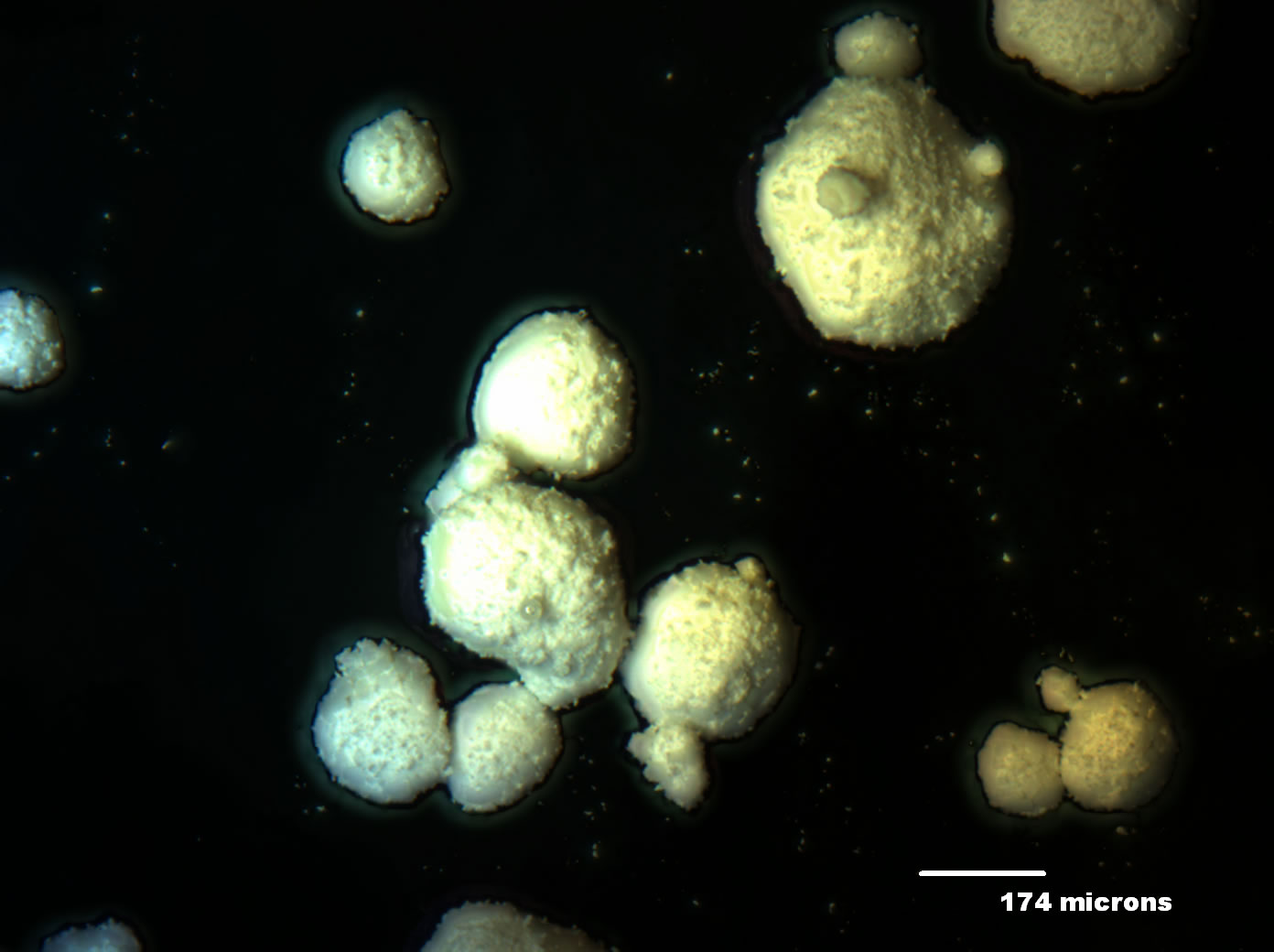
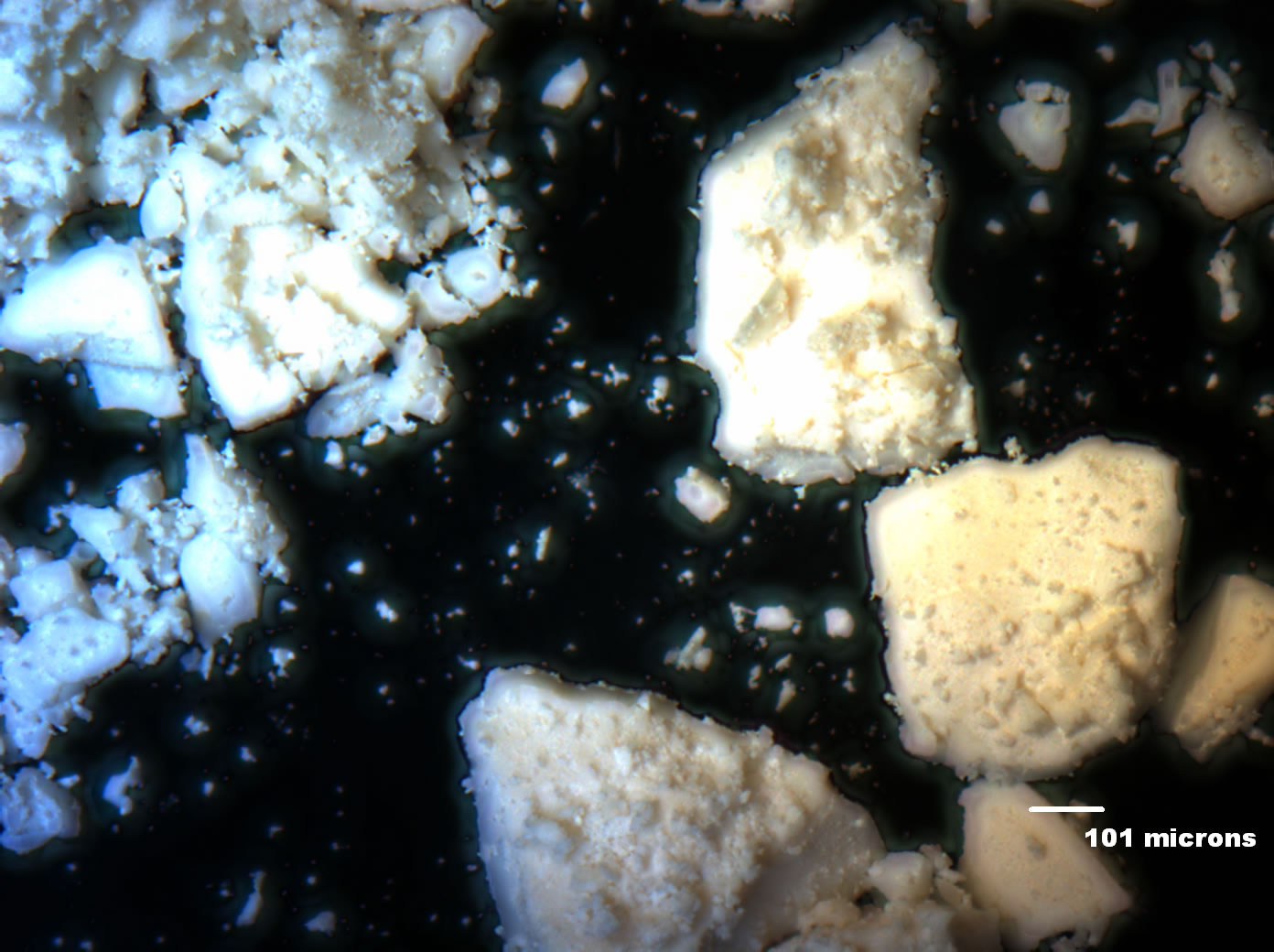
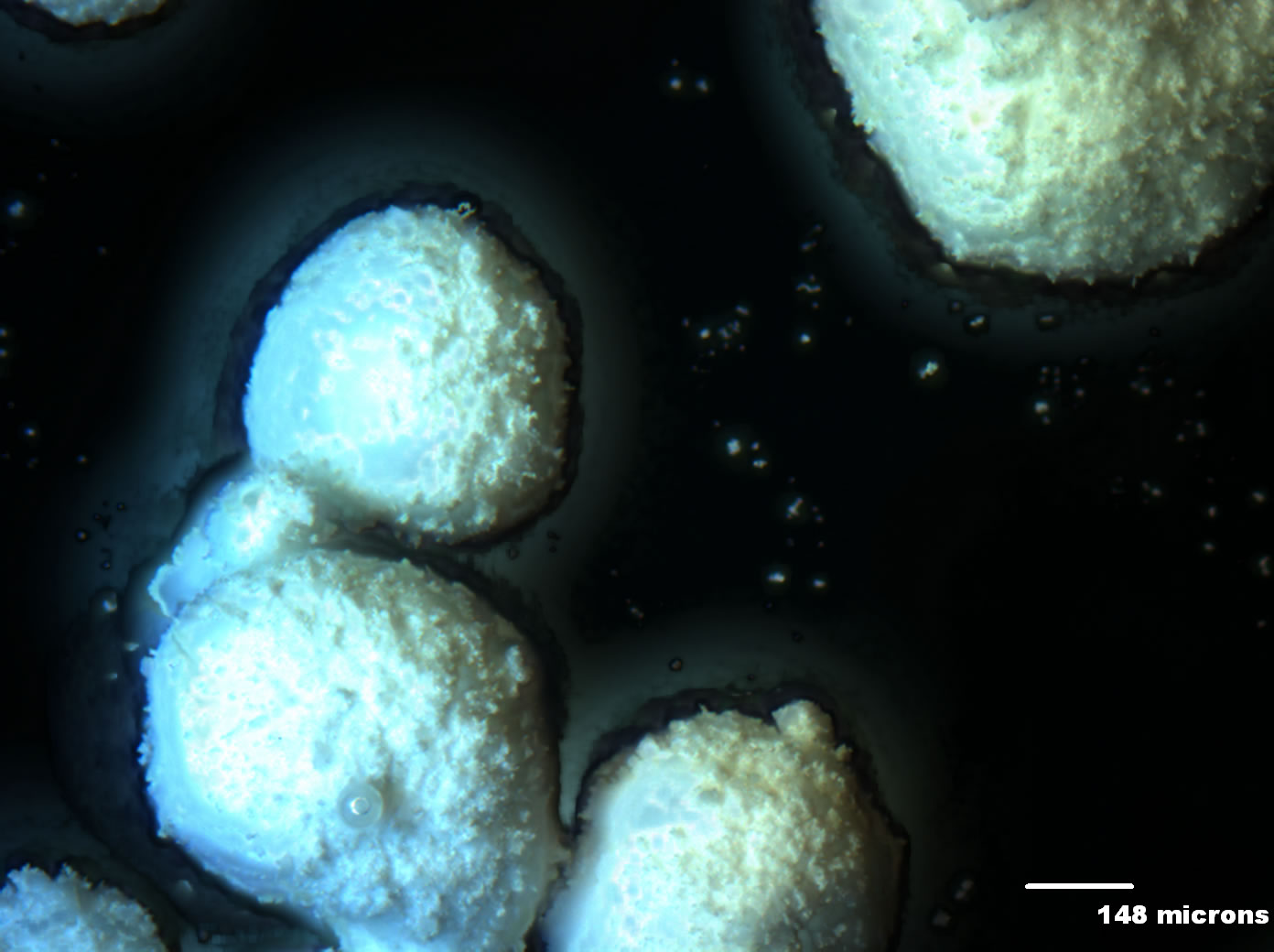
| Unicer 166: Fresh | A001-1B: Spent |
 |
 |
 |
 |
| Unicer 166 | A001-1B |
 |
 |
 |
 |
 |
 |
 |
 |
| Unicer 166 | A001-1B |
 |
 |
 |
 |
 |
 |
| Unicer 166 | A001-1B |
 |
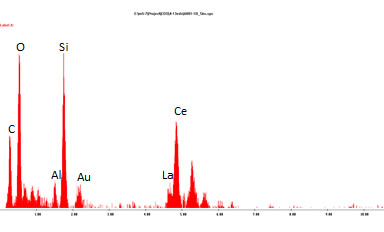 |
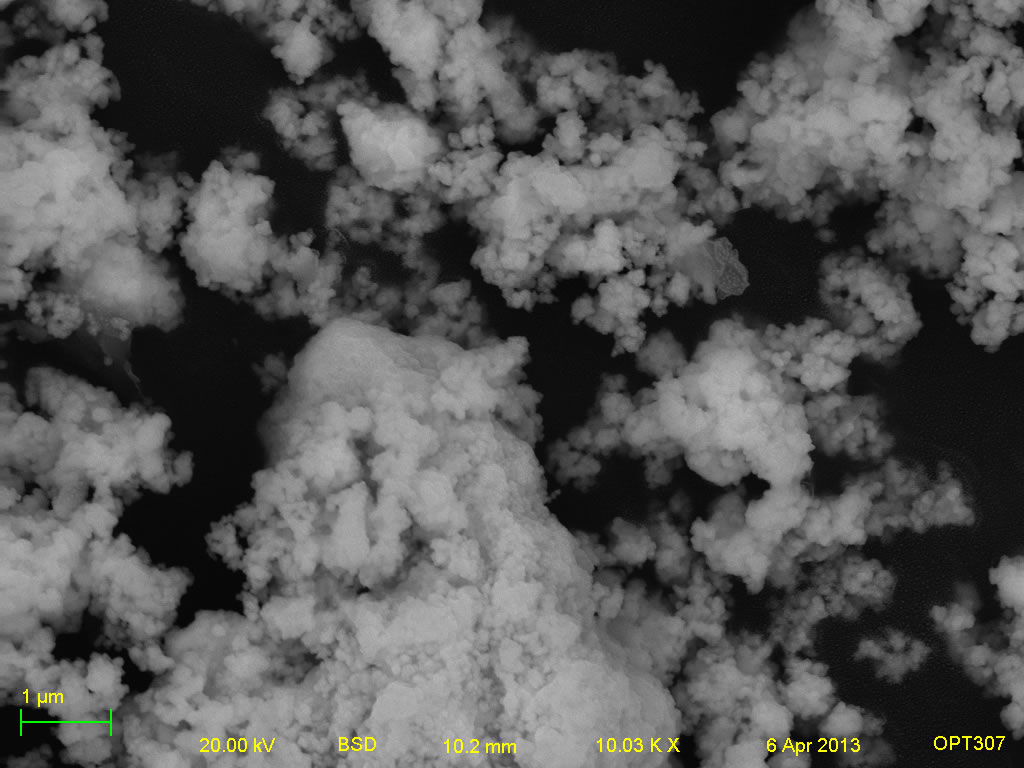
The gold peak in the EDS spectrum is from sputter coating the sample. The primary contaminant in the spent slurry is silicon dioxide from polishing glass. Carbon contamination likely occurs due to degradation of polyurethane polishing pads; however, it is impossible to quatify with the sample mounted on carbon tape.
First Separation
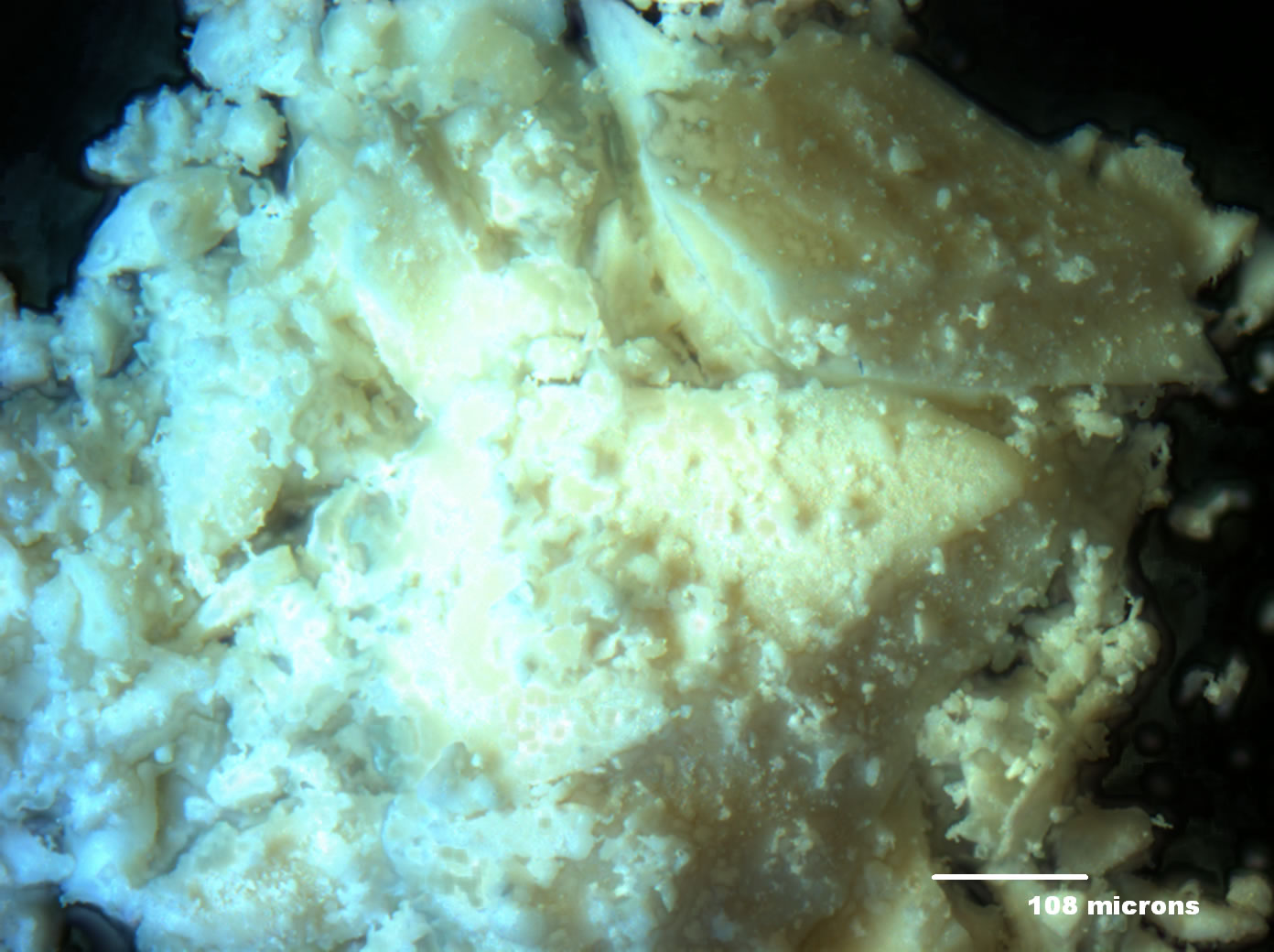
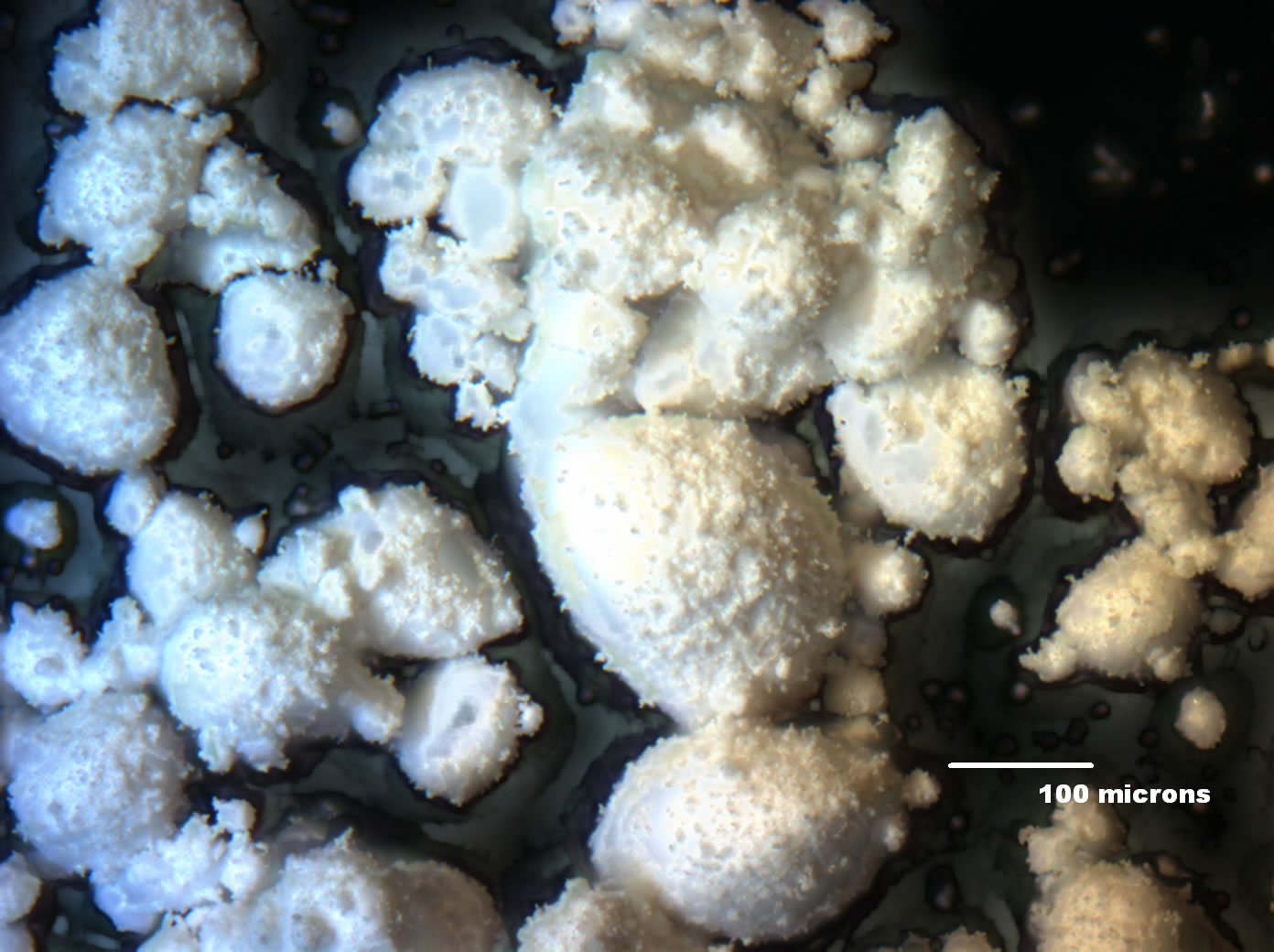
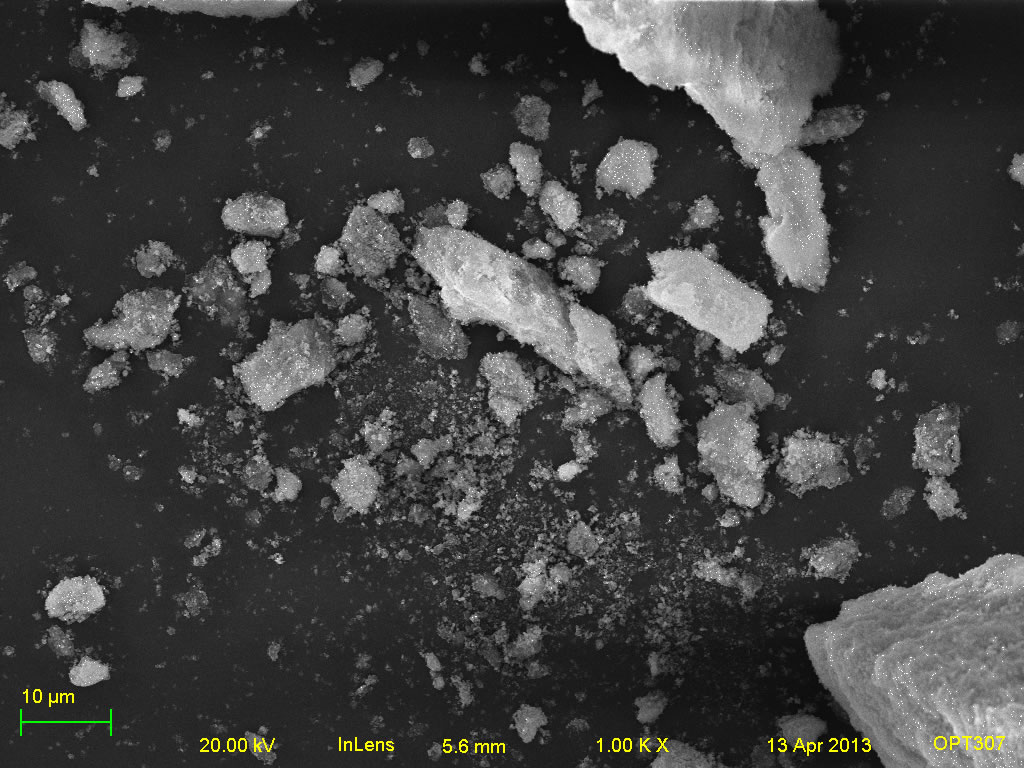
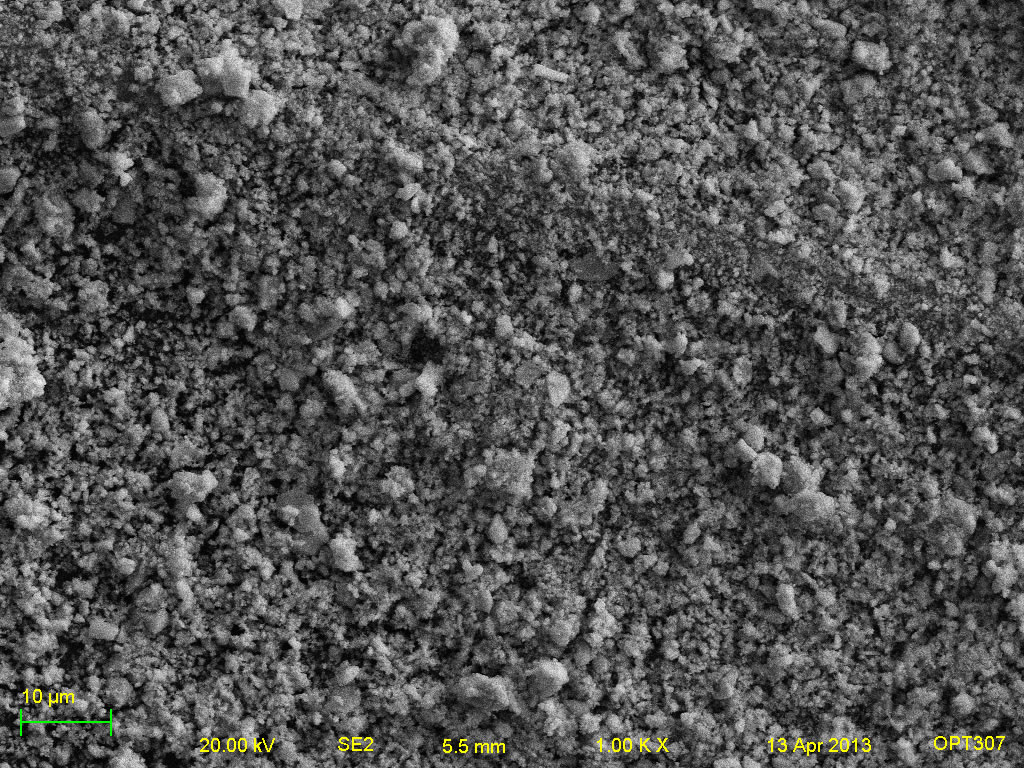
| A001-1D: Removed | A001-1C: Recovered |
 |
 |
 |
 |
| A001-1D | A001-1C |
 |
 |
 |
 |
 |
 |
 |
 |
| A001-1D | A001-1C |
 |
 |
 |
 |
 |
 |
| A001-1D | A001-1C |
 |
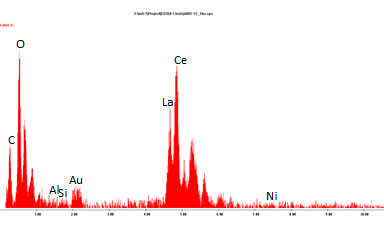 |
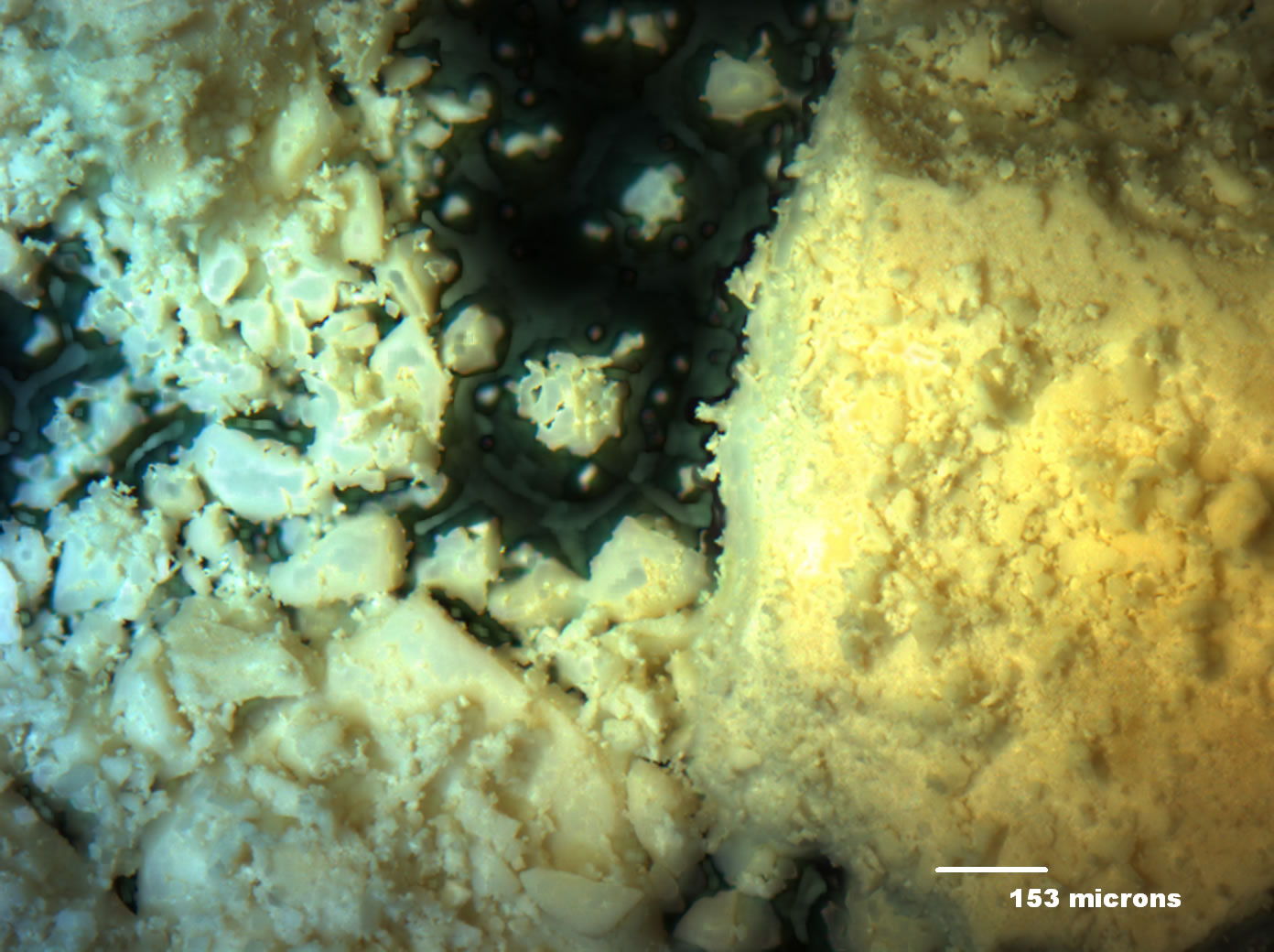
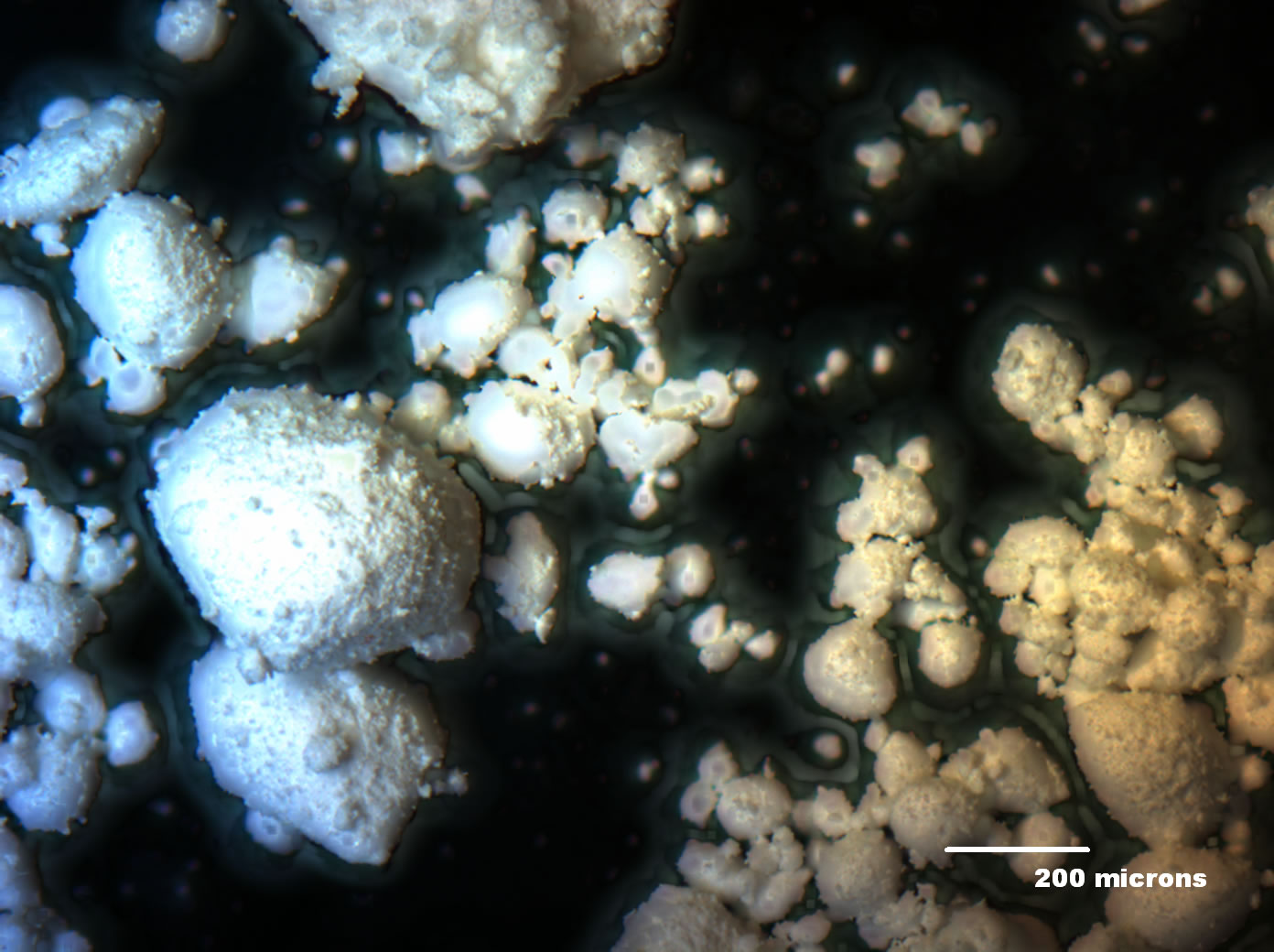
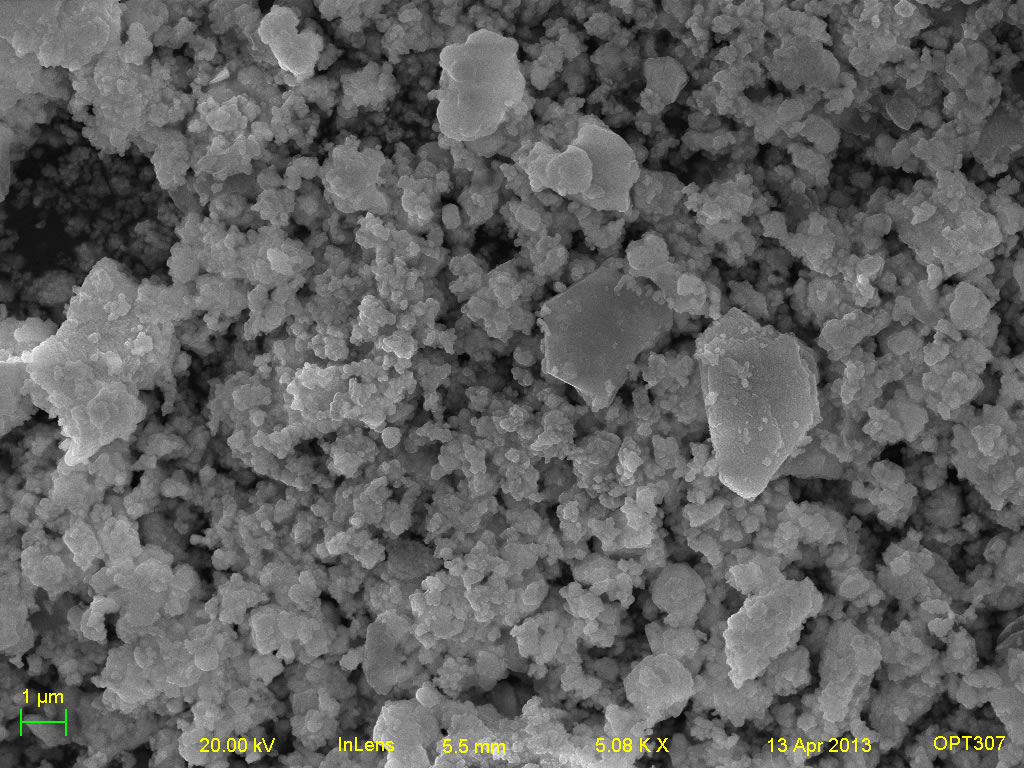
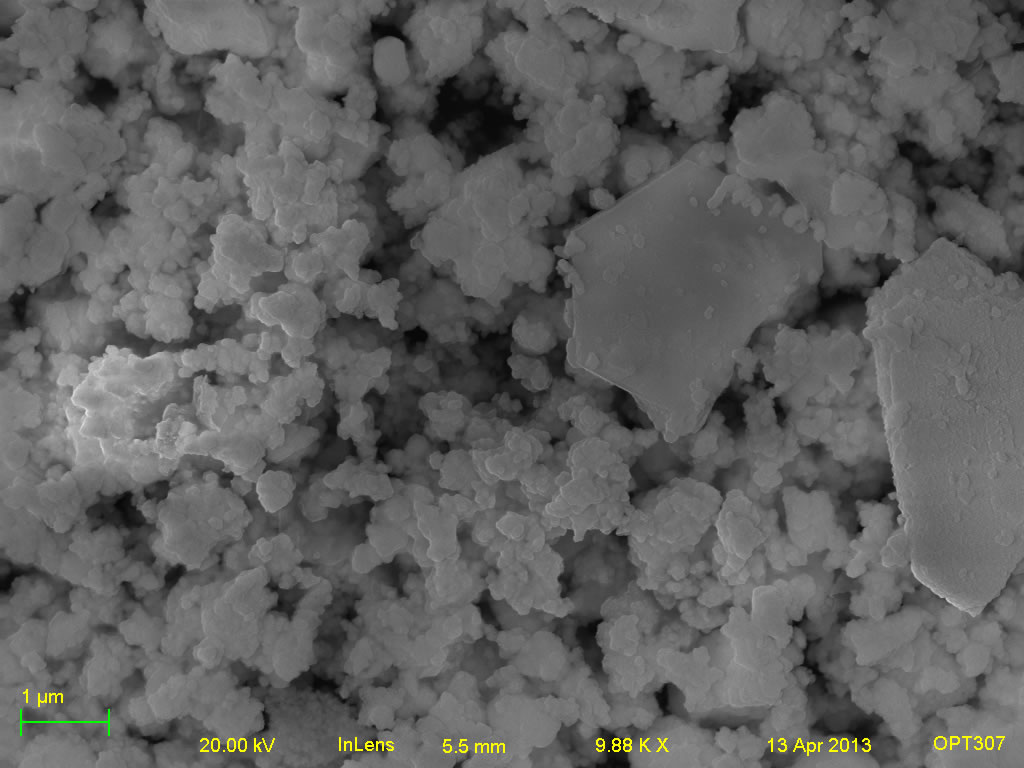
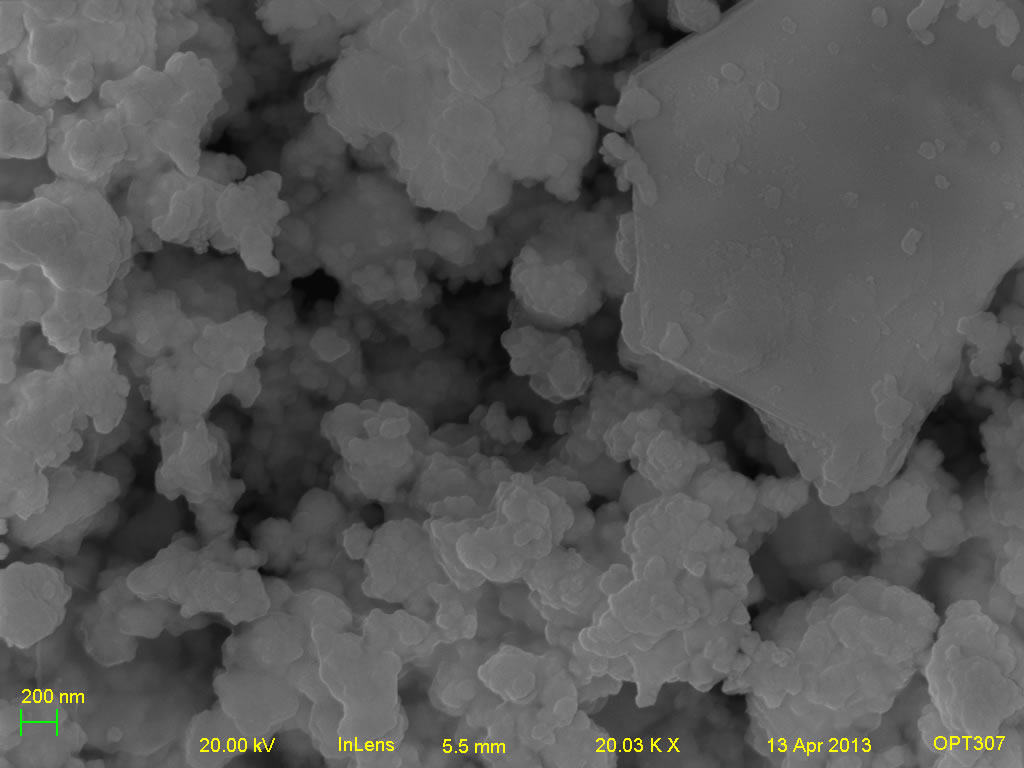
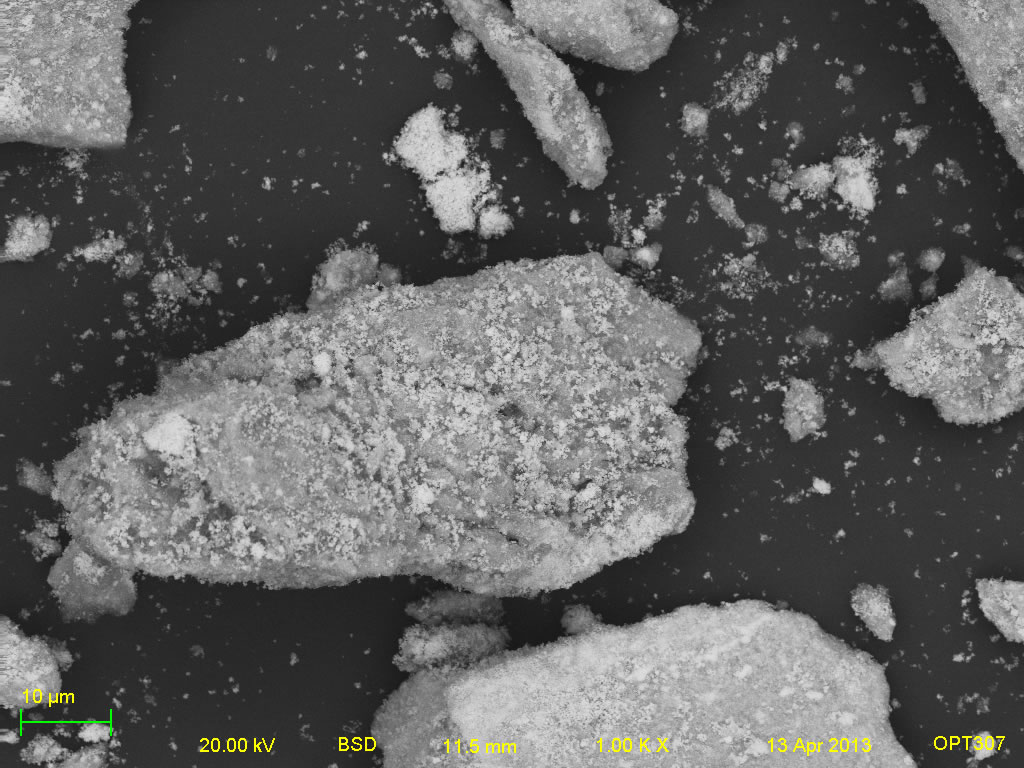
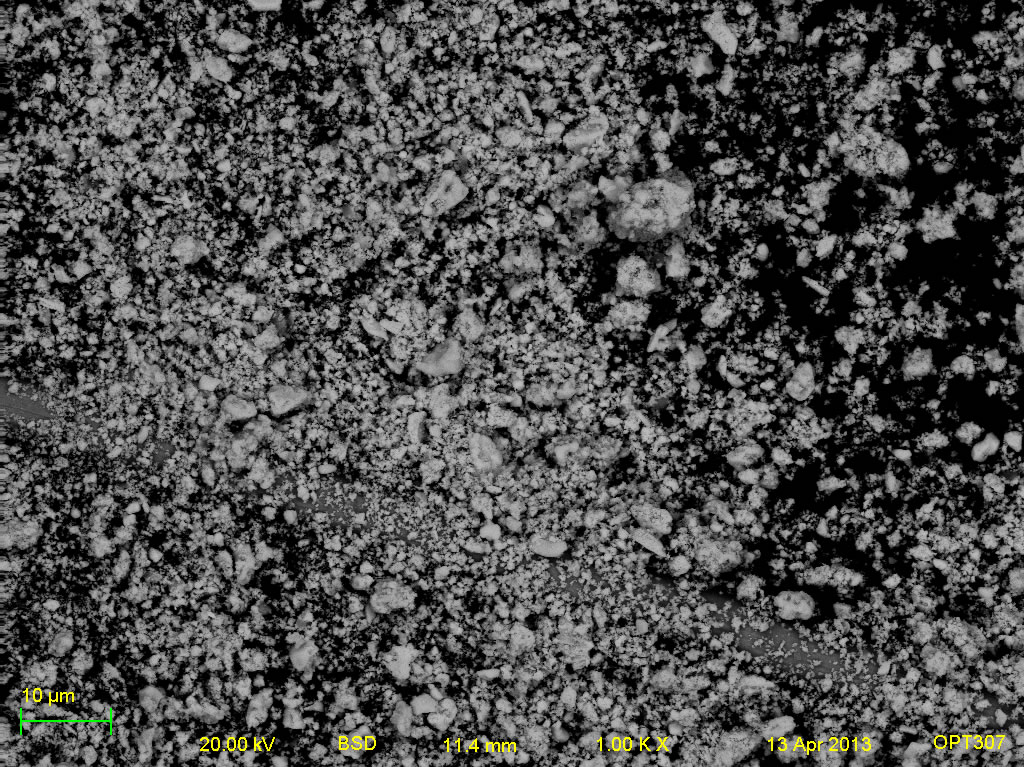
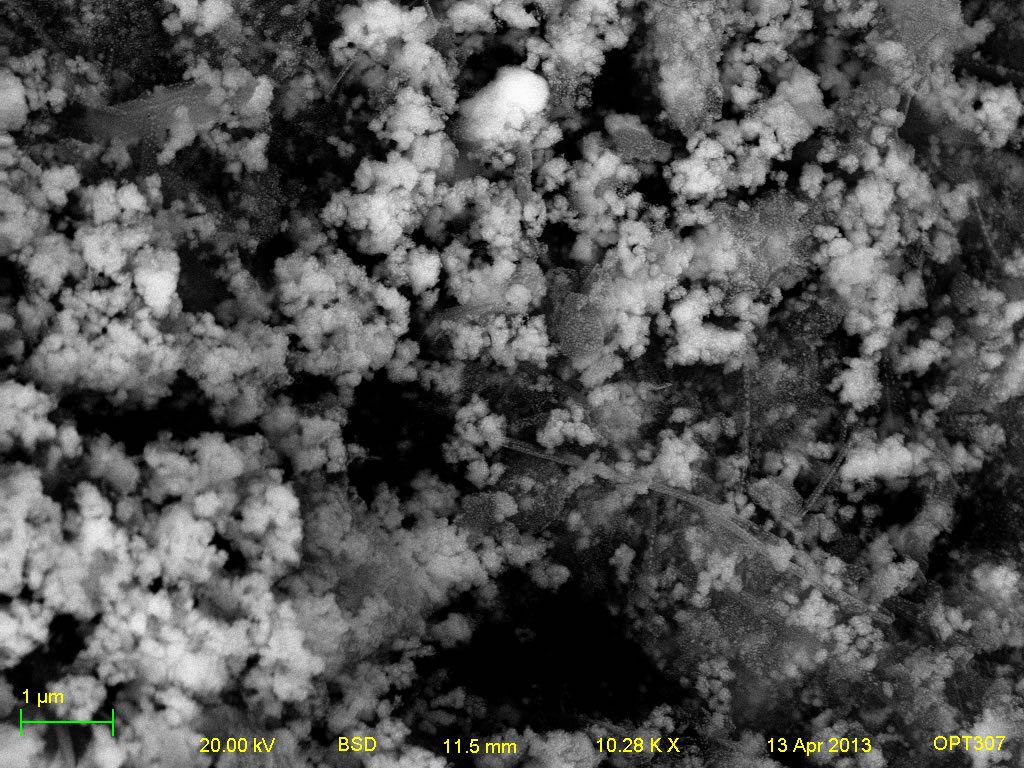
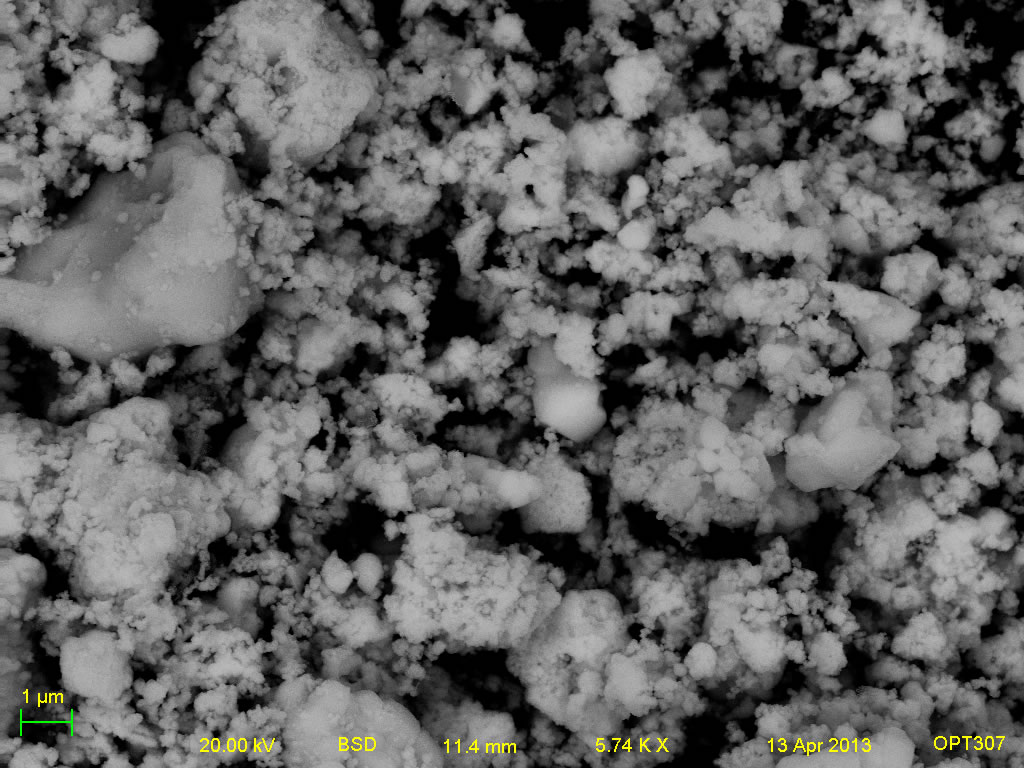
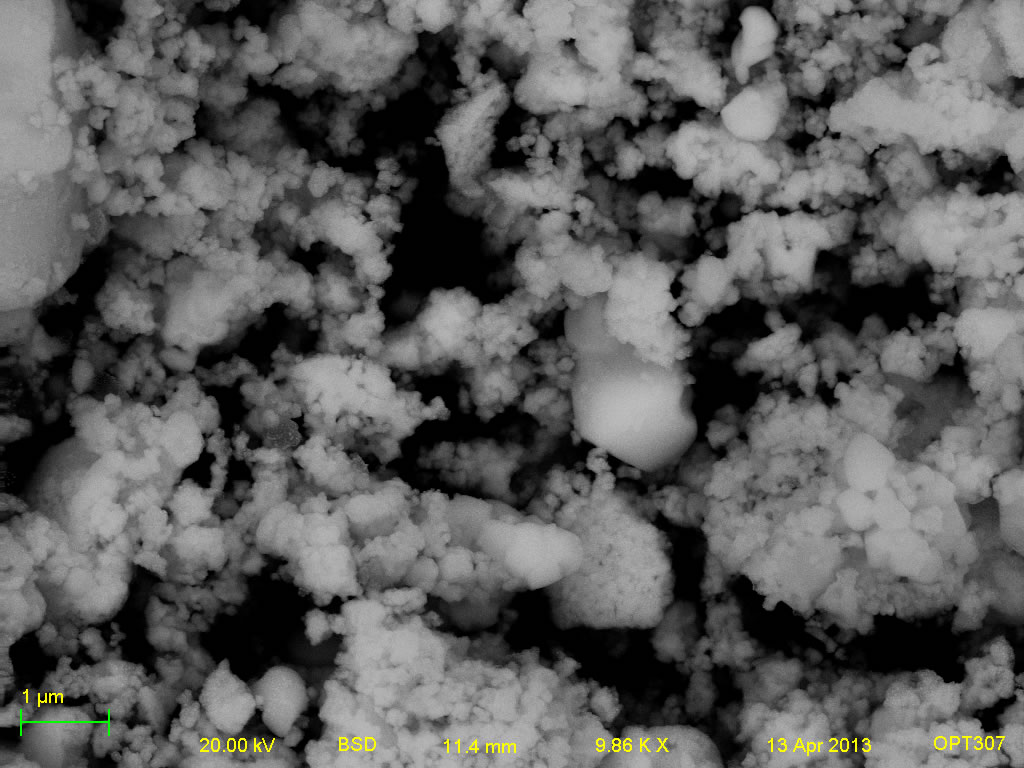
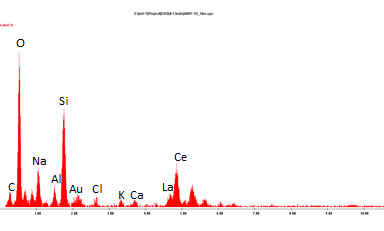
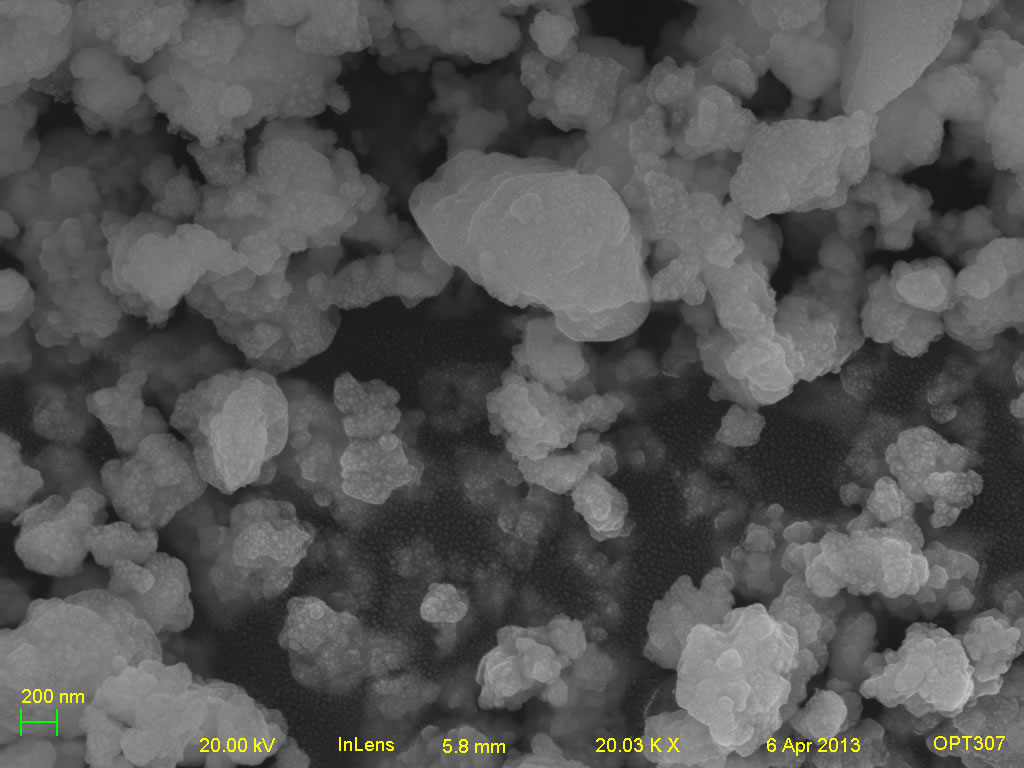
The material removed in the first separation is primarily glass waste. Interestly, fibers (suspected to be polyurethane) are visible in the higher magnifaction backscatter micrographs. Due to the relatively low atomic number of the compositional elements, the fibers appear dark in the backscatter images.
Second Separation
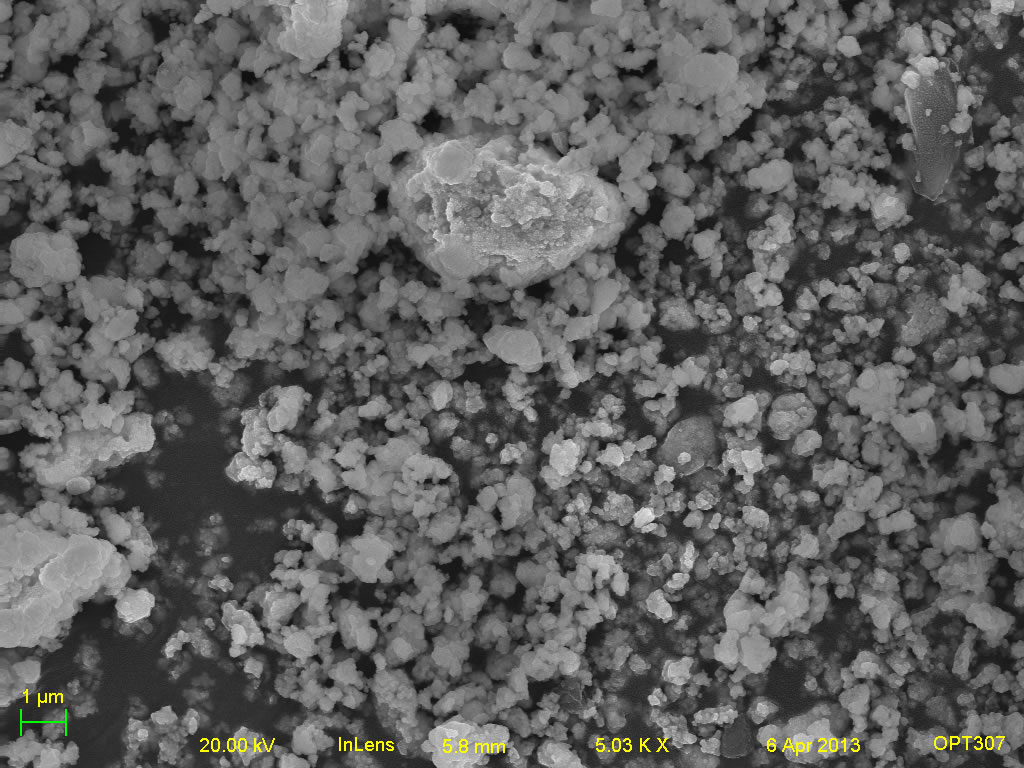
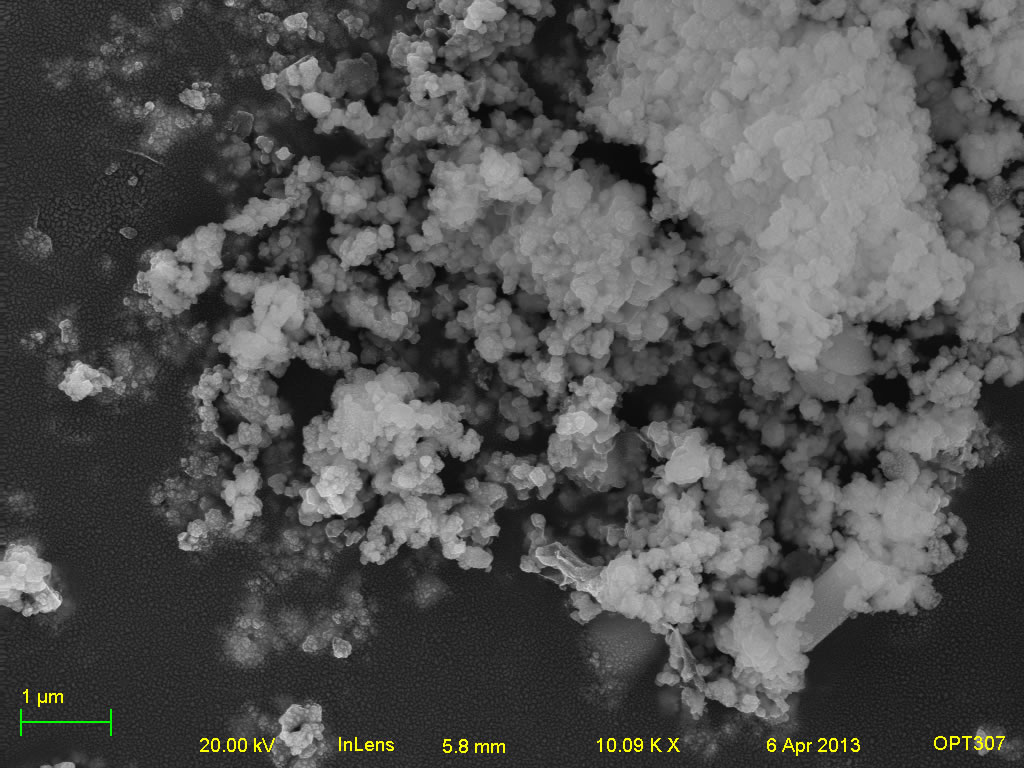
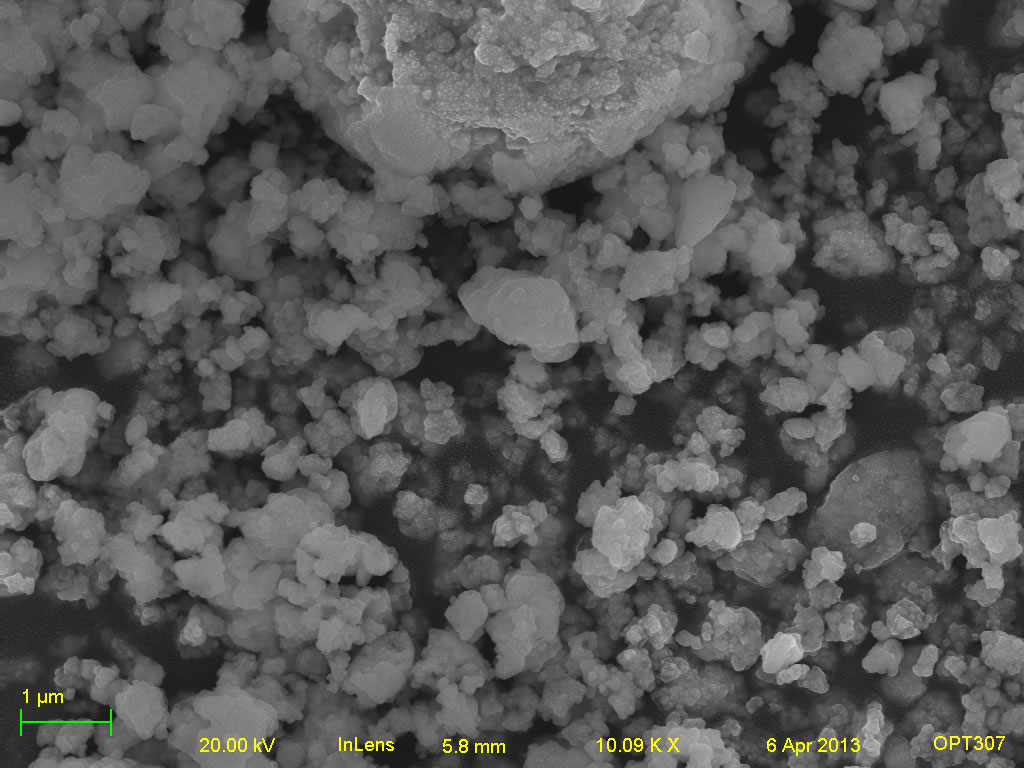
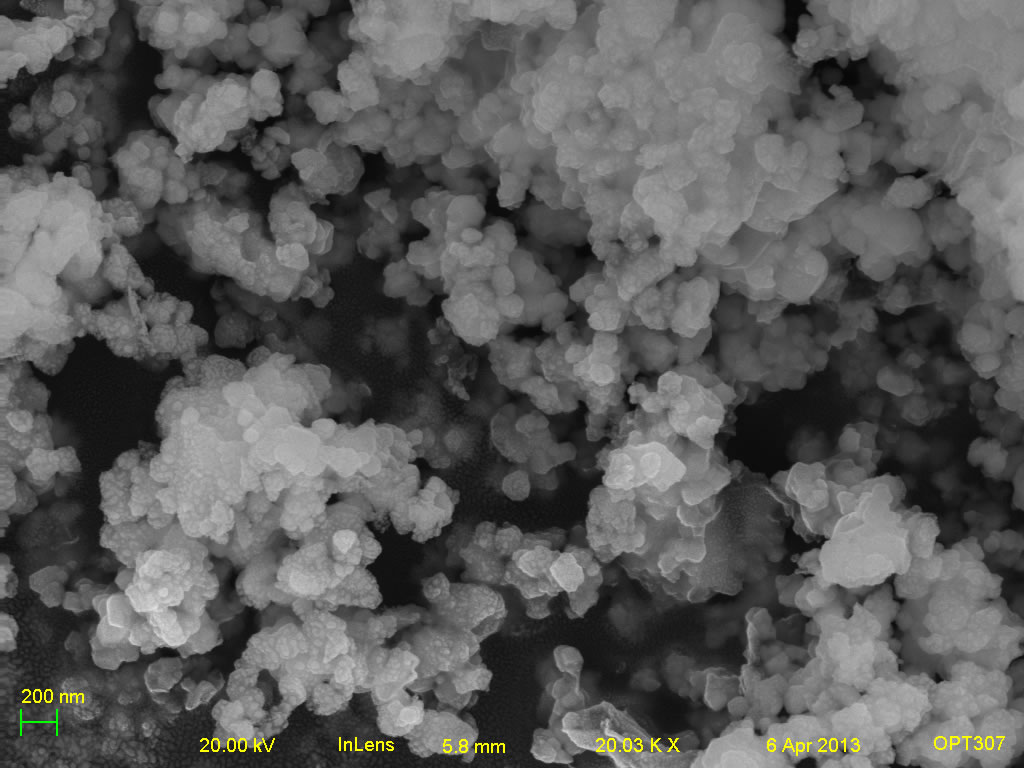
| A001-6A: Removed | A001-6B: Recovered |
 |
 |
 |
 |
| A001-6A | A001-6B |
 |
 |
 |
 |
 |
 |
 |
 |
| A001-6A | A001-6B |
 |
 |
 |
 |
 |
 |
| A001-6A | A001-6B |
 |
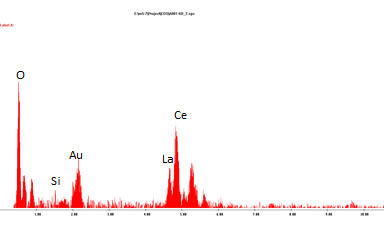 |
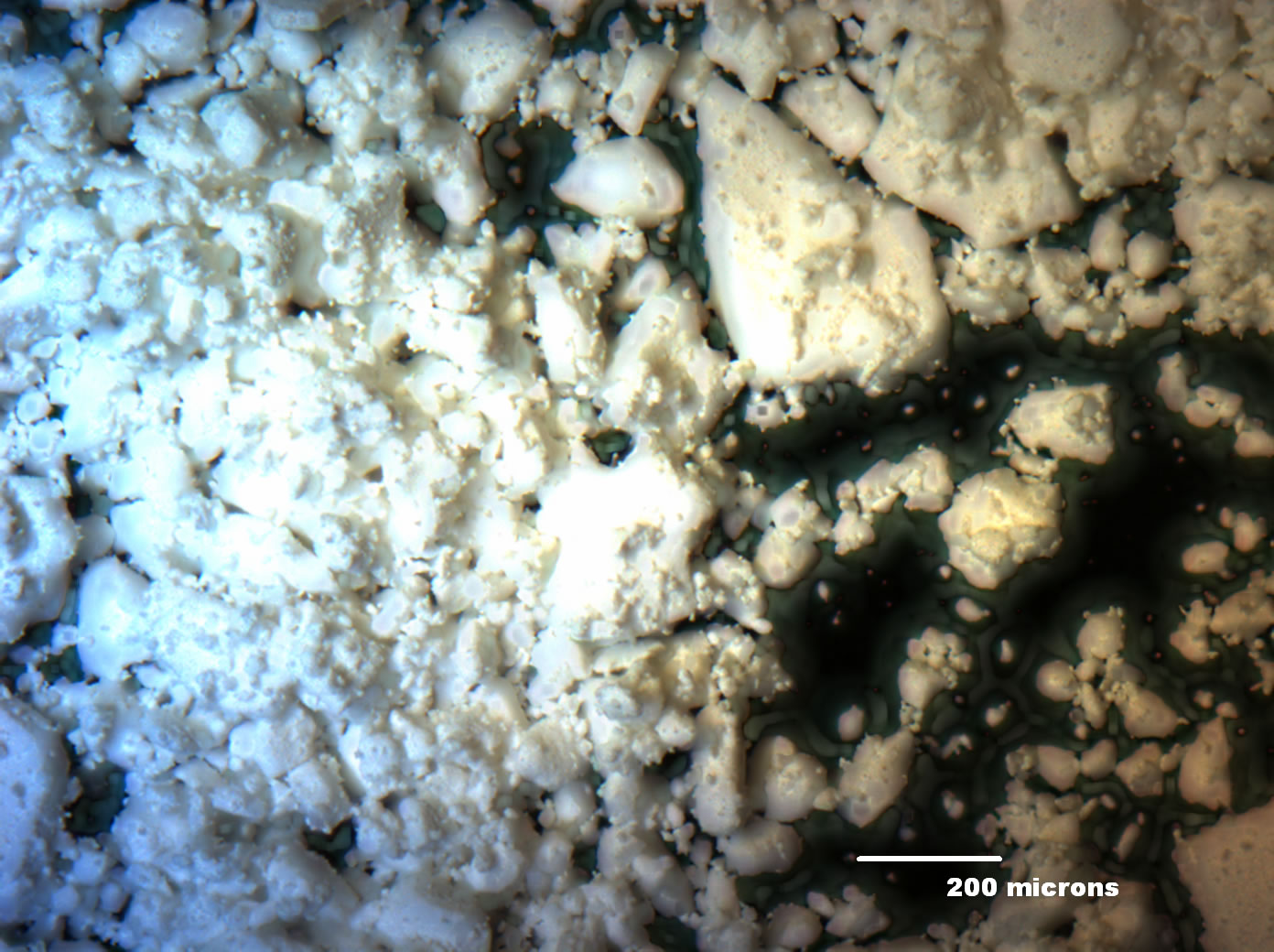
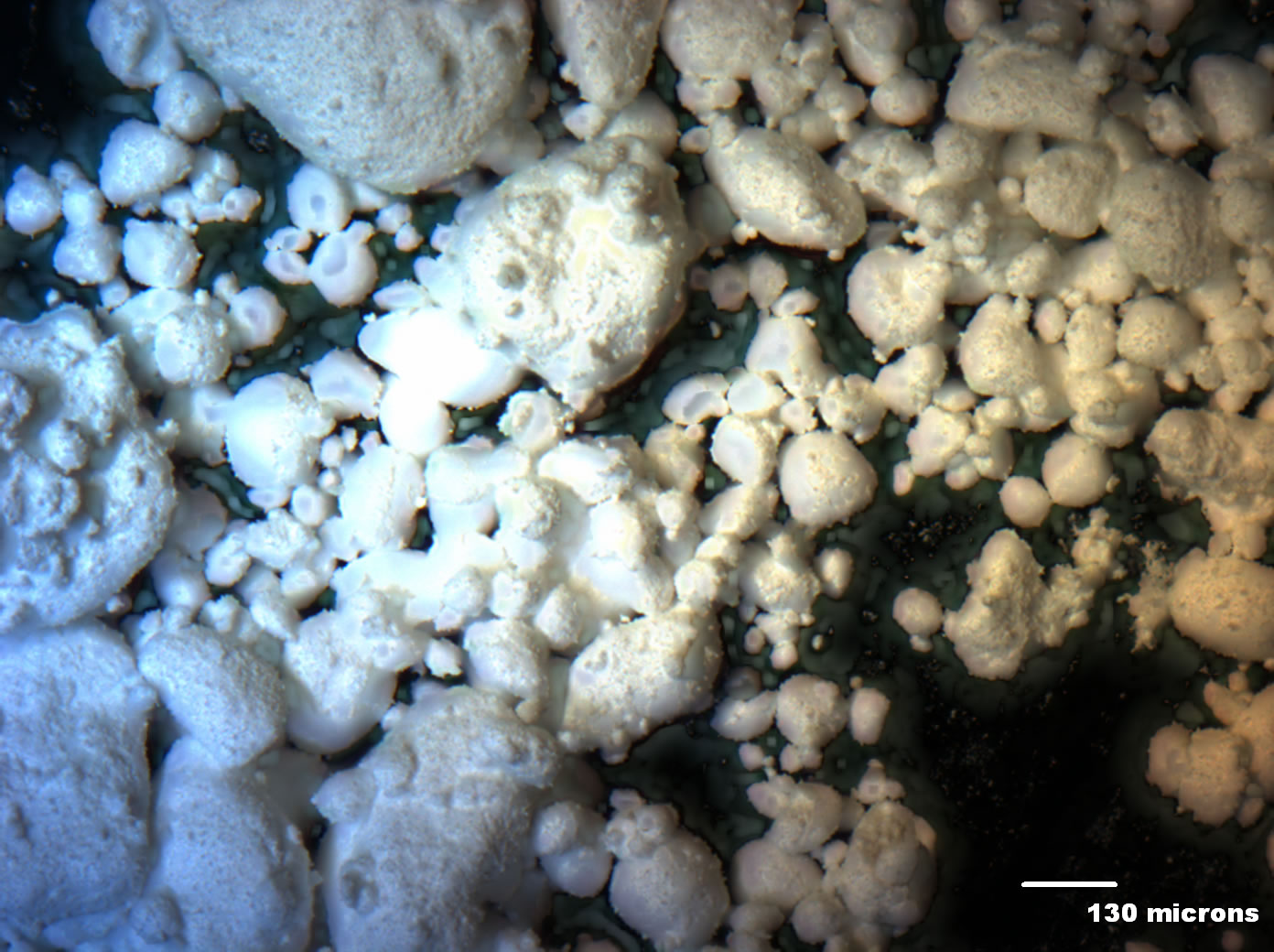
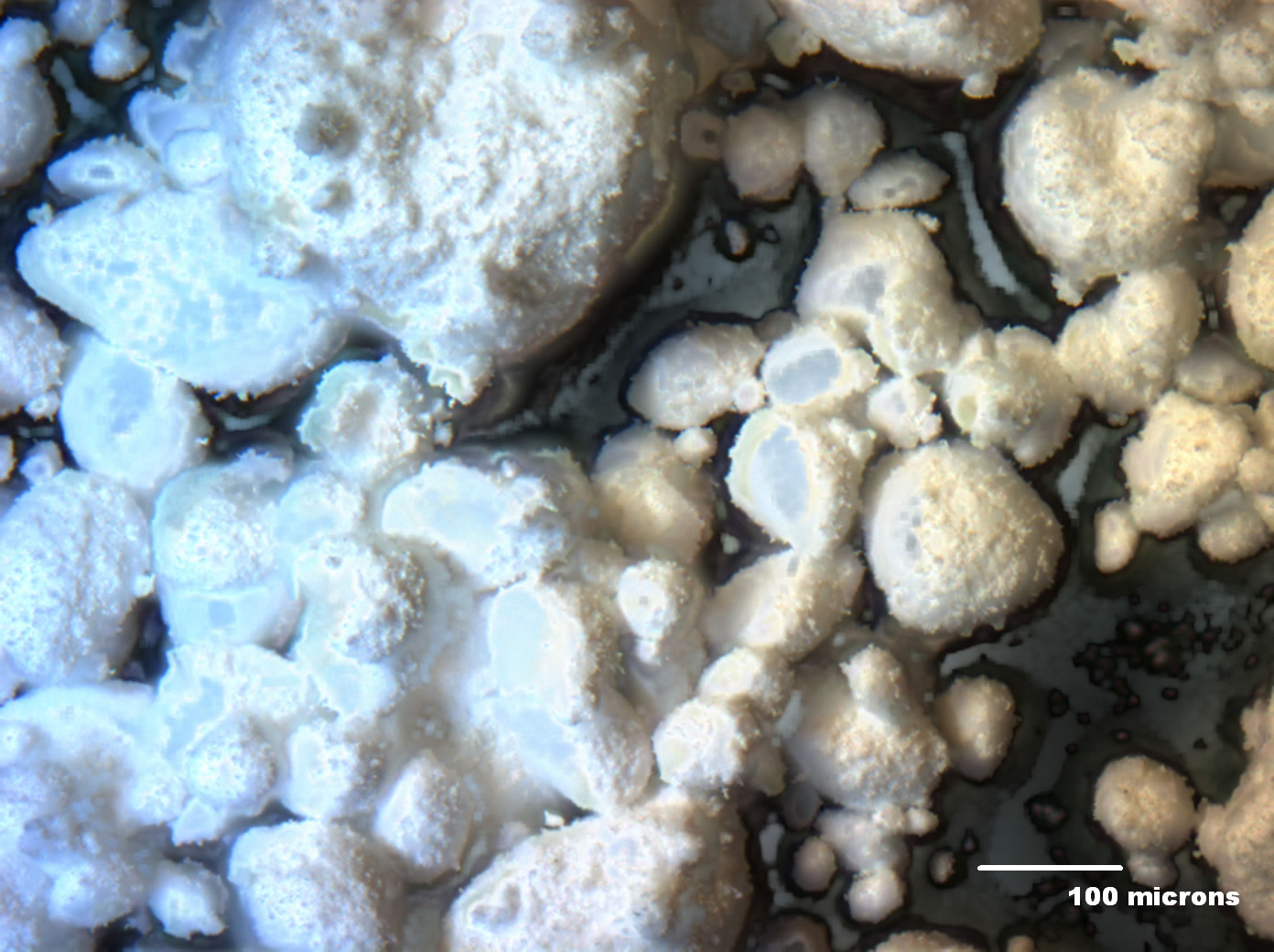
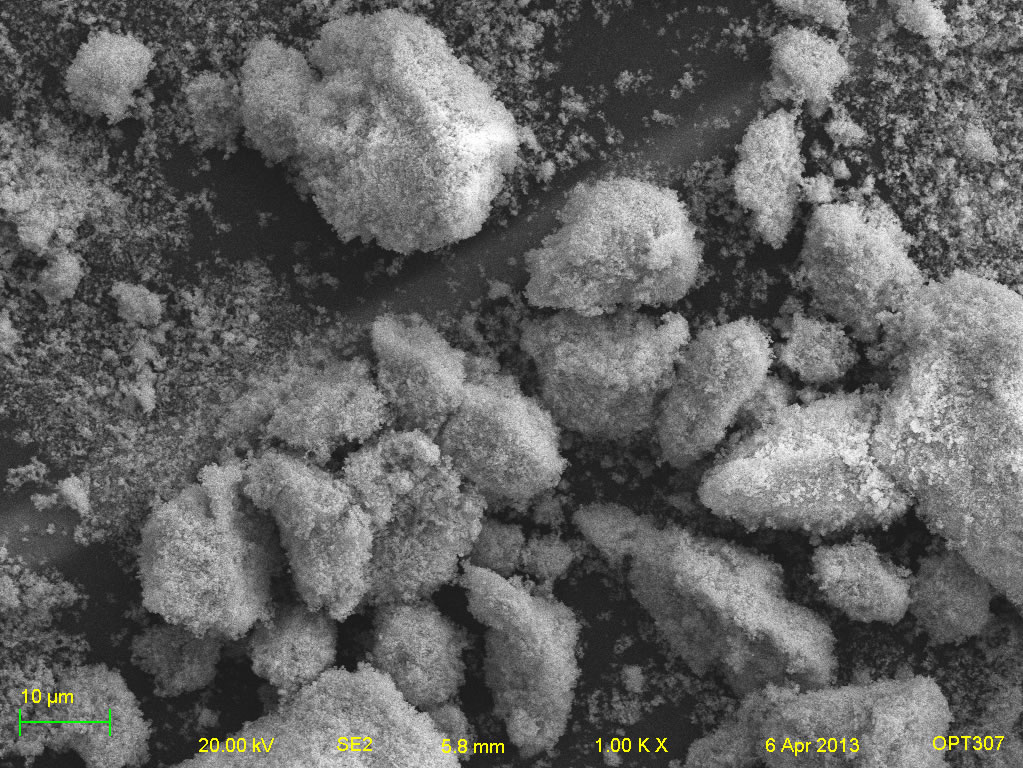
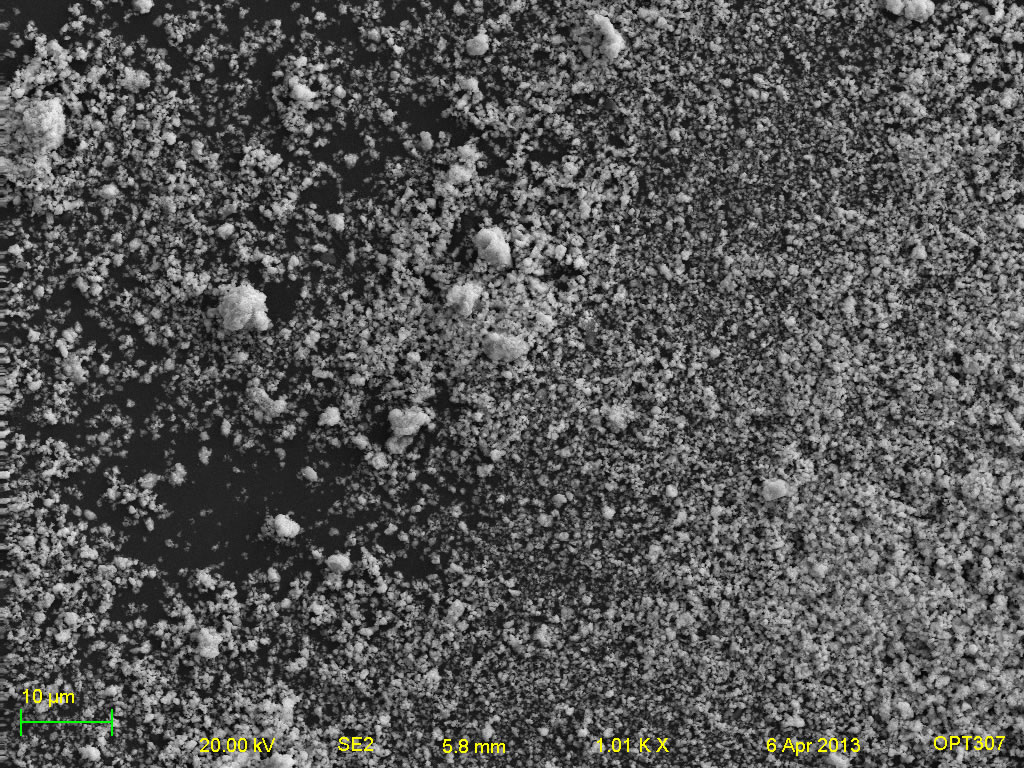
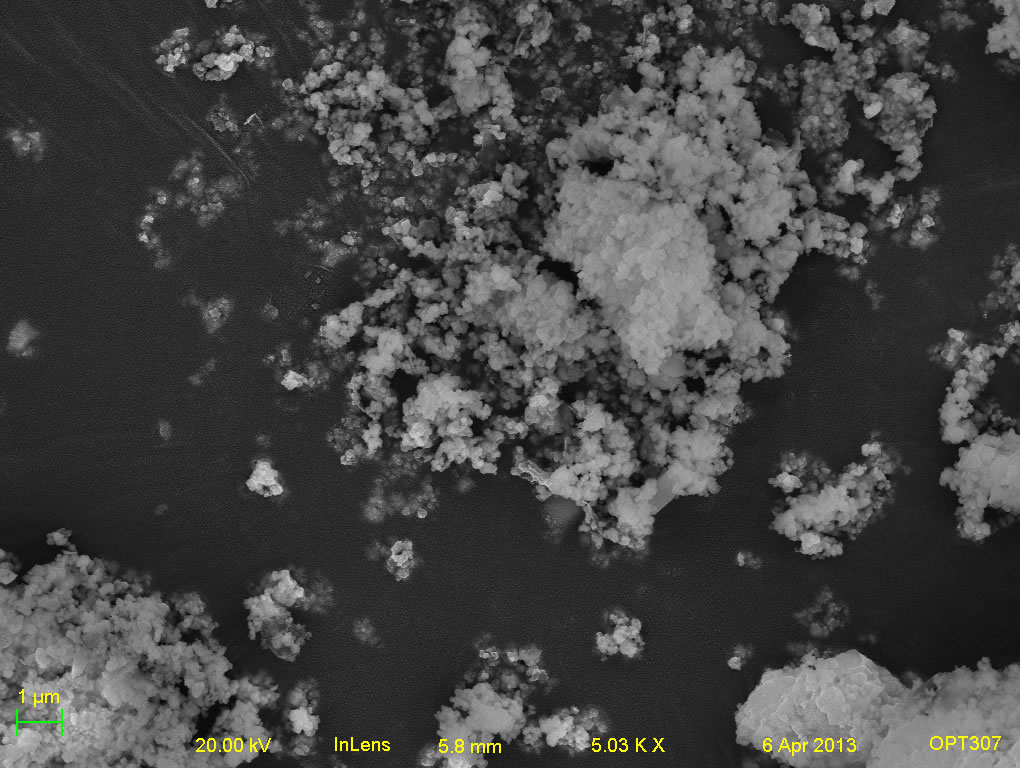
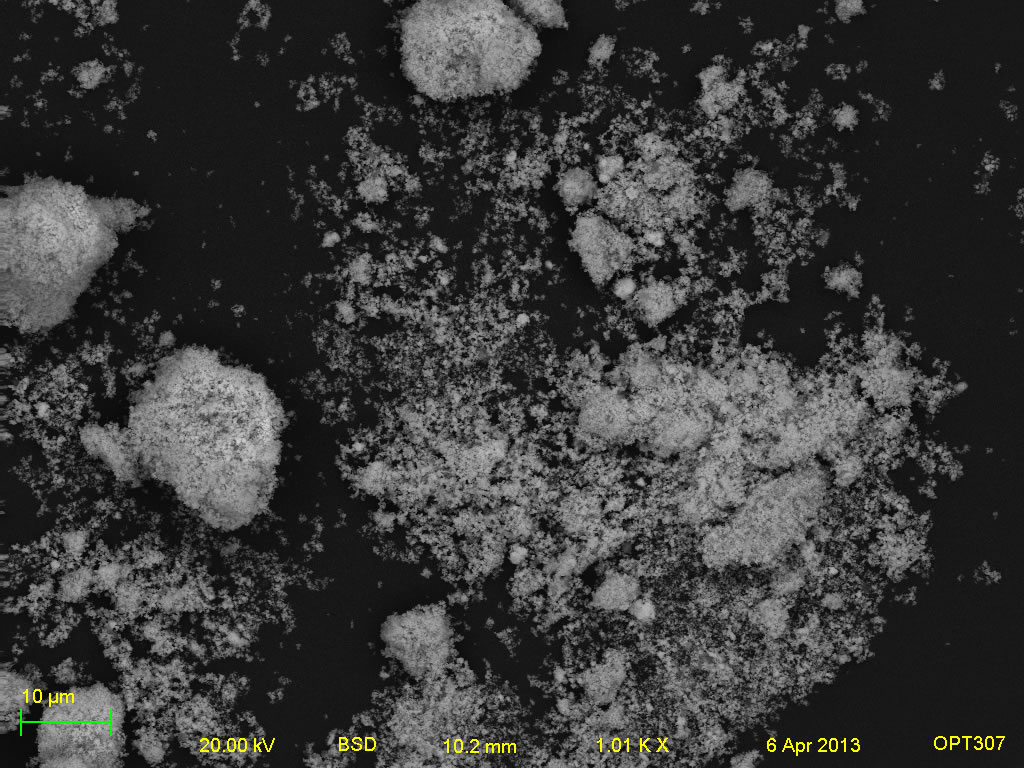
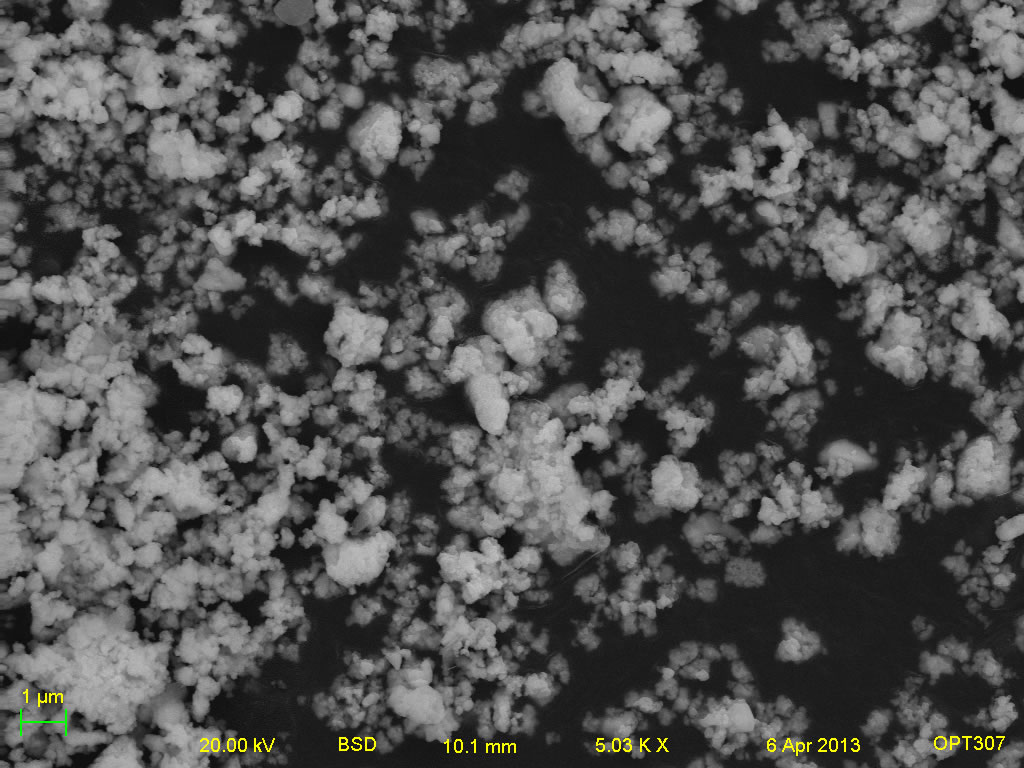
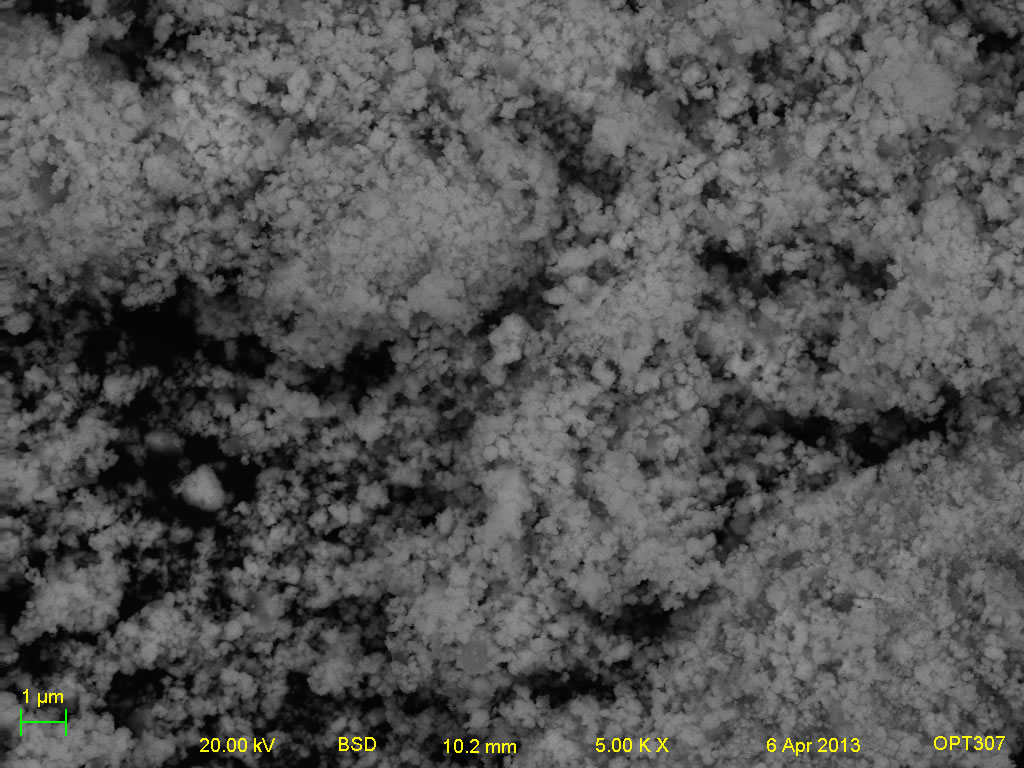
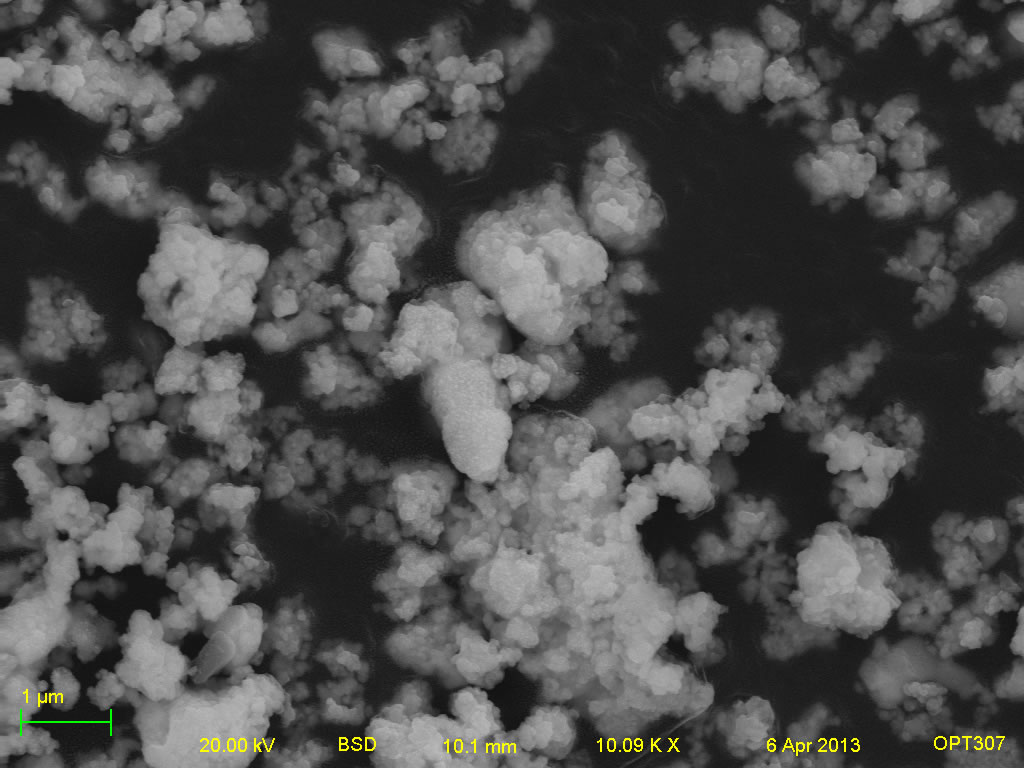
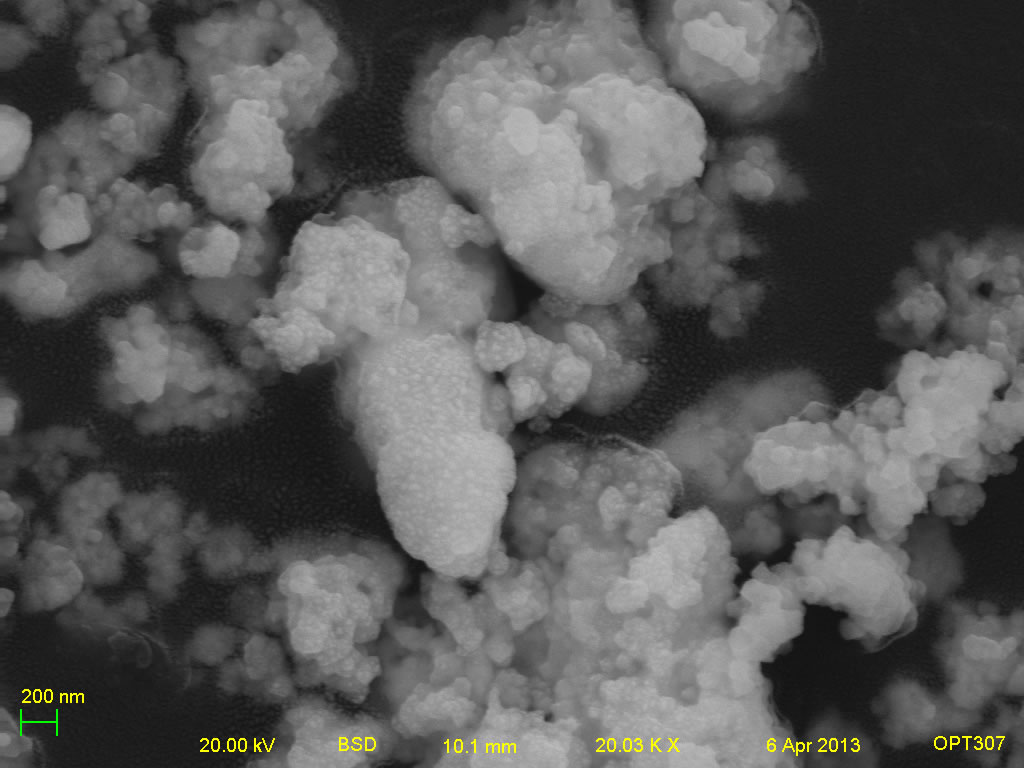
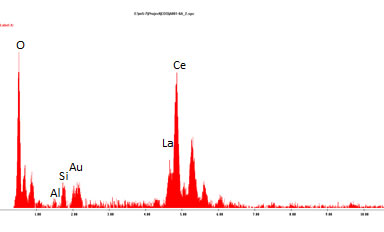
The second separation removes most of the silicon and aluminum, but also some of the rare earth oxides that the polishing slurry is comprised of.
Waste and Reprocessed Polishing Abrasive
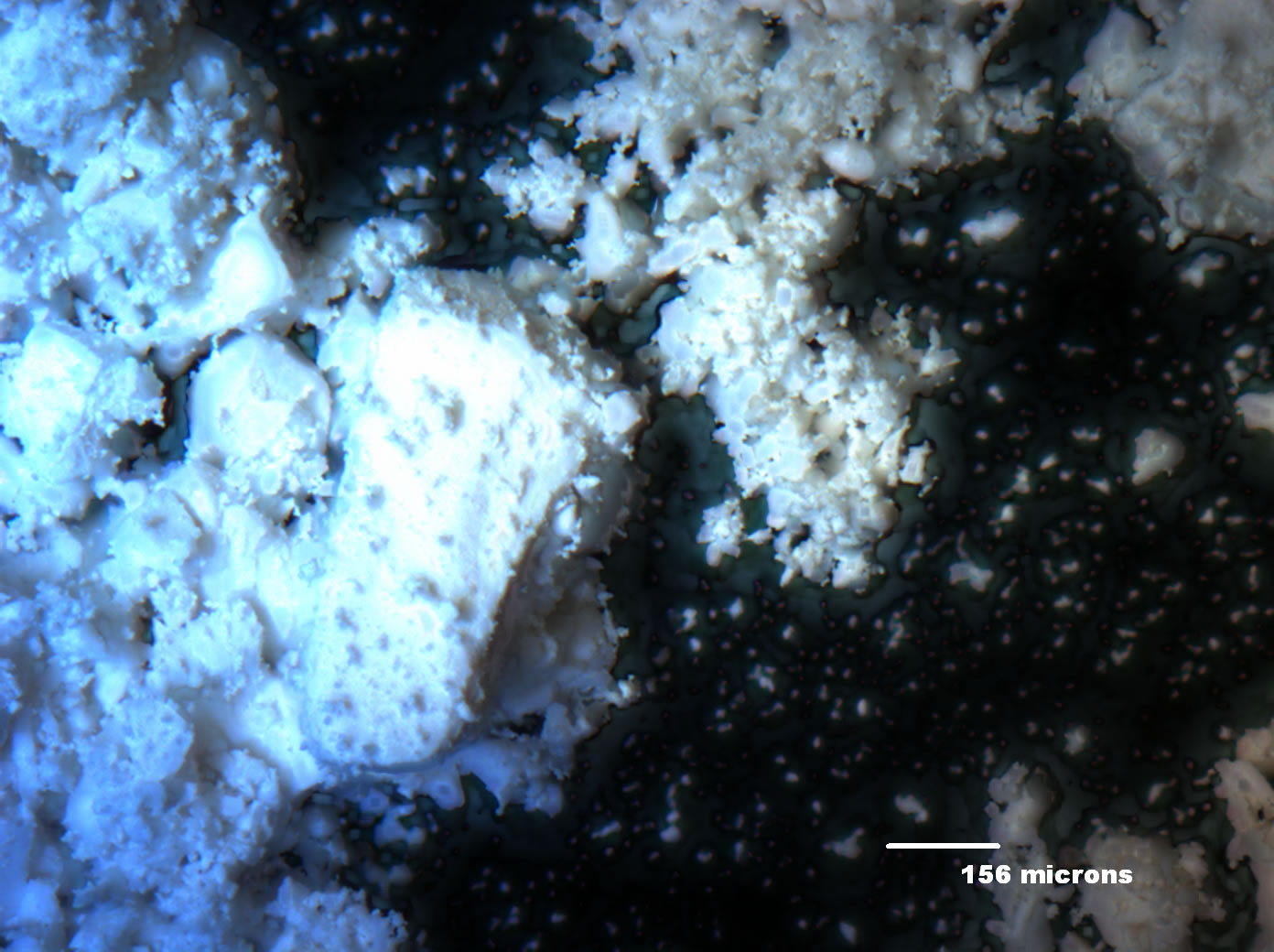
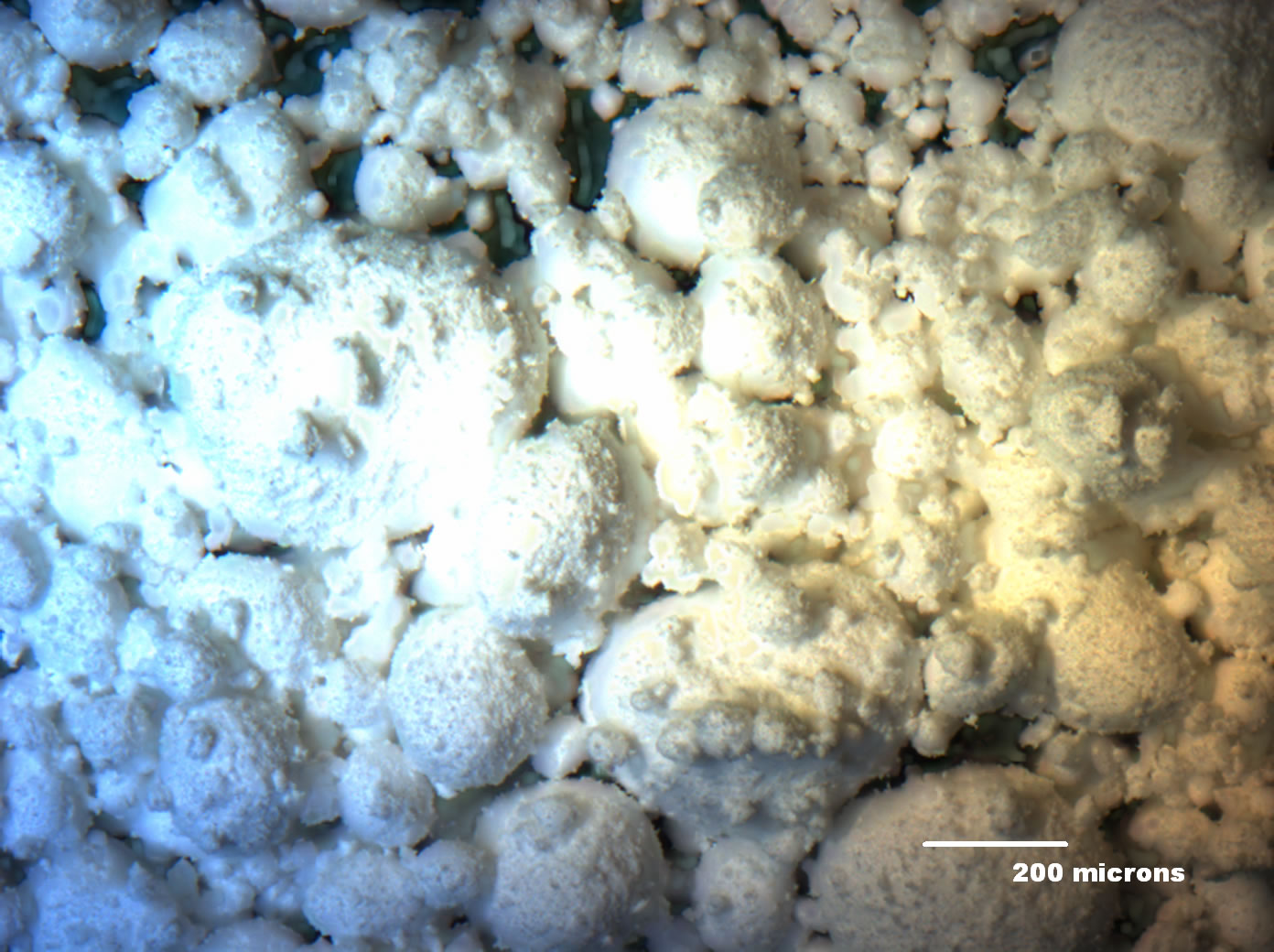
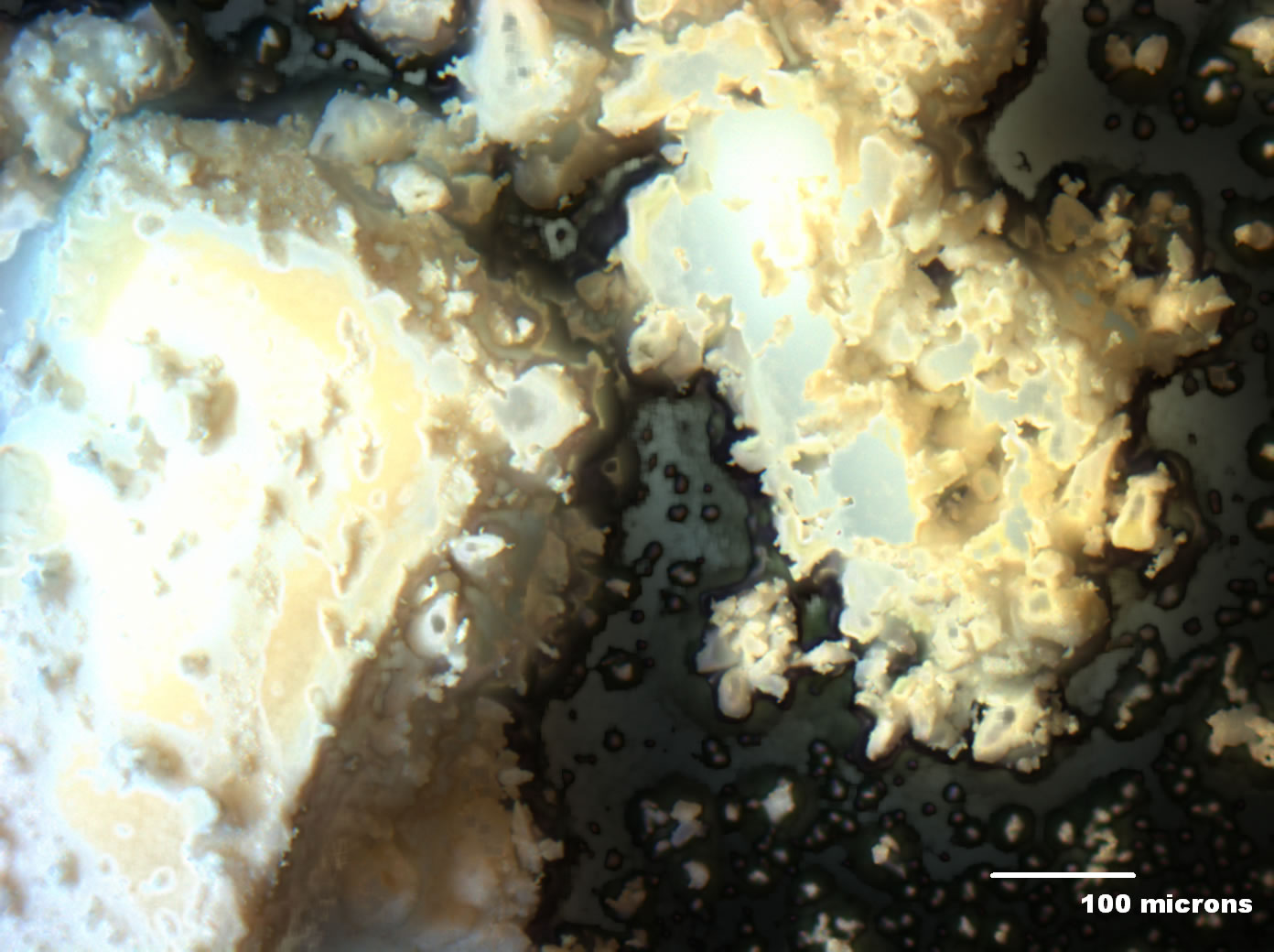
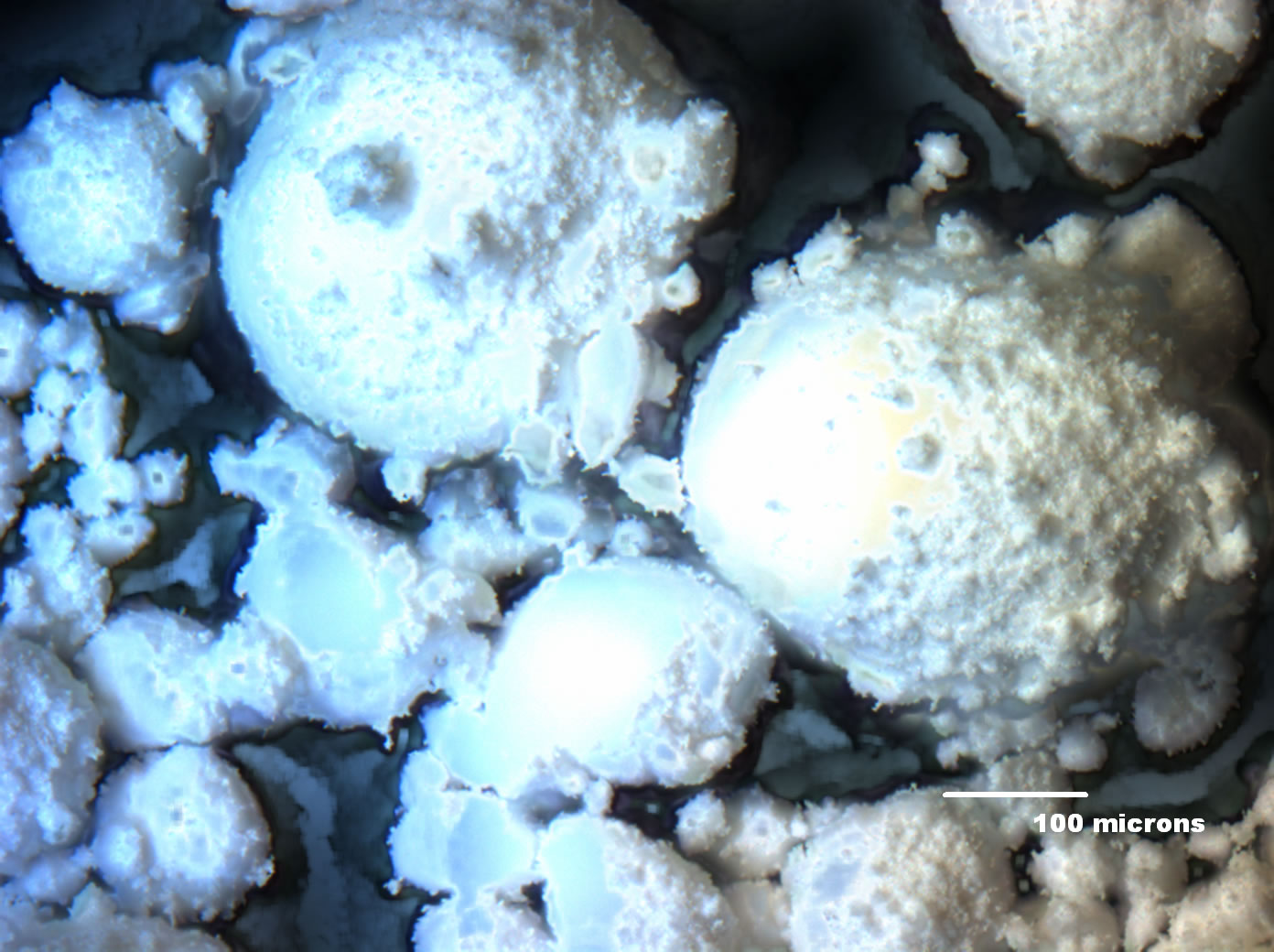
| A001-1: Waste | ECHO-SR6: Reprocessed abrasive |
 |
 |
 |
 |
| A001-1 | ECHO-SR6 |
 |
 |
 |
 |
 |
 |
 |
 |
| A001-1 | ECHO-SR6 |
 |
 |
 |
 |
 |
 |
| A001-1 | ECHO-SR6 |
 |
 |
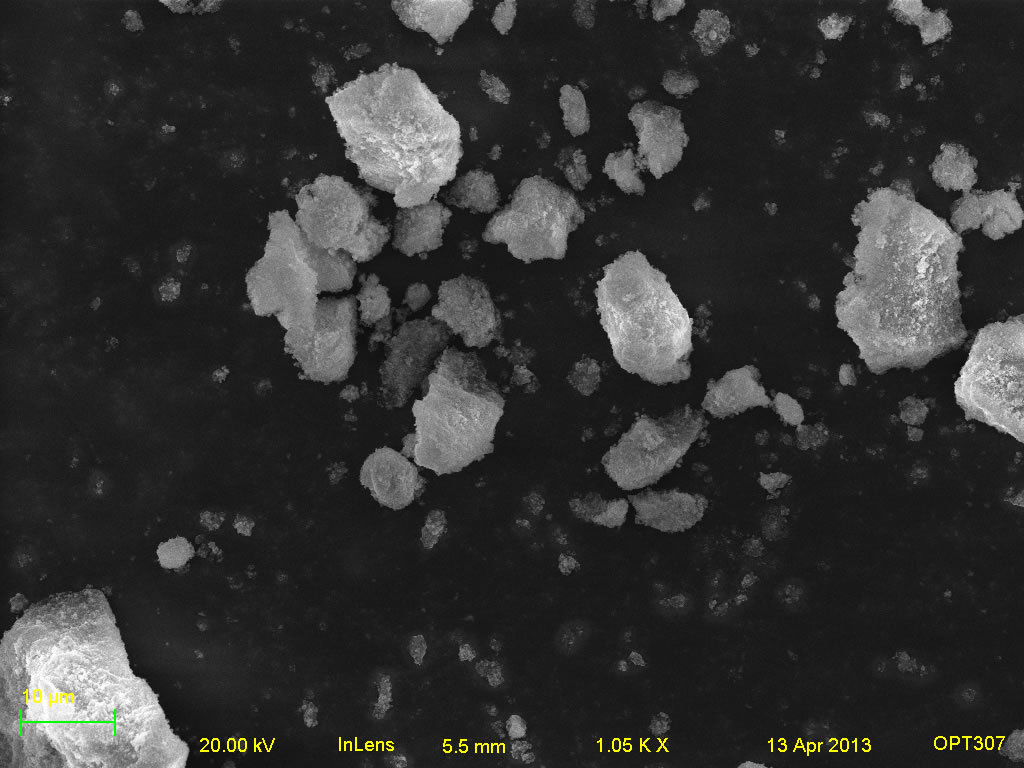
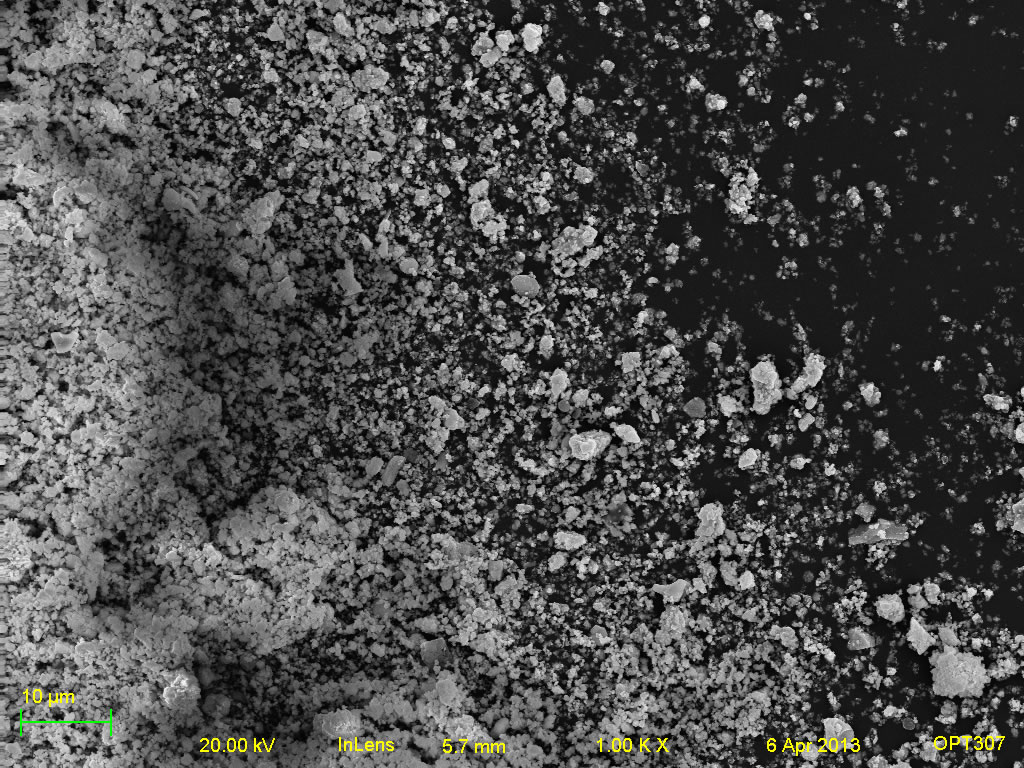
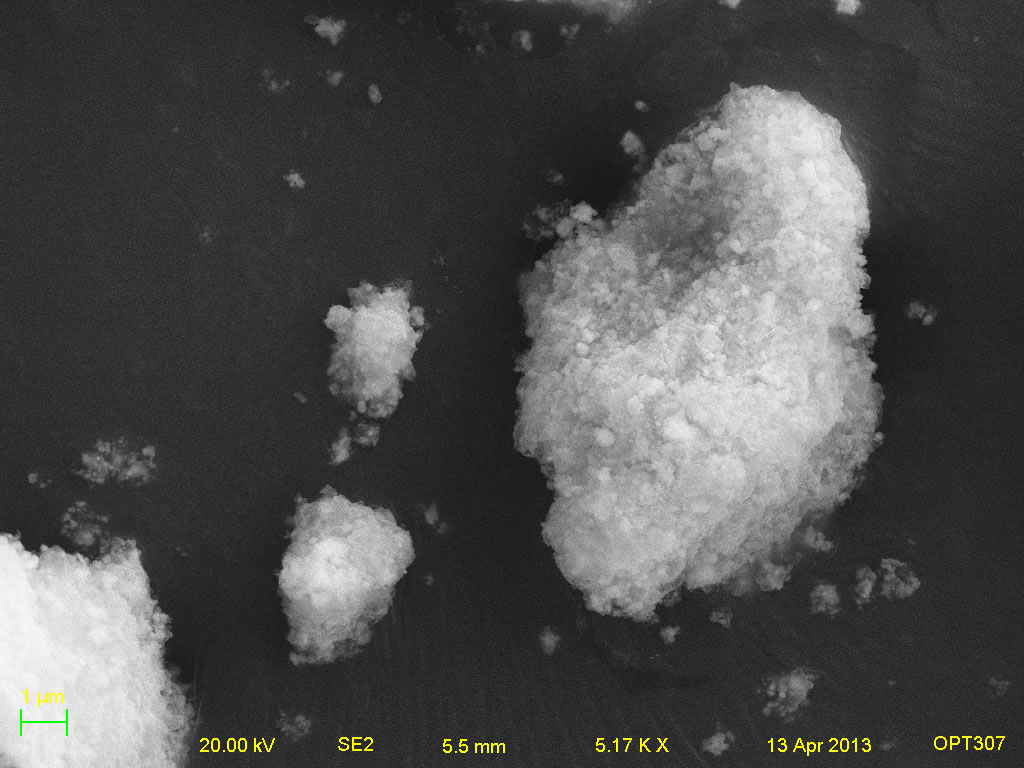
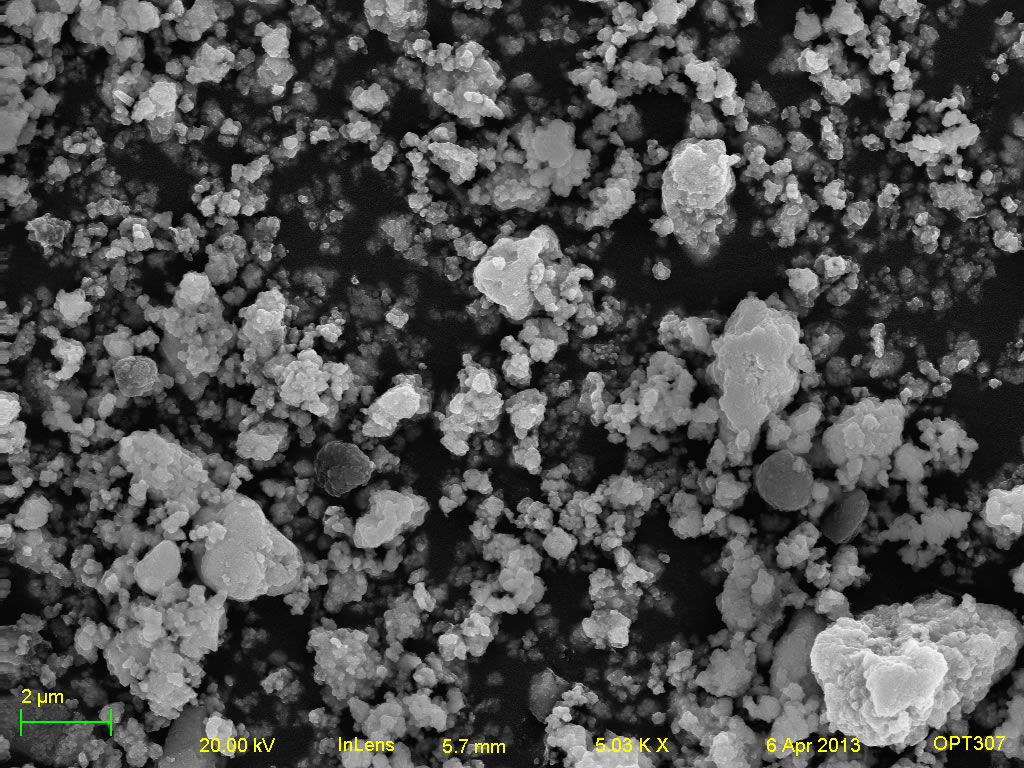
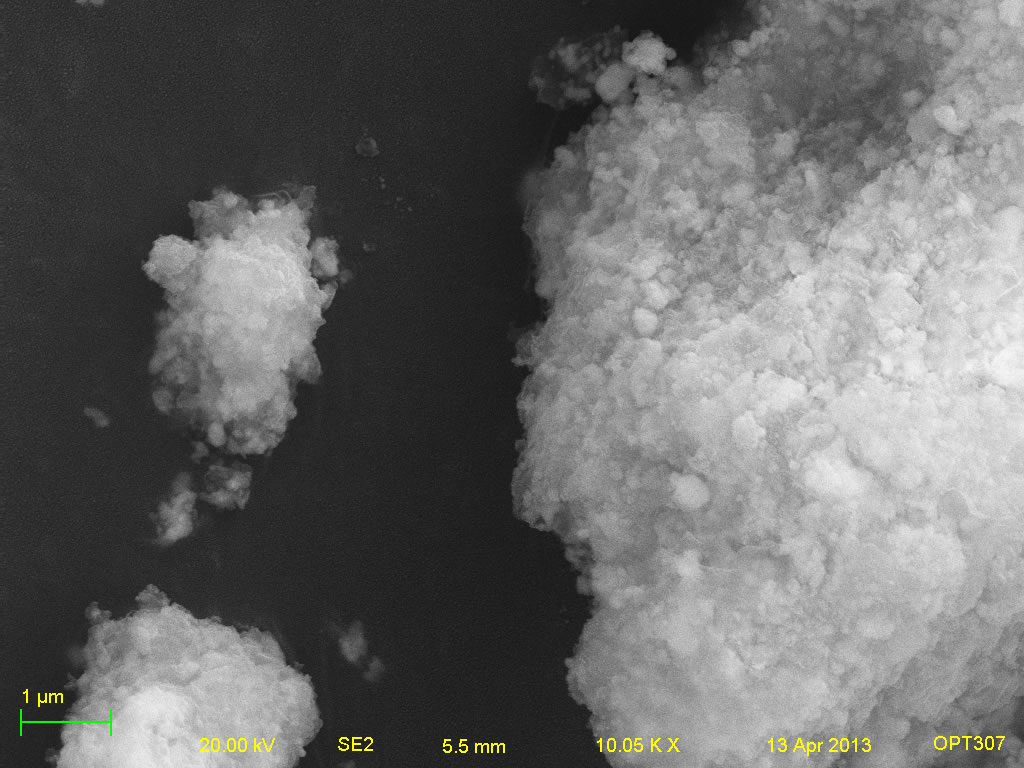
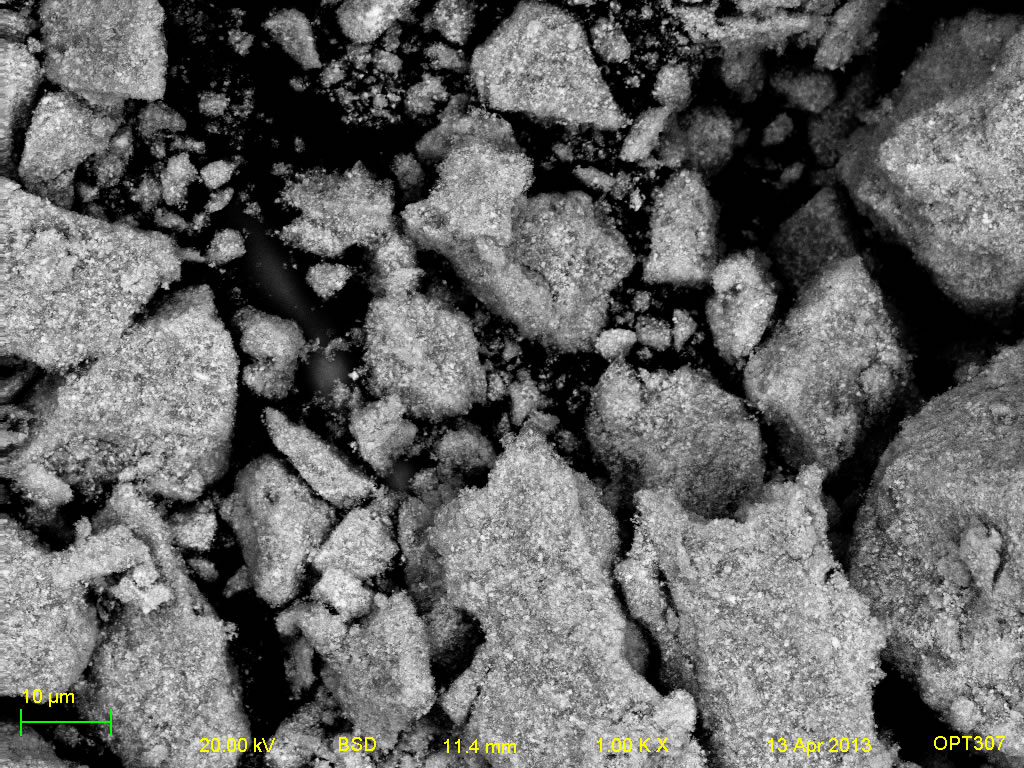
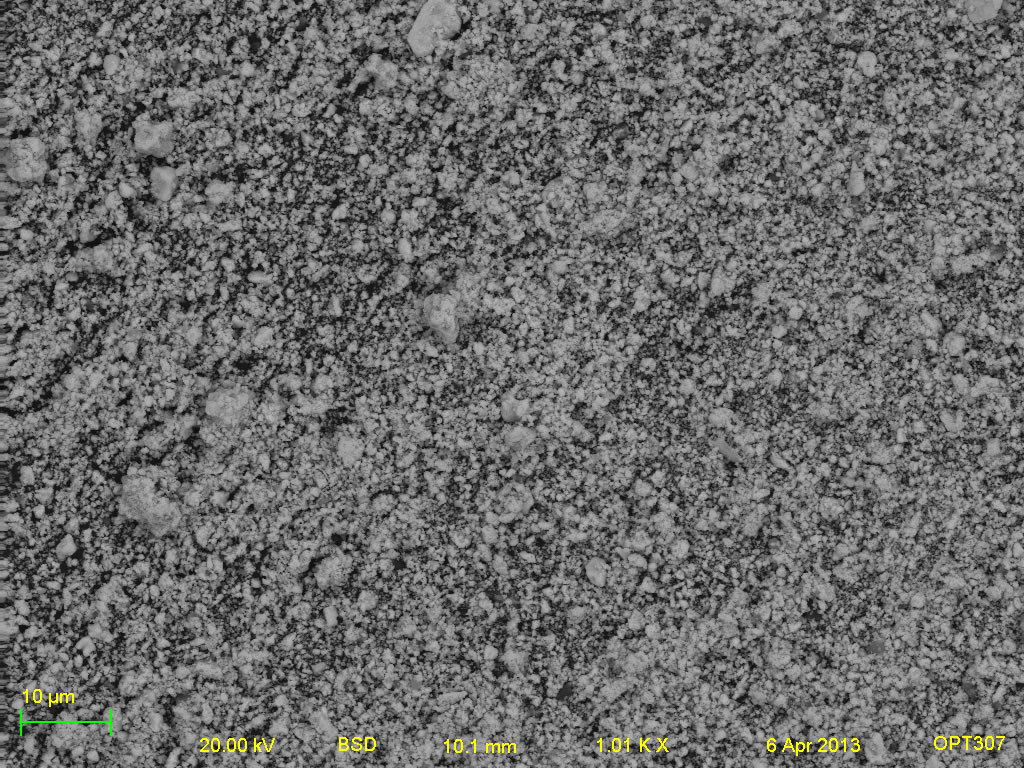
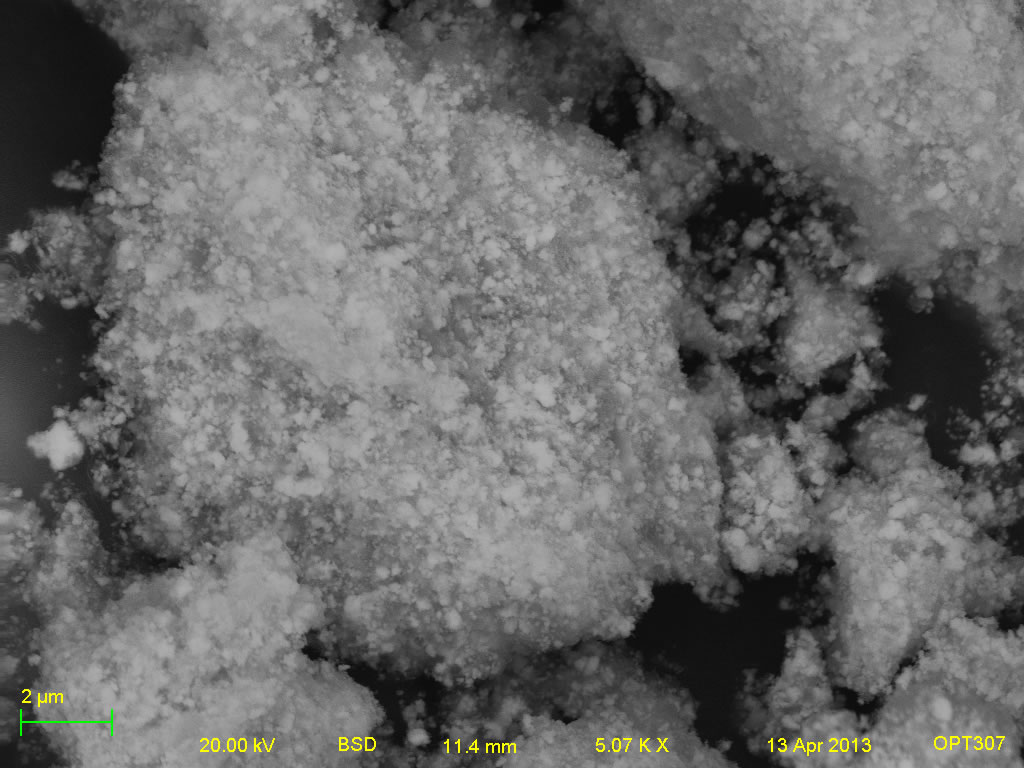
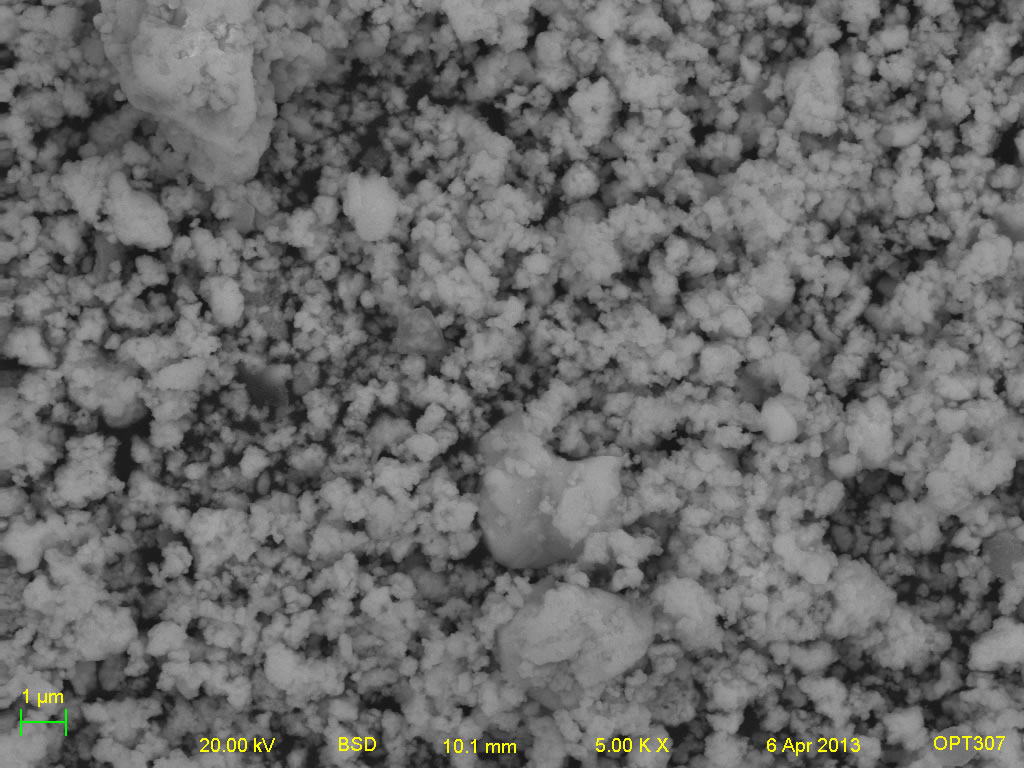
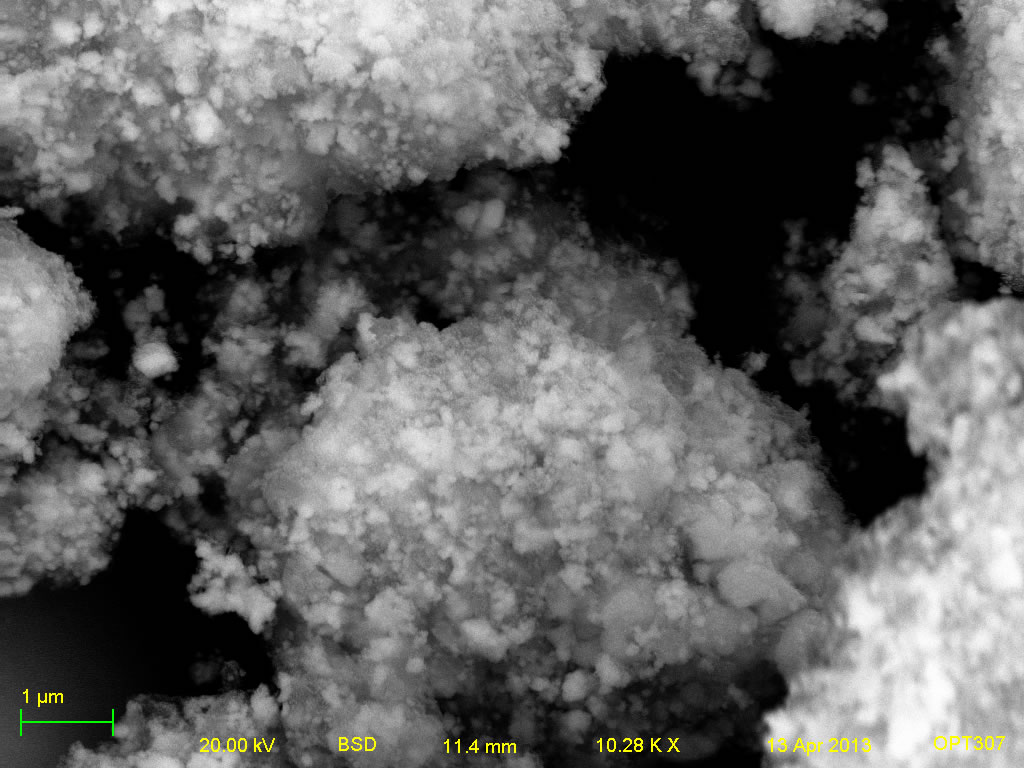
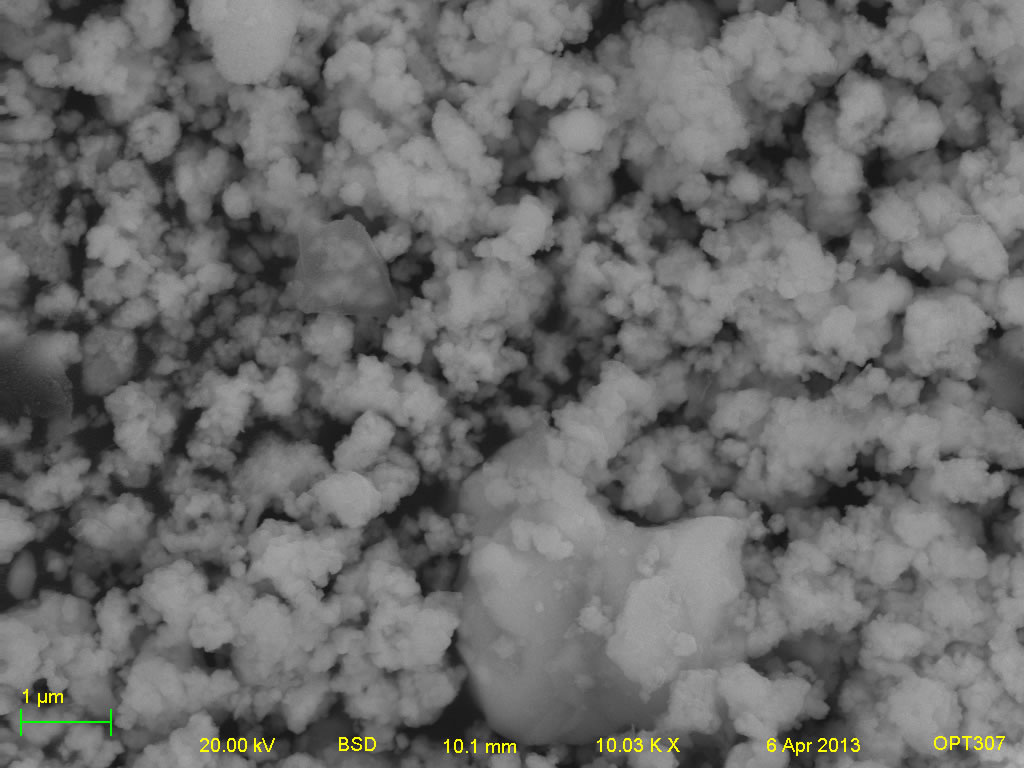
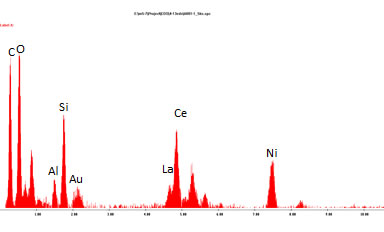
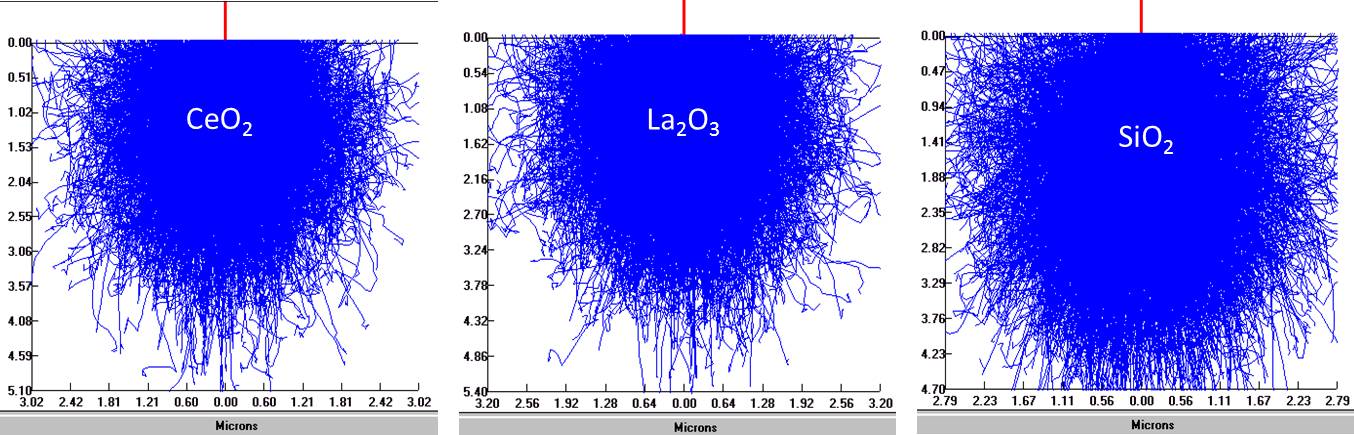
The waste material is primarily silicon dioxide with some aluminum contamination. The presence of nickel in this sample seems abnormally high since it does not appear in solids removed in the first of second separation; a nickel-rich area may have been selected accidentally when performing EDS analysis. Again, the strong carbon peak in the waste might indicate the presence of polyurethane in the waste, but is likely also (perhaps moreso) due to the carbon tape used to mount the sample. Looking at particle size, and the electron flight simulations given below, it is apparent that the electron beam sees the carbon tape beneath small silica particles. A lower accelerating voltage could have been used.
Conclusions
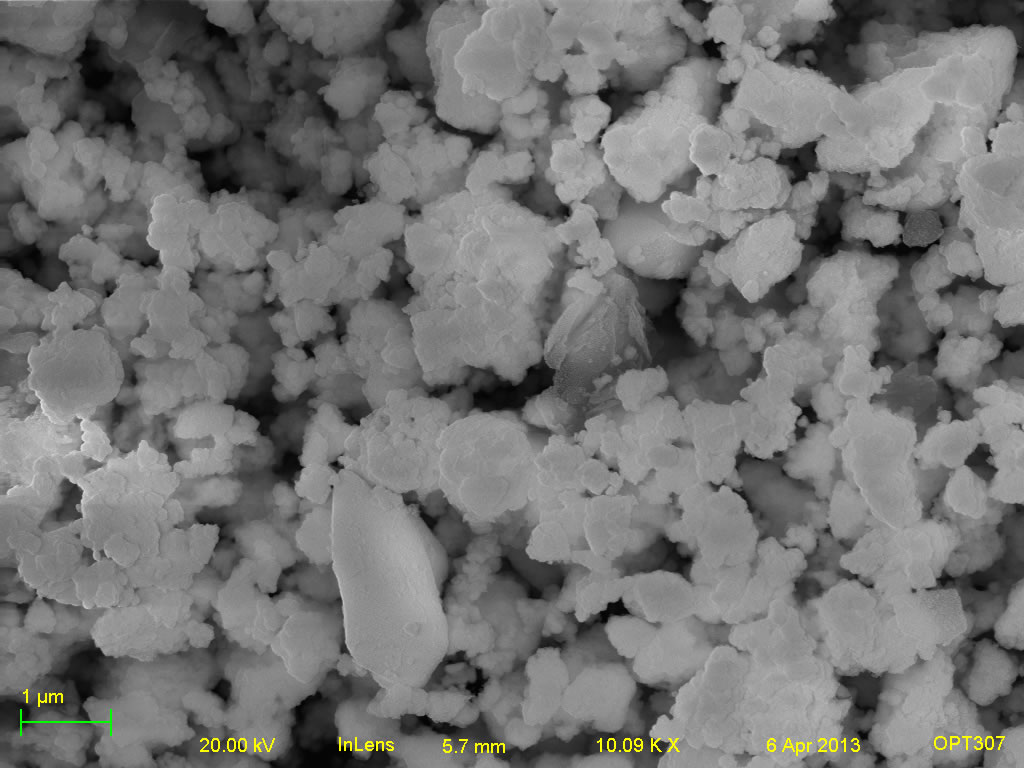
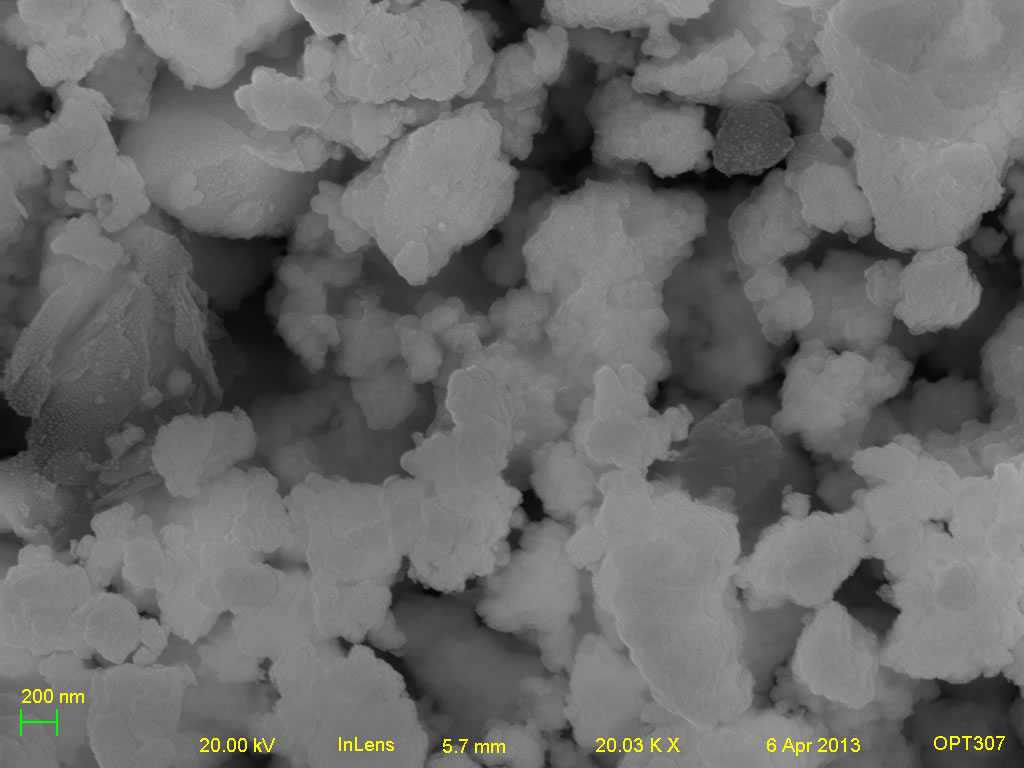
SEM/EDS analysis revealed that the composition of the reprocessed polishing abrasive (ECHO-SR6) in nominally the same as the fresh polishing abrasive (Unicer 166), indicating that rare earth oxide polishing abrasives can be reclaimed from spent slurry.
| Unicer 166 | ECHO-SR6 |
|
|
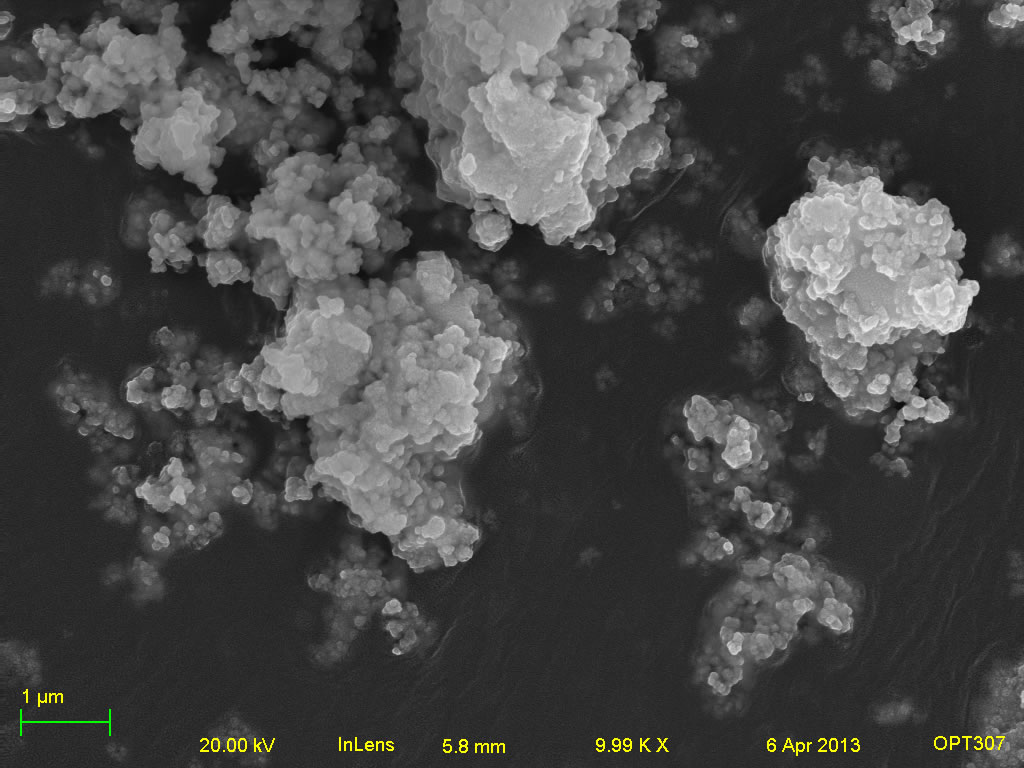
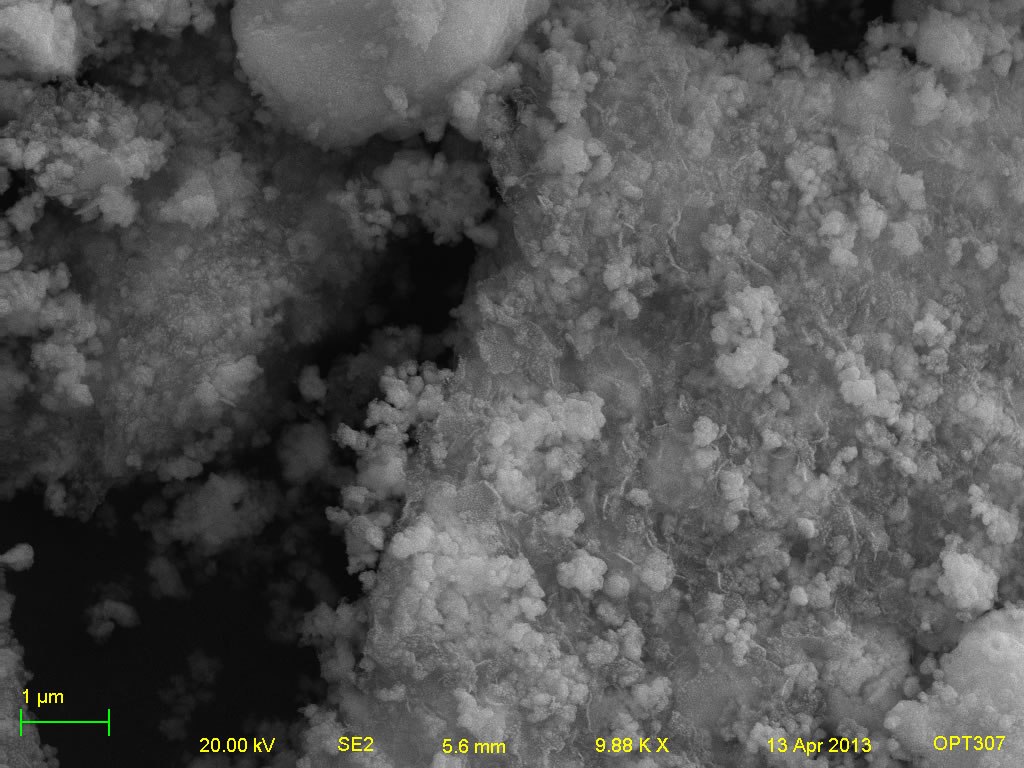
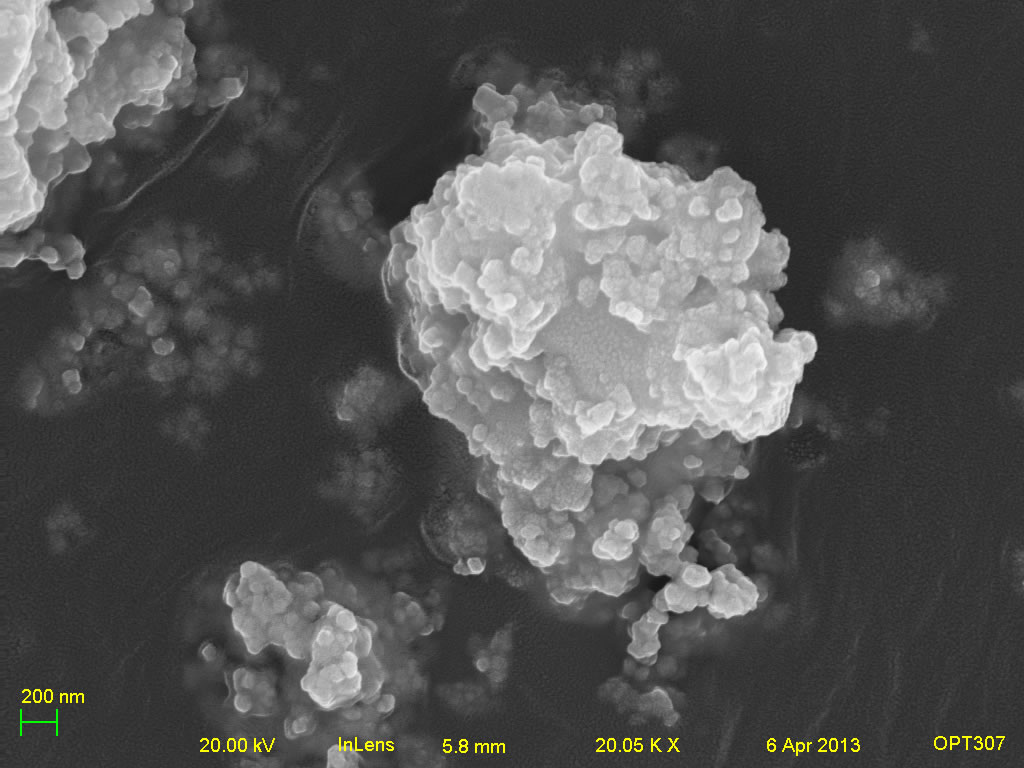
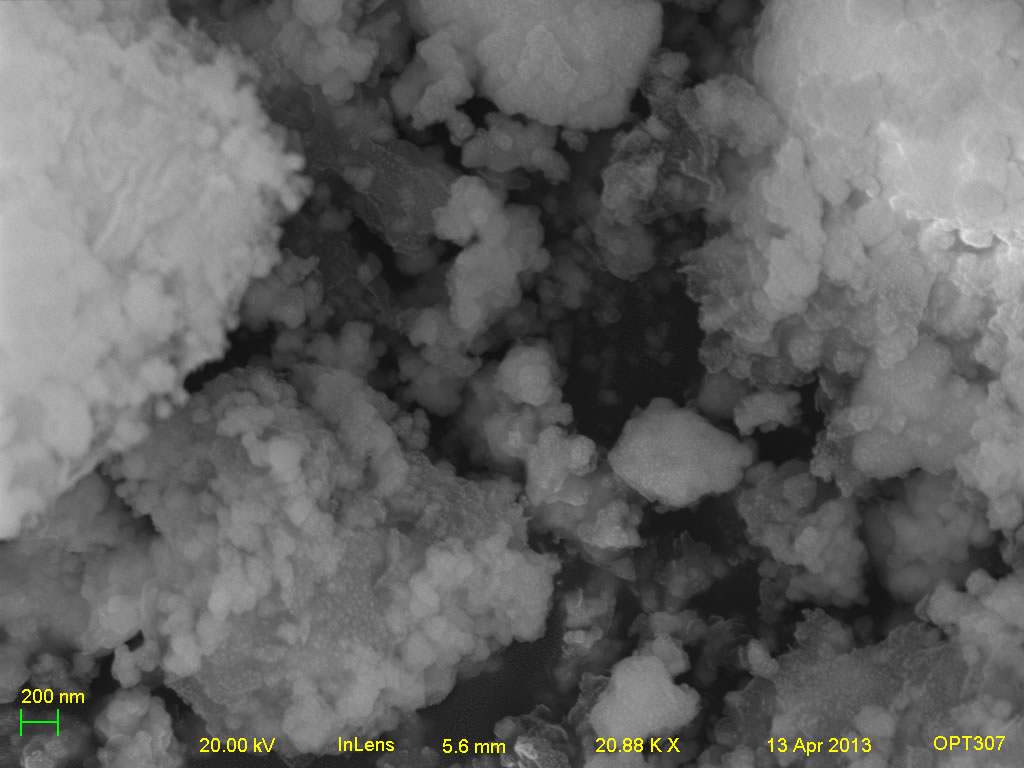
The average particle size qualitatively decreases through use and reclamation; the result is a final product that is finer than the starting material.
It would be useful to prepare and analyze a second set of samples to confirm that there is no sampling bias based on sample preparation methods. Sample vials were agitated before preparation, but samples did not appear to be homogeneous across the sample stub; the images presented represent the most typical regions of the sample.
Acknowledgements
I would like to thank Mark Mayton from Flint Creek Resources, Inc. for providing the samples, Brian McIntyre and Rohit Puranik of University of Rochester’s Institute of Optics for their guidance regarding the imaging of these samples, and Stephen Jacobs and Tess Jacobs of the Laboratory for Laser Energetics for their support throughout this process.