2. Structure Identification
University of Rochester Medical Center, Department of Dematology
1. Introduction
Poor agricultural practices are degrading our soils. (Alam). There are three major classes of soil degradation, physical, chemical, and biological. Arising primarily from repeated tillage or heavy machinery (physical), poor water quality and management, use of pesticides or improper fertilizer use (Chemical), or finally, depletion of biodiversity and organic matter (biological) (Alam). One proposed way to combat soil degradation is arbuscular mycorrhizae (AM), also known as Bio-fertilizers. Bio-fertilizers provide stress tolerance, against heat, salinity, drought, up regulate and provide inorganic nutrients and water, ultimately improving the overall health of the plant. Additionally, some studies suggest AM can increase atmospheric CO2 fixation. Improving the carbon fixation limit of above-ground vegetation in plants (Ngamprasit). All of which can play a role in reversing the stress brought on by poor agricultural practices. In an effort to corroborate Begum and others findings, the current project aims at observing the morphological and phenotypic differences in SEM micrographs between MA treated and control Phaseolus vulgaris seedling. As well as conducting x-ray microanalysis of roots to confirm an increase in the nutrients in AM-treat seedling tissues.
2. Structure Identification
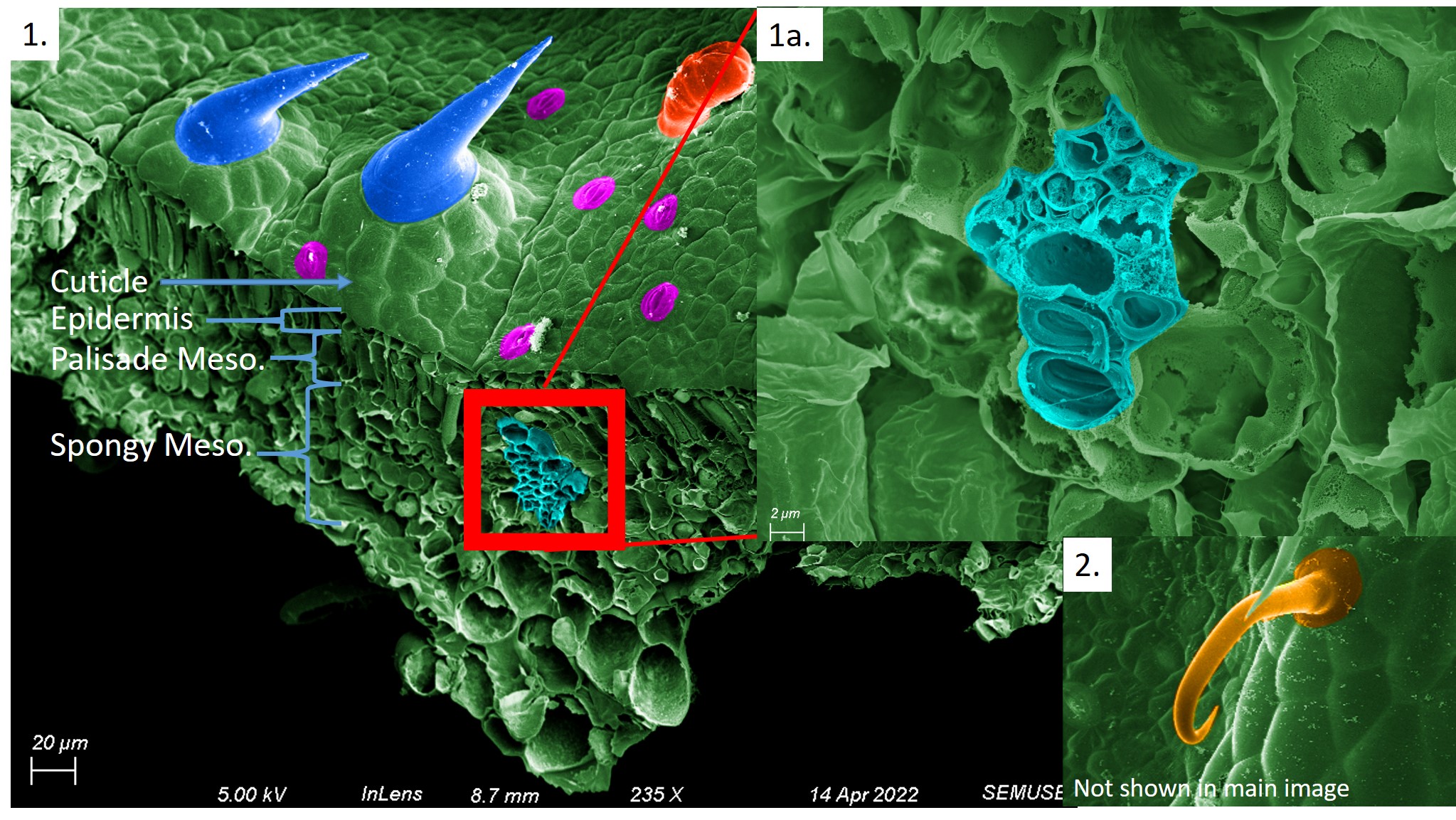
Figure 1 shows a falsely colored image of a cross-section of the control leaf. Three trichrome structures were observed in Phaseolus vulgaris plants. Here I have labeled them as "Boxing glove", "Velcro", and "straight spike" type trichomes. Trichomes have a diversity of functions from protection to the elimination of toxic substances. Also of importance are stomata highlighted in purple. Stomata are well known for their ability to regulate water. Finally, highlighted in teal are the xylem and phloem vascular tissue cross-section. One unexpected finding was the presence of a coiled structure within the xylem channel.
3. Biomass Comparison
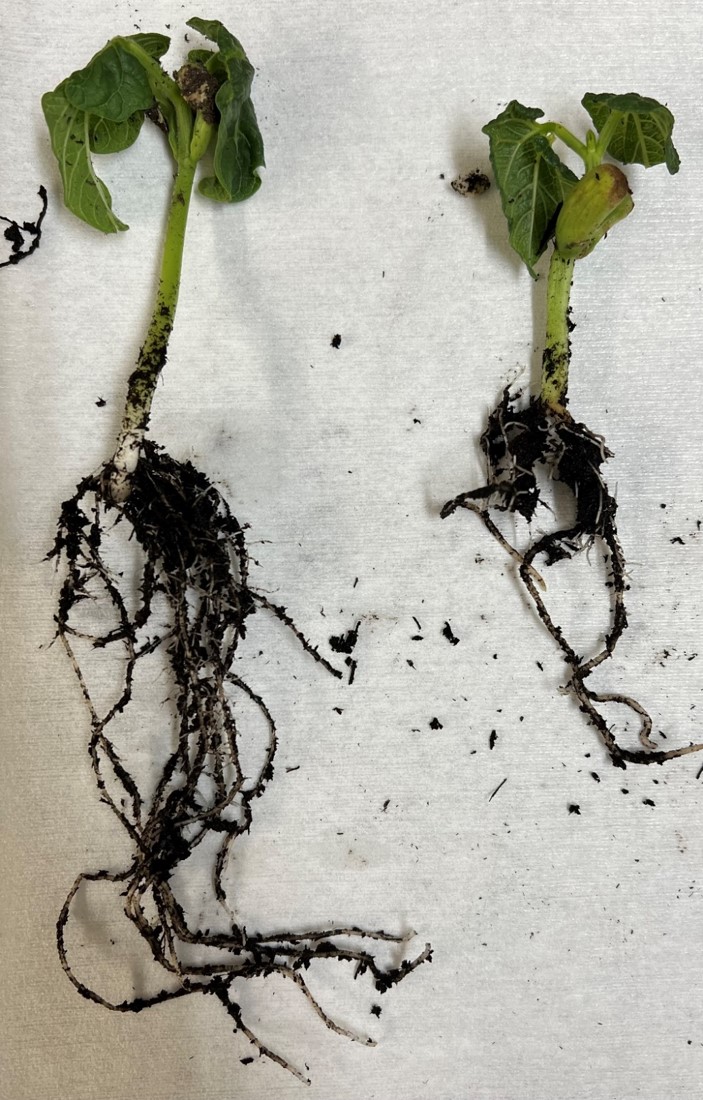
The first part of my experiment was to observe size difference in the AM-treat vs control plants. From Figure 1 it is clear that the AM-treated bean plants have significantly more biomass. This is true in both the roots system and the above-ground portion of the plants. An increase in height, number of leaves, and ultimately biomass was also observed in Ngamprasit's report.
4. Control vs AM-Treated Leaf Surfaces
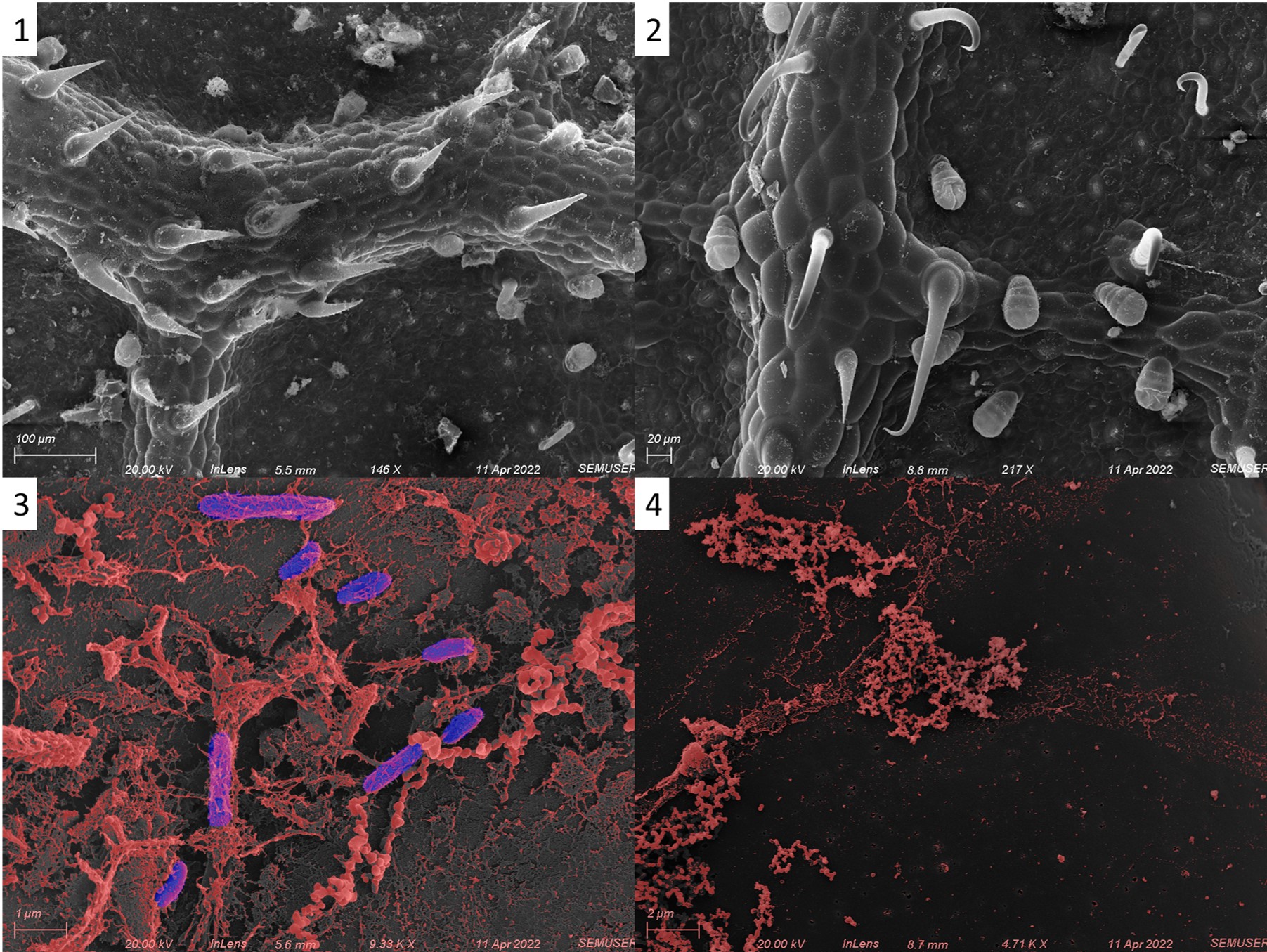
The next step in the experiments was to investigate the morphological difference between the two samples. To this end, figure 3 shows a drastic difference in the bacterial life on the control plant versus the treated. These bacteria are highlighted in panel 3 in red. This was an unexpected finding. This might suggest AM plays a role in defending the plant from bacteria stress. This might also explain why the AM-treated plants are able to grow larger compared to the control. It seems logical that if the plant doesn't have to constantly defend itself from bacteria it can grow quicker than its counterpart. Additionally, in panel 3 it appears that the surface of the leaf may be compromised by the bacteria growth.
5. Control vs AM-Treated X-ray Microanalysis
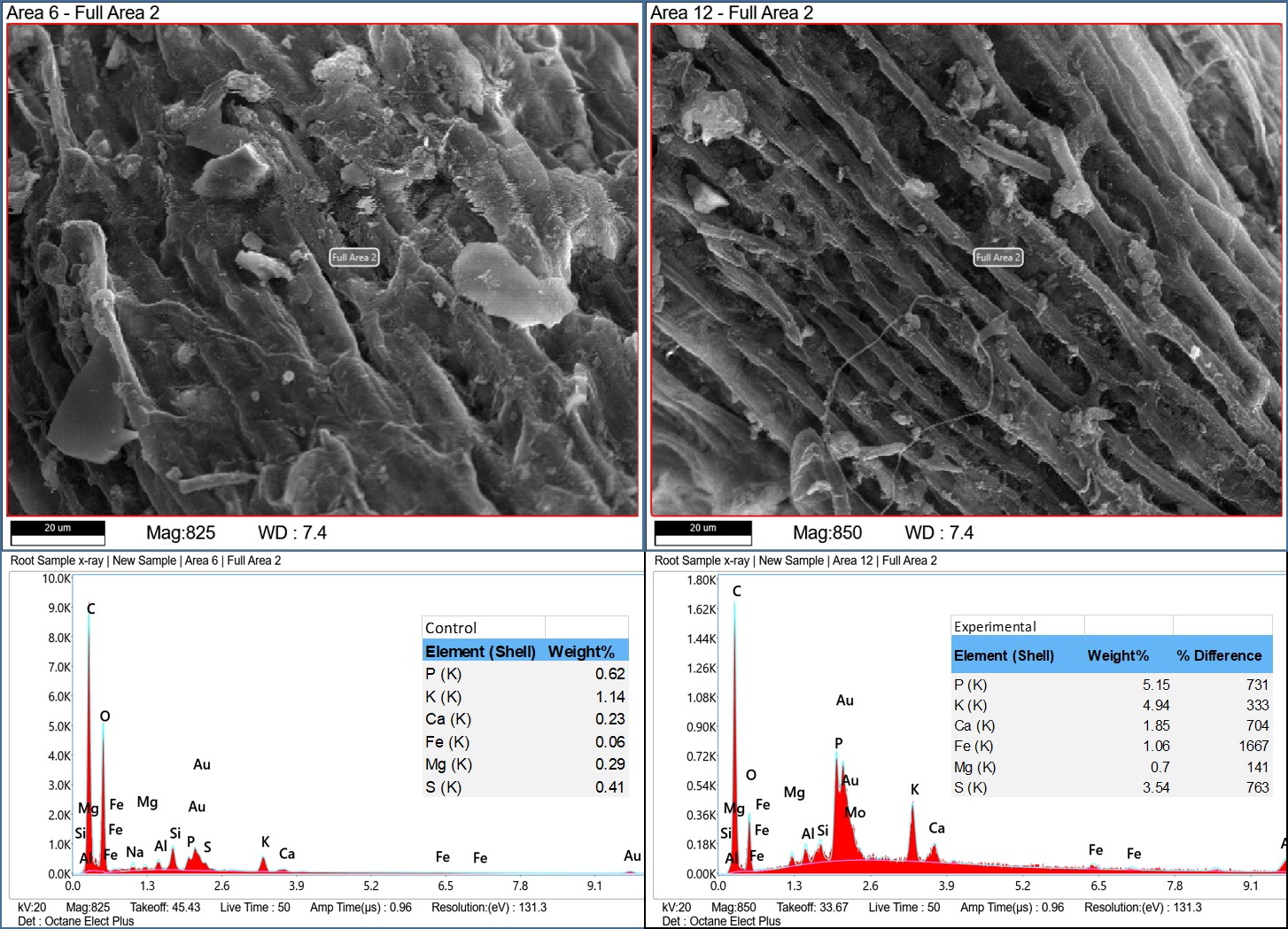
As mentioned previously an effect of AM treatment in plants is the uptake of inorganic nutrients into the plant tissues. This X-ray microanalysis experiment was conducted to investigate this claim. Firstly though, I noticed a significant morphological difference between the two samples. Where AM-treated roots (right panel) had significantly more ridges and surface area. It is possible this is a mode for increased water and nutrient uptake in AM-treated plants. Secondly, important inorganic nutrients P, K, Ca, Fe, Mg, and S were selected in both root samples and compared. For all nutrients in the AM-treated sample, the inorganic percent weight was significantly greater than the control. With the highest percentage difference being 1667%. As a note, the angles of the roots were different due to the placement of samples on the stubs. Therefore the control has a higher takeoff angle resulting in greater x-rays reaching the detector and counts per second. However, this should not affect the ratios of nutrients in the actual root samples. Ngamprasit reports greater nutrients in AM-treat vs control, however, some of my values are an order of magnitude larger than Ngamprasit's. A few potential causes of this discrepancy could be, differences in the plants used, and the length of time the plants were grown was much longer at 120 days. Therefore with more mass, there would be a greater dilution factor of total nutrients. To that point, my analysis is only a very small subset of the whole specimen. Importantly though there appears to be a real increase in the AM-treated tissue.
6. X-ray Map of AM-Treated Leaf
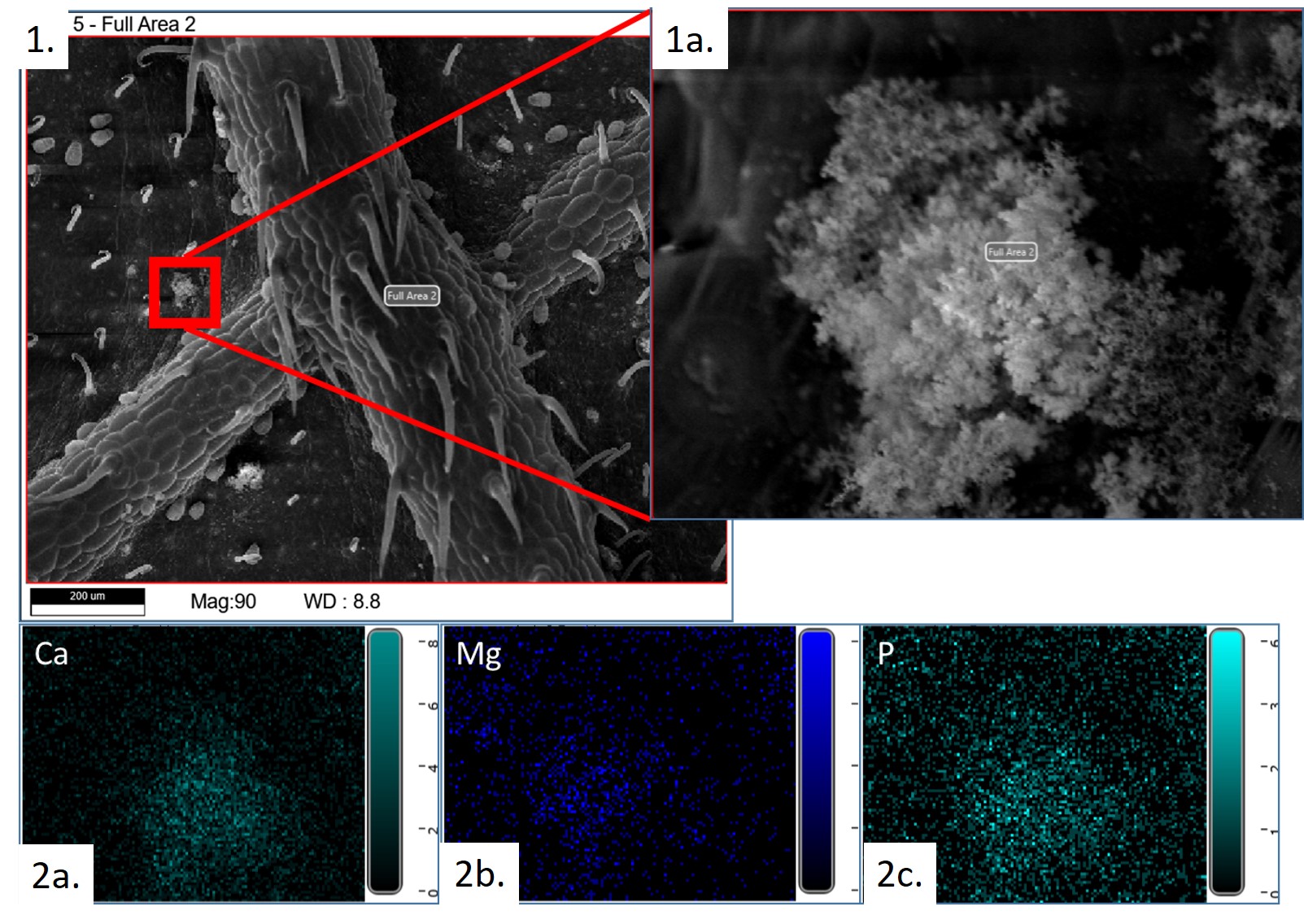
Figure 5 shows the x-ray mapping of a small fungal cluster on the surface of a leaf. Initially, when mapping the nutrient distribution on an AM-treated leaf I notice localized Ca deposits where I have placed inset in figure 5. After this, I increased the magnification and mapped the nutrient distribution. Again I found localized signals for Ca, Mg, and P. It's worth noting that these are three nutrients that Ngamprasit also notice an increase with AM treated samples. The fact that there are higher amounts of these nutrients in the fungal clusters could be an important piece in understanding how the AM fungus forms a symbiotic relationship with the host plant.
7. Root Density in AM-treated vs Control
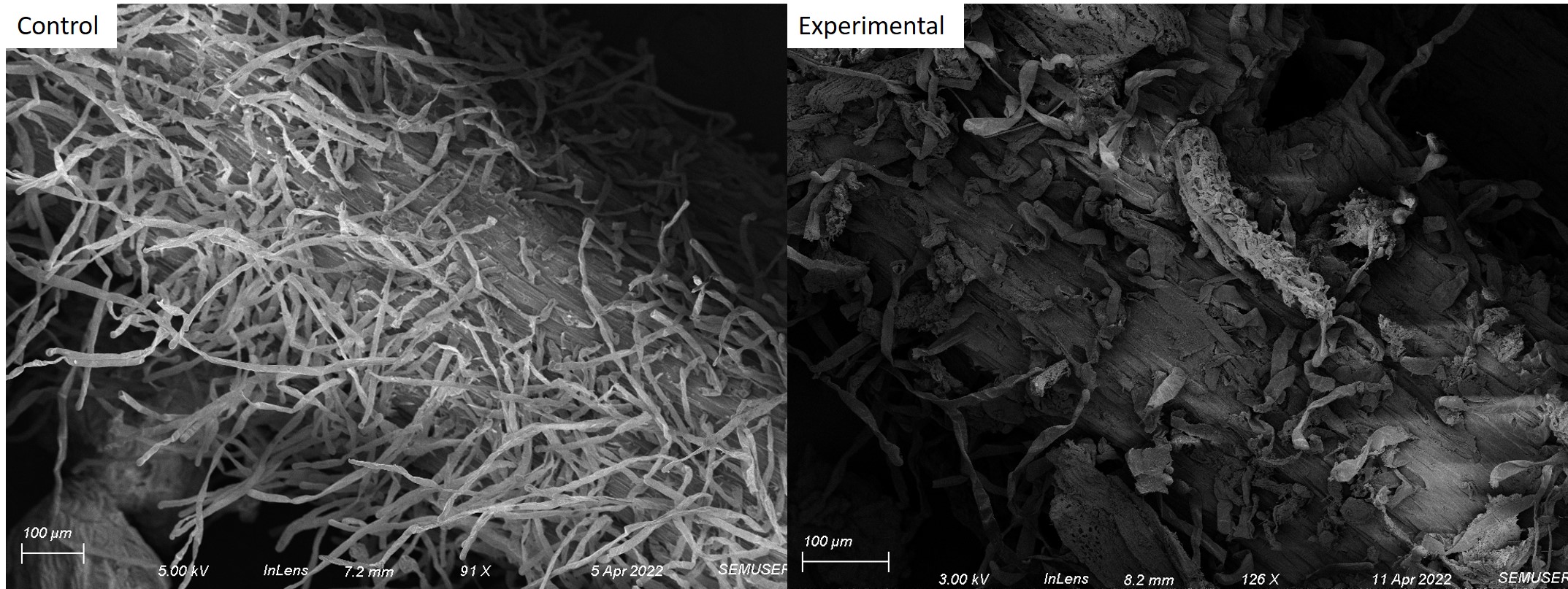
Another important morphological difference I noticed while imaging was the density of root hairs between control and AM-treated as seen above. A known phenomenon of plants is to produce root hairs in dry conditions. Root hairs are an attempt to find water in the surrounding soil. Therefore they can be a sign that the plant is water-stressed. Since the water of both of these plants was controlled this supports the hypothesis that the AM-treated plants have better water uptake and retention than the control as suggested by Begum.Furthermore, this could be another cause of stunted growth relative to the AM-treated plant.
8. Honorable Mentions
9. Conclusion/Discussion
The overall size of the AM treated seedlings was much greater than the untreated beans. In both above soil and below. Unexpectedly, there was no bacterial life present on the surface of the AM treated plant leaf tissue. The bacterial life on the control plant seem to damage and degrade the tissue of the host plant. There is significantly higher amount of essential nutrients P, K, Ca, Fe, Mg, S, in the AM treated plant. The percent difference are also in line with what is reported in Begum et. al. There is an apparent increase in the overall surface area of the root in AM treated plant. And a decrease in the total amount of root hair on the main root (not shown). Likely due to the lack of access the water (for control)The presence of AM aggregates on the surface of the AM treated plant show localized Ca, Mg, and P deposits suggesting a possible mechanism for the increase the these nutrients in plant tissuesThe results shown suggest AM treated Phaseolus vulgaris have the potential to improve plant health by the reduction of stress from bacteria, increased nutrient and water uptake, increase biomass of seedlings and others. All of which support and confirm the findings of Begum and Ngamprasit et. al. Furthermore, supporting further investigation of AM treatment as a method to compact plant stress and potential for carbon fixation.
10. Acknowledgements
I would like to sincerely thank Brian McIntyre for all of his instruction, help, and for sharing his love and knowledge of electron microscopy during this course. I would also like to thank Luke for his help in lab.
References
Afroz Alam, Soil Degradation: A Challenge to Sustainable Agriculture. International Journal of Scientific Research in Agricultural Sciences, 1(4), pp. 50-55, 2014 Begum et. al. Role of Arbuscular Mycorrhizal Fungi in Plant Growth Regulation: Implications in Abiotic Stress Tolerance. Front. Plant Sci., 19 September 2019 Supranee Ngamprasit, Et. Al. Comparative potentials of native arbuscular mycorrhizal fungi to improve nutrient uptake and biomass of Sorghum bicolor. Agriculture and Natural Resources 50 (2016)