
Introduction
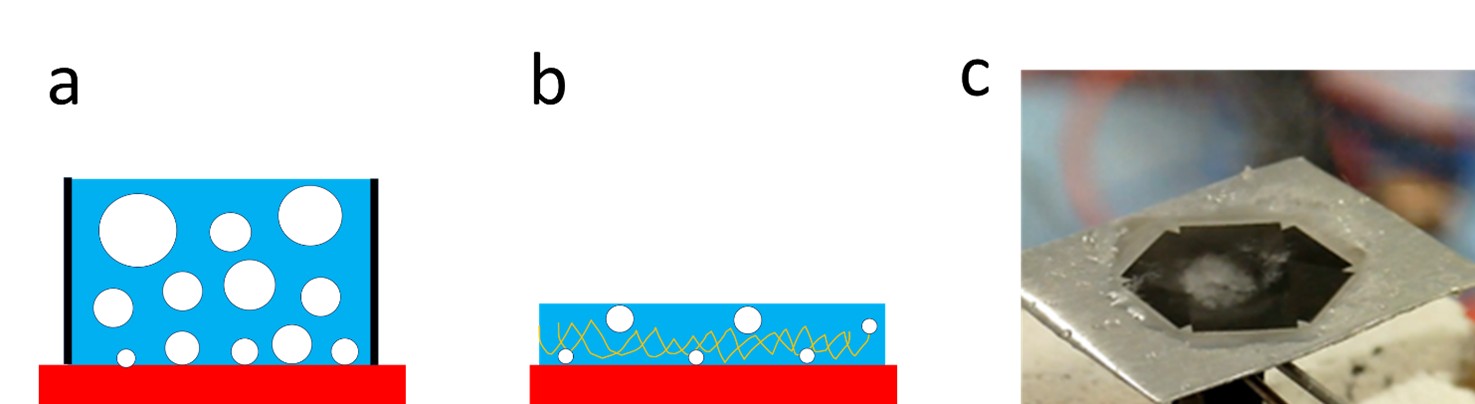
Efficient thermal management is crucial for ensuring the reliability and performance of modern electronic devices, particularly as high-performance CPUs continue to generate substantial amounts of heat (see Fig 1). As power densities increase, even advanced liquid cooling systems are nearing their thermal limits (Fig 2a). To address this challenge, thin film boiling has emerged as a promising next-generation solution, offering rapid heat removal through microscale phase change (Fig 2b). This mechanism enables significantly higher heat transfer coefficients and critical heat flux values due to reduced thermal resistance and smaller bubble nucleation sites. However, to sustain continuous boiling heat transfer in this regime, materials with strong superhydrophilicity are essential to ensure a constant supply of water to the heated surface. Here we introduce a superwicking black metal (SWBM) that can be used for efficient thin film boiling heat transfer (Fig 2c).
SWBM Fabrication and Wicking Properties
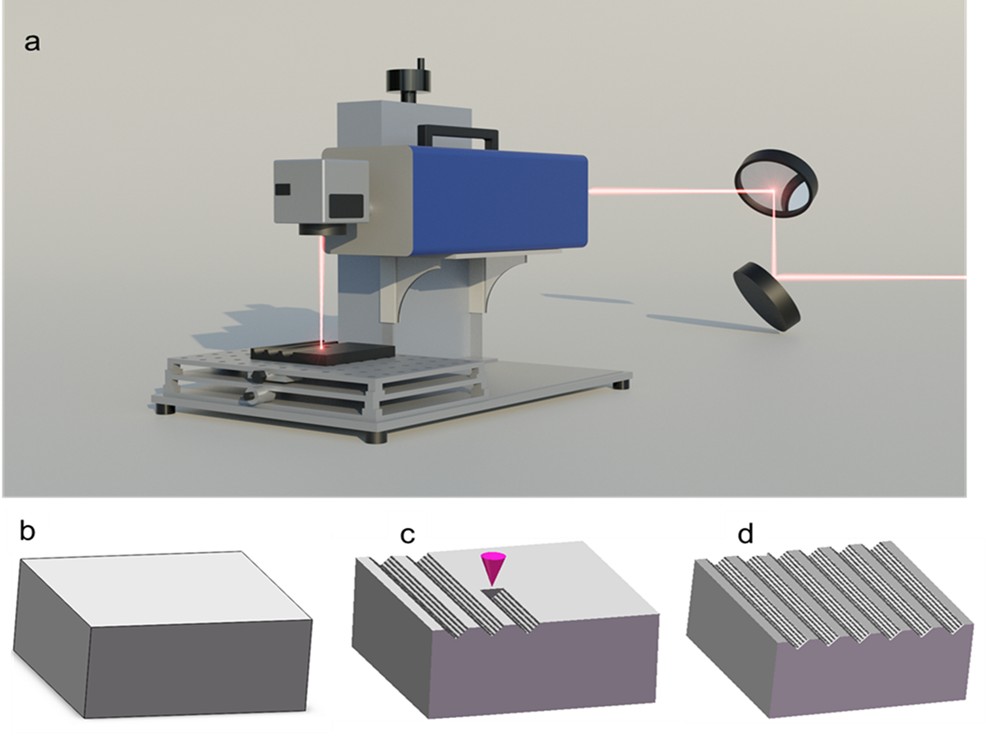
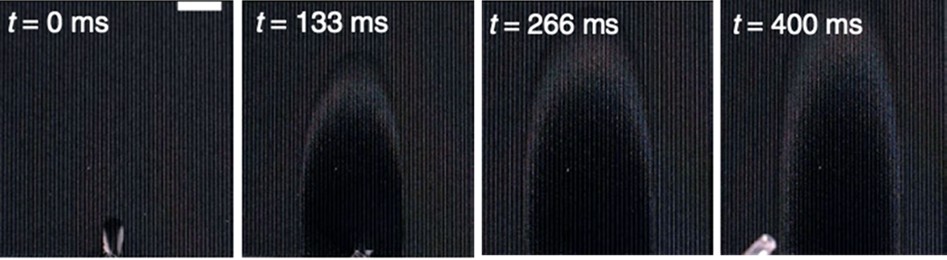
To fabricate the SWBM for thin film boiling, a femtosecond laser processing technique is used. The experimental setup for fabricating the SWBM samples is shown in Fig. 3. In a typical experimental procedure, a burst of femtosecond laser pulses from a Ti: Sapphire laser (Astrella, Coherent), operating at 800 nm wavelength. 35 fs pulse width, and 1 kHz repetition rate, is focused on the surface of a 200 µm thick aluminum foil, mounted on a x-y translational stage, at a normal incidence. The focal spot size on the substrate surface is about 30 µm and the substrate is raster scanned with a scan speed of 1 mm/s and interline spacing of 100 µm. The SWBM surface exhibits super-strong wettability, enabling efficient transport of water across its surface in the form of a thin film. Remarkably, water can spread uphill against gravity on this surface with an initial velocity of 6.5 cm/s, highlighting its exceptional capillary-driven wetting capability (see Figure 4). This behavior is attributed to the hierarchical micro/nanostructures engineered onto the surface, which not only enhance wettability but also promote thin-film evaporation by maximizing the liquid–solid interfacial area and minimizing thermal resistance. In addition, the surface features an open capillary architecture that facilitates rapid water replenishment, reduces evaporation resistance, and allows for easier removal of contaminants or residues, contributing to both thermal performance and long-term durability in high-heat-flux applications.
SWBM Surface Characterization
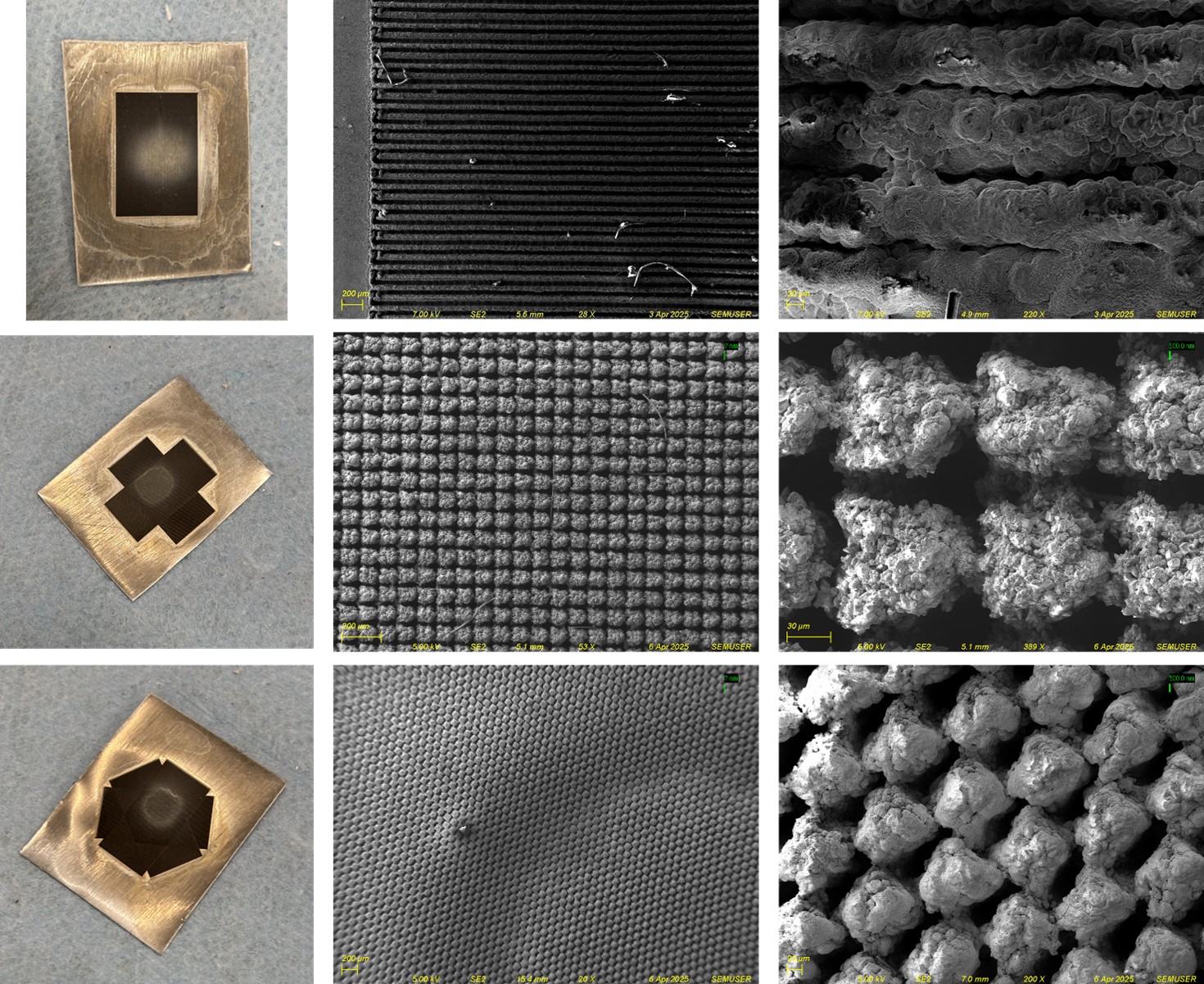
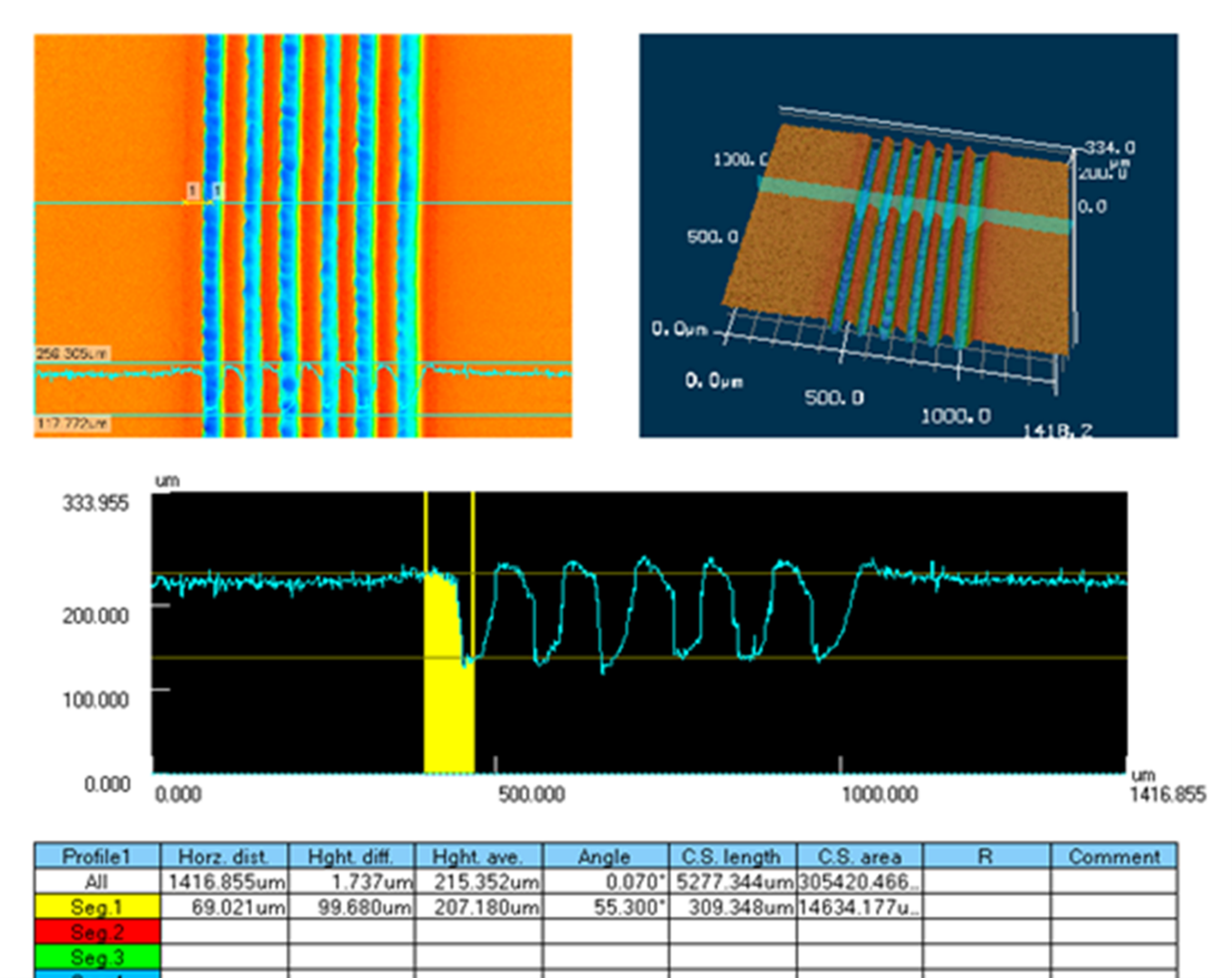
A 3D scanning laser microscope (Keyence VK 9710-K) is used to measure the surface/depth profile of the hierarchical microstructures on the SWBM surface, with a height resolution of 500 nm. Additionally, surface morphology of the samples is measured using a Zeiss-Auriga scanning electron microscope. In this study, three distinct SWBM patterns were fabricated: line, cross, and hex. The line pattern consists of periodic linear microgrooves, while the cross pattern features two orthogonal arrays of linear grooves. The hex pattern comprises three sets of grooves, each oriented 60° apart. Figure 5 presents both camera and SEM images of the three patterns. Surface profiling of the SWBM samples shows that the grooves have an average depth and period of approximately 100 µm (see Fig 6). The uniformity of the groove structures confirms the precision and cleanliness of the femtosecond laser fabrication process.
SWBM Nanostructure and Chemical Composition
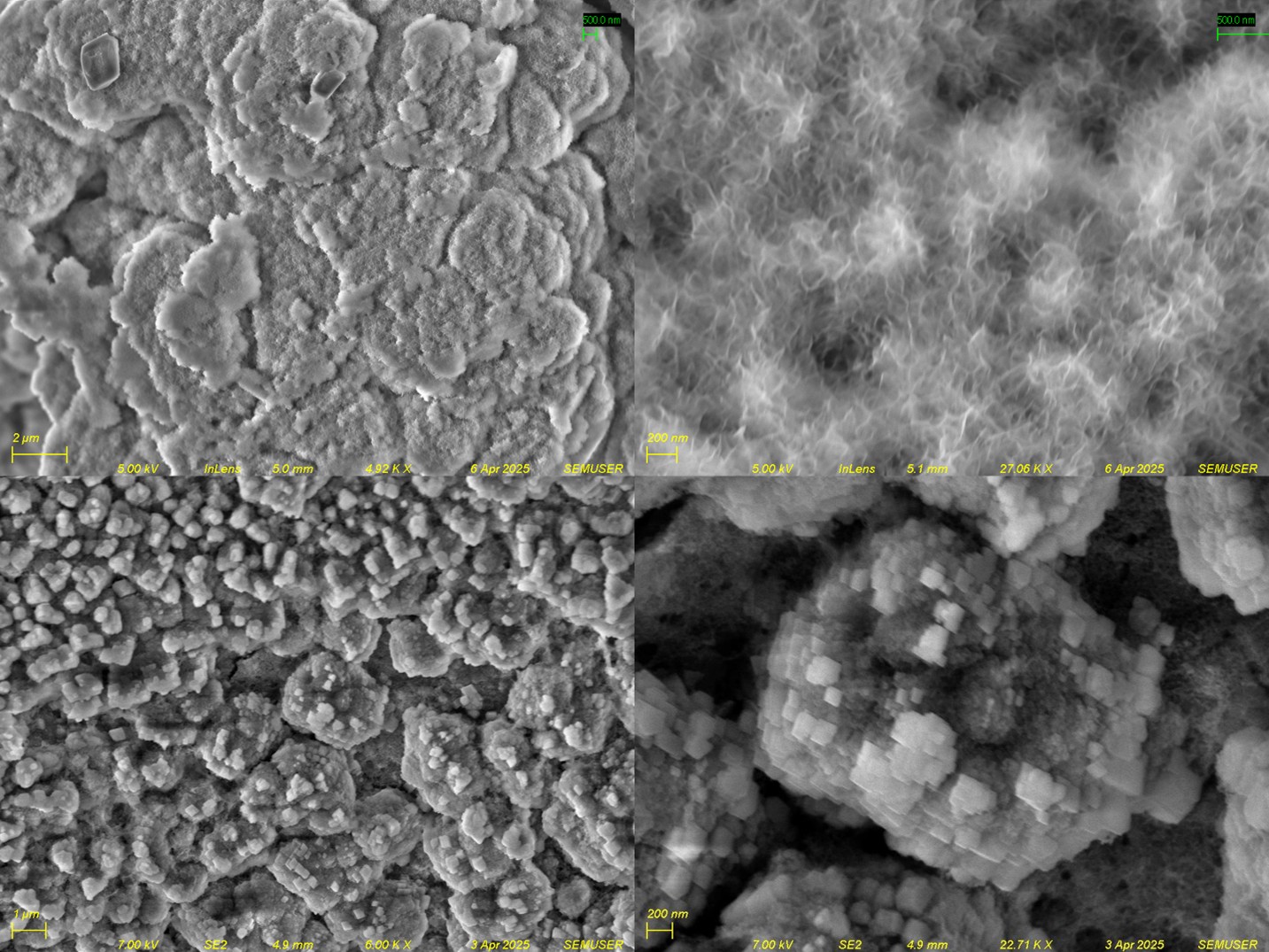
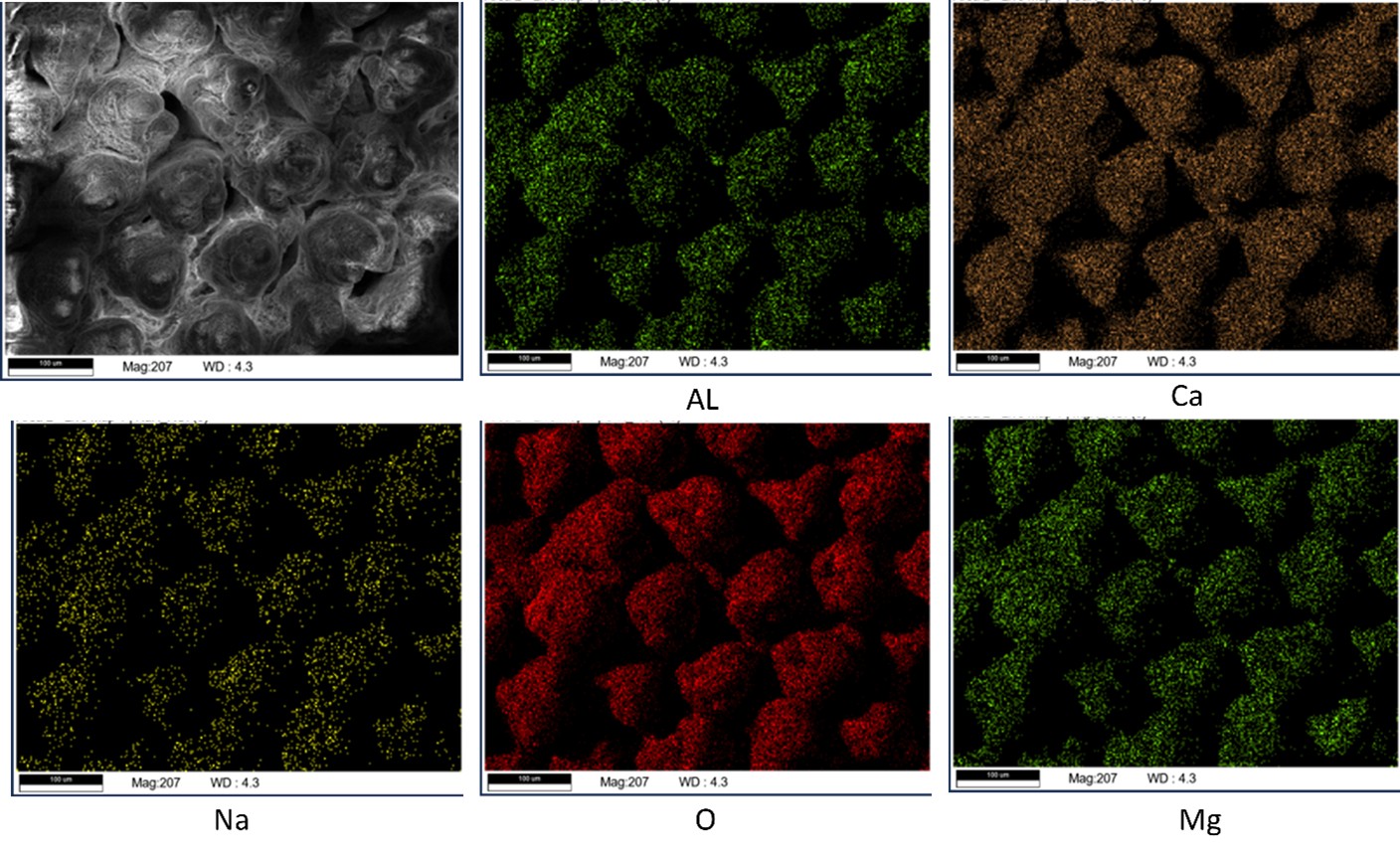
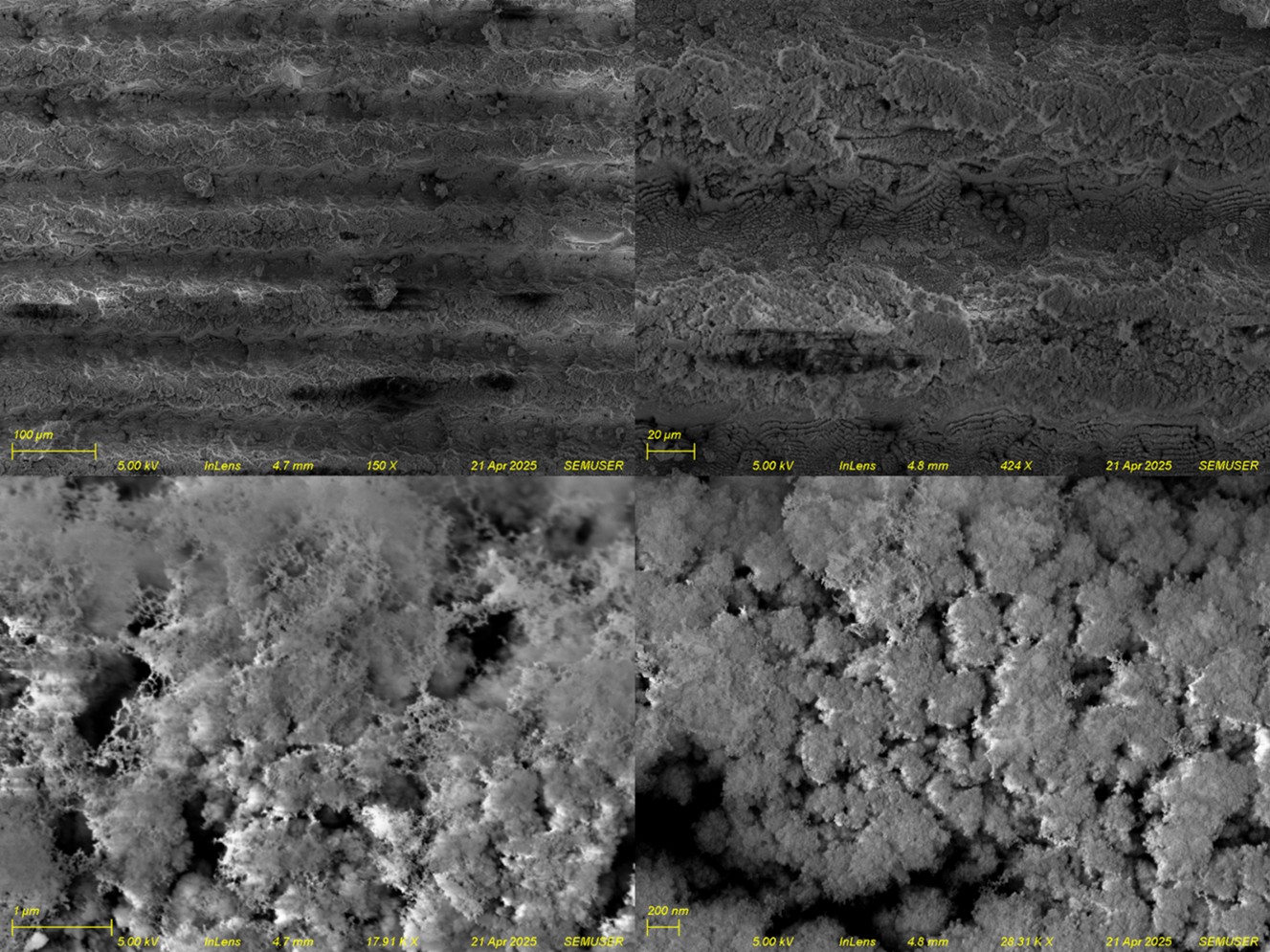
Laser-treated aluminum develops a fibrous, porous, and flake-like Al₂O₃ nanostructure (see Fig 7), resulting in a high surface area that is advantageous for thermal applications, particularly those involving phase change heat transfer. This nanostructured morphology enhances both capillary-driven liquid spreading and evaporative cooling efficiency. However, following exposure to thin-film boiling conditions using tap water, the surface becomes densely coated with salt nanocrystals, indicating substantial mineral deposition as a result of repeated evaporation (see Fig 7). Scanning electron microscopy (SEM) reveals distinct cubic and aggregated crystal morphologies, while energy-dispersive X-ray spectroscopy (EDS) mapping confirms the presence of sodium (Na), magnesium (Mg), and calcium (Ca) — ions commonly found in hard water (see Fig 8). These results highlight the dual role of the nanostructured surface in promoting heat transfer while also acting as a nucleation site for mineral accumulation, a factor that may influence long-term performance and cleaning requirements. Silicon, the most widely used material in semiconductor chips and central processing units (CPUs), also responds effectively to femtosecond laser treatment. Under appropriate processing conditions, laser-treated silicon develops snowflake-like nanostructures that closely resemble those observed on laser-structured aluminum surfaces (see Fig 9). These intricate nanostructures significantly increase the surface area and can enhance wettability and phase-change heat transfer, making laser-treated silicon a promising candidate for advanced thermal management applications in microelectronics.
Acknowledgement
I would like to thank Sean O’Neill and Greg Madejski for the fantastic instruction I received from them throughout the semester. Additionally, I would like to thank all the members of the Guo group for their support during this project.
Related Publications and Media
- Solar-trackable super-wicking black metal panel for photothermal water sanitation – Nature Sustainability
- Singh, S.C. et al. Optics and Photonics News 31 (2020), 60.
- EurekaAlert, Science Daily, New Atlas, Optics.org — July 13, 2020