
Advising and Support
For undergraduates, the Goergen Institute ONLY offers a data science major - it does not offer a minor or a cluster.
Undeclared, undergraduate students interested data science can sign up for the data science undeclared major listserv, follow the Goergen Institute on LinkedIn and Instagram, and sign up for the Goergen Institute newsletter.
Who to Contact — Quick Guide
Use this table to find the right person for your question.
If your question is about... | Contact |
|---|---|
Data Science (GIDS-AI) policies, degree requirements, general course planning/sequencing, course overlap policies. | Undergraduate Coordinator — Kristen Faison |
Course questions tied to your interests, an application area, research directions, or career paths in a discipline | Your Faculty Advisor for that application area |
A student's-eye view on courses, clubs, DSC related interests, course planning and more. | Peer Advisor — Anastasiia Chyzh |
Declaring or adding a second major/minor in another department | That department directly (for Data Science contact the undergraduate coordinator). If you are declaring a second major and atleast one is a B.S. you must submit the Petition For an Exception to a Faculty Rule or Regulation. |
College-wide academic policies (S/F option, overlap policy, general requirements) | The undergraduate coordinator can assist with some policies but it is always a great idea to confirm with Center for Advising Services (CAS). |
Help with specific course content or homework | Course instructor/TA; CSUG tutoring (CS courses); Learning Center (Math courses) |
Becoming a DSC Teaching Assistant | Lisa Altman — via the TA application form |
Transfer credit, study abroad course approval, or course substitutions | Transfer credit - Completed the course approval form and submit to the department in which the course is coded for. Data Science - gids-undergrad@UR.Rochester.edu Course substitutions: Submit the course substitution form if you have transferred in a non direct UR requivelant course or wish to have a different course considered to fulfill a Data Science requirement. Data Science requirement substitutions form.
|
Conference or travel funding |
|
Graduate school options (GEAR, MS-EAP, direct MS admission) | Lisa Altman (lisa.altman@rochester.edu) and Gwen M. Greene Center for Career Education |
Independent study or research for credit | A faculty supervisor for the work itself and complete the Independent Study Form. If you would like to use independent study or research for credit towards a Data Science requirement email gids-undergrad@ur.rochester.edu |
Internships and jobs |
Data Science Faculty Advisors
Data Science does not assign faculty advisors to students. Please reach out to a faculty advisor that would be best suited to answer your questions and provide guidance.
Area | Data Science Faculty Advisors | Affiliated Faculty |
|---|---|---|
| Faculty available for guidance on data science course selection as well as research opportunities and career paths. | Can offer advice within their domain for domain-specific course selectionn research opportunities and career paths. |
Biology |
| |
Biomedical Signals and Imaging | — | |
Brain and Cognitive Sciences |
| |
Computer Science, Mathematics, and Statistics |
| |
Earth and Environmental Science |
| |
Economics and Business | Roy Jones (BUS/CIS) | |
Linguistics | ||
Physics |
| |
Political Science |
| |
General Data Science |
|
Undergraduate Coordinator and Peer Advisors
University Advisors
The professional advisors at the Center for Advising Services (CAS) are available to help students navigate a wide variety of academic programs and policies. They assist students with developing comprehensive academic plans, provide referrals to specialized academic resources, and help students problem-solve when they are experiencing academic challenges. CAS is a good place to start when students have academic questions or concerns and are unsure of who to go to for assistance.
Data Science Undergraduate Coordinator Advising
Kristen Faison, the undergraduate coordinator, is the main point of contact for questions related to the data science major.

Kristen Faison, Undergraduate Coordinator and Data Science Academic Advisor
Email: kfaison2@ur.rochester.edu
Schedule a meeting with Kristen (use the guest option)
What can Kristen help with?
- General Data Science course/degree planning (for more technical information contact a faculty advisor)
- Data Science degree requirements
- Declaring your major
- S/F grading information
- Course approval forms for data science courses (for CSC courses please speak with computer science)
- Course substitution
- Relevant University policy questions
Peer Advisor
Peer advisors are upperclassman data science majors who have been selected for their experience and knowledge. For a student's perspective on the data science major, please contact the data science peer advisor. Data science students may also want to consult with peer advisors in other areas, such as computer science, mathematics, or the department of their application area.
Anastasiia Chyzch (Class of 2027), Data Science Peer Advisor
If you would like to speak with Anastasiia for course planning or academic advising please reach out to her using her email below.
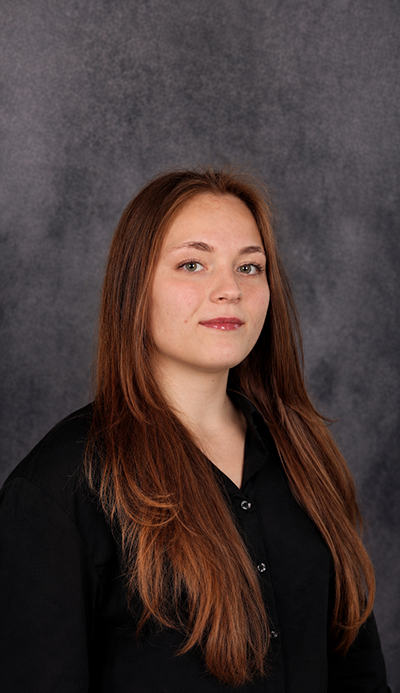
Majors: Data Science and Political Science
Email: achyzh@u.rochester.edu
What can my peer advisor help with?
- Course specific questions and advice
- Data Science degree planning
In addition to the peer advisor, you will find students with strong interests in data science involved with the following clubs:
- National Student Data Corp
- Women and Minorities in Computing (WiC-MiC)
- Computer Science Undergraduate Council
- Dandyhacks
- Sports Analytics Club
- Society of Undergraduate Statistics Students
- Girls Who Code
- Google Developer Student Club
Interested in becoming a data science peer advisor?
Email Kristen Faison to indicate your interest.
Declaring/Changing Your Major
Useful resources:
Data science degree planning form (pdf)
Data Science Planning Google Sheet
WRTG 273 advising guidelines (PDF)
To Change Your Intended Major
- Complete the Intended Major Change Form
- Note, this may change your advisor
- Meet with the data science advisor about your plans if switching to Data Science.
(Up to two intended pre-majors are allowed for dual-major planning)
How to Declare the Major
- Complete data science pre-requisite courses (pre-req GPA above 2.0, no more than one grade below C; transfer courses accepted)
- Complete the Data science degree planning form (pdf)
- Submit the form to the email listed on it (contact kfaison2@ur.rochester.edu for help)
- Once reviewed, you'll get next steps for official declaration through the registrar.
Note: Required degree courses cannot be taken Satisfactory/Fail (S/F). If you choose to use S/F grading you must uncover the S/F grade prior to graduation. Please note that you can only uncover all S/F grades once.
Contact a CAS advisor for more information on this policy.
Double Majors / Double Degrees
- Follow the college's course overlap policy — seek advising when planning two majors
- Data science + computer science double major is NOT permitted (but a CS minor is fine)
- BA+BS or two BS degrees: after declaring, file the Petition for an Exception to a Faculty Rule (not needed for two BA degrees)
- Double degree students need 136 credits (vs. 128 for one degree)
Revising Your Major Requirement Choices
If you would like to choose a different course to use towards a Data Science requirement (after declaring) please email Kristen Faison (kfaison2@ur.rochester.edu) and share which course you would like to change.
Switching BA ⇄ BS
- File the Rochester Curriculum Change Form to drop your existing major
- Submit an updated Data science degree planning form (pdf)
- Once approved submit a new major declaration form .
Support for Studies
The first step toward academic success is taking advantage of office hours and appointments with faculty and teaching assistants. Academic help is also available from departments across the University.
- The River Campus Libraries offer a wide variety of helpful resources in the LibGuide for Data Science.
- The Computer Science Undergraduate Council (CSUG) offers free tutoring for all computer science courses.
- The Department of Mathematics offers math help at their math study hall and through the the Learning Center.
Refer to the University’s complete list of academic services to support your academic success.
Departmental Distinction
Data science student major GPA is used for departmental distinction to reflect the quality of performance within a major.
- distinction = major GPA equal or above 3.5
- high distinction = major GPA equal or above 3.7
- highest distinction = major GPA equal or above 3.85
Math Minor
A data science BS major can easily earn a math minor by taking one additional math course, MATH 235: Linear Algebra. The following shows the courses need for the math minor and how it is permitted with exceptions from the overlap policy.
- MATH150 – no overlap per policy/prereqs in data science/foundational for math minor
- MATH161 & MATH 162 - no overlap per policy/prereqs in data science/foundational for math minor (or MATH 141, 142 & 143 OR MATH 171 & MATH 172)
- MATH165 - no overlap per policy/core for data science/foundational for math minor
- MATH201 – overlap/BS requirement for data science/advanced course for math minor
- MATH203 – overlap/BS requirement for data science/advanced course for math minor
- MATH235 – no overlap
Computer Science Minor
A data science major can earn a computer science minor by taking two additional computer science courses. The following shows the courses need for the computer science minor and how it is permitted with exceptions from the overlap policy.
- CSC171 - no overlap per policy/prereqs in data science
- CSC172 - no overlap per policy/prereqs in data science
- CSC/DSCC240, CSC/DSCC261, CSC/DSCC242 – Use two of these courses for the two overlaps/core requirement for data science/computer science minor
- Two non overlapping ccomputer science courses above the level of 130.
Teaching Assistants
Teaching assistants (TAs) play a vital role in helping their peers better understand course material. Each semester, we appoint several students as TAs for data science courses. Current data science TA’s are:
| Course | Title | Instructor(s) | Teaching Assistant(s) |
|---|---|---|---|
| DSCC 162 | Data Structures in Python | Andrea Cogliati | Offered in Summer |
| DSCC 201/401 | Tools for Data Science | Brendan Mort | Offered in Fall and Spring |
| DSCC 202/402 | Data Science at Scale | Ajay Anand and Lloyd Pallum | Offered in Spring |
| DSCC 435 | Optimization for Machine Learning | Jiaming Liang | Offered in Fall |
| DSCC/CSC 240 | Data Mining | Cantay Caliskan | Hired via CS department - Offered in Fall |
| DSCC/CSC 440 | Data Mining | Jiebo Luo | Offered in Fall |
| DSCC 261/461 | Database Systems | Eustrat Zhupa | Hired via CS department - Offered in Fall and Spring |
| DSCC 462 | Computational Introduction to Statistics | Anson Kahng | Offered in Fall |
| DSCC 265/465 | Introduction to Statistical Machine Learning | Cantay Caliskan | Offered in Spring |
| DSCC 275/475 | Time Series Analysis and Forecasting | Ajay Anand | Offered in Fall |
| DSCC 383W/483 | DSC Capstone/Practicum | Ajay Anand & Cantay Caliskan | Offered in Fall and Spring |
Becoming a TA
To become a TA you must have:
- Taken the course before the semester you are seeking to TA for.
- Received (or will receive) an A or A- in that course.
You can apply to be considered for multiple courses, but you will only be assigned to TA for one DSC course. You are allowed to apply to/maintain another TA position or job with other departments.
Use the TA application form to express your interest. You can contact a professor directly but you must apply using the form. The department will review all TA requests and send decisions out before the beginning of each semester.
Deadlines:
- For Fall classes, apply between March and April. We will send out decisions by July.
- For Spring classes, apply between October and November. We will send out decisions by December.
Instructor Permissions/Waitlists
Some courses require instructor permission to register on UR Student. To learn about registering for a course that requires instructor permission, see the requesting permission to register (PDF) or view the video (QRV).
We encourage students attend the first day of class even if they are unable to register for a course. Spots may open up in the first or second week of classes as students add/drop. In addition, faculty are more likely to let a student in if they have attended their course since the start of classes.
Transfer/Study Abroad/Substitution Requests
Transfer credit from AP/IB courses and other placement exams, domestic colleges, and study abroad programs are permitted for the data science major with the appropriate approvals. Consult the CAS advising handbook to learn more about transfer credit.
AP/IB Courses
Fundamental courses taken in high school from the data science curriculum are approved by other departments. The college has information in the advising handbook for getting credit from Advanced Placement (AP) and International Baccalaureate (IB) courses.
Incoming Transfer Students
Incoming transfer students should seek course approvals as soon as they arrive on campus. Since most courses in the data science curriculum are offered by computer science and mathematics, students should seek transfer approval from those departments. Incoming transfer students should meet with the data science academic advisor as soon as possible to create a plan for declaring and completing the major.
Study Abroad
Data science students planning to study abroad typically look for programs that offer coursework in computer science, mathematics, or other college requirements, so that they can work towards their degrees while they are abroad. Students planning to study abroad should discuss their course plans with an advisor in the Center for Education Abroad. Refer to the below section on transferring course credit back to the University of Rochester.
Transferring Course Credit
Current students taking courses outside the University of Rochester must obtain approval for transfer credit PRIOR to taking the outside course. This policy applies to education abroad courses as well. Course Approval Forms can be obtained from the Center for Advising Services (CAS) in Lattimore 312.
Many courses in the data science curriculum are offered by computer science (artificial intelligence, data mining, database) and mathematics (calculus, linear algebra, statistics, probability); students should seek transfer approval from those respective departments. To receive transfer credit for elective courses from data science application areas, students should consult the authorized approval list for the appropriate department.
The transfer approval process can take several days or weeks. DO NOT wait until the last minute to get approval.
To request transfer credit approval you must:
Fill out the DSC Substitution Request Form
- Provide a syllabus for each course that you wish to transfer, that details:
- Exactly which topics are covered and in what detail
- What the homework and project requirements are
- How the course is graded
- A schedule from the course syllabus is also useful
- Indicate whether you believe the course to be equivalent to a University of Rochester data science course or not (equivalency means that your course covers the same material, in the same depth).
- Also upload a copy of the Course Approval Form
The departmental advisor will forward your request to the appropriate instructor for consideration and notify you of their decision.
Once your Course Approval Form has been signed by an authorized department approver, we will email it to ccasrec@ur.rochester.edu and copy the student.
Upon completion of the course(s), ask the registrar at the other school to email an official transcript to CAS (ccasrec@ur.rochester.edu).
Substitution Requests
Data science is an emerging, cross-disciplinary field. Occasionally, a pre-existing or new course from an ancillary department may be used in place of a pre-approved course in our curriculum.
To obtain a course substitution, fill out the substitution request form for data science. You must provide a course syllabus and reasoning for the substitution exception. Once the course has been approved, your academic advisor will file a Departmental Major/Minor Revision Form to update your declaration.
Travel Support
The Goergen Institute for Data Science supports professional development for our undergraduates through sponsored attendance at conferences and events. With funding from the Institute, students have attended the annual Grace Hopper Celebration celebrating women in computing, the MIT Sloan Sports Analytics Conference, and various hackathons and other events. To receive reimbursement for data science-related travel, students should complete the student conference travel application and email it to Lisa Altman (lisa.altman@rochester.edu) 5 weeks or more before traveling.
Research
The University of Rochester - a top-tier research institution with a compact campus, flexible curriculum, and interdisciplinary focus - fosters unique opportunities for undergraduate research. Data science students perform research with data science affiliated faculty members and with other departments, including the University medical center.
For an example of data science student research, read about Sarah Lee '24.
Included below are some helpful resources for undergraduates interested in research:
- AURA (University of Rochester's research finder platform)
- GIDS Undergraduate Summer Research Experience
- Research Experience for Undergraduates (REU) Finder
Support for Research
The Office of Undergraduate Research supports students preparing for, pursuing, and participating in research. Visit their website to learn more about undergraduate research opportunities in departments across campus.
Students seeking research opportunities should review the websites of GIDS affiliated faculty members and related University institutes and centers to find research topics that interest them. Reach out to faculty members directly to ask about research opportunities. We also encourage students to attend research talks on campus.
Independent Studies
Undergraduate students have the option to engage in research for credit. To enroll in an independent study or independent research (DSCC 391 or DSCC 395), you must:
- Collaborate with a full-time faculty member who will supervise and guide your independent work.
- Approach an affiliated faculty member who you would like to work with, and ask them if they would be able to/interested in supervising your work.
- Fill out the following online Independent Study Form alongside the faculty member who will be supervising your work (you will need to discuss credit hours, course title, course description, and how you will be evaluated).
You CANNOT register for an independent study via the University's online course registration system. You must follow the steps above in order to properly register.
Registration for a 4.0 credit independent study is due by the third Wednesday of each semester.
Graduate School
Data science majors possess robust computational, analytical, and communication skills, equipping them to explore a wide range of academic opportunities. Some look at graduate school immediately after their undergraduate degree while others work for a few years and then return to school. Many graduates from the program go on to pursue master's and doctoral degrees in fields such as computer science, data analytics, statistics, and business. Additionally, some students have successfully advanced to professional programs, including law school and dental school. Below, you'll find helpful resources to guide you in considering graduate school.
Staying at URochester
- GEAR is a program that guarantees exceptional undergraduates admission to any of the Hajim School master's programs at the University of Rochester. Students are accepted into GEAR as incoming first-year students, and provided they stay in the Hajim School and have a 3.3 GPA in their senior year, will be automatically accepted to the graduate program here as well. They are often able to take graduate courses during their senior year of undergraduate study, allowing them reduced time in graduate school and potentially complete both a BS and MS in five years.
- Our Master's Early Admissions Pathway (MS-EAP) offers students who are in their junior year of an undergraduate program within the Hajim School guaranteed admission into select master’s programs with a 50% tuition discount (for a Hajim MS) or 40% tuition discount (for a Simon MS). The admission guarantee is contingent on the student receiving an overall GPA of 3.5 or greater upon completion of their undergraduate program.
- Students who don't fall into the two programs listed above are also welcome to apply to the Master of Science (MS) in data science program. We encourage URochester students to meet with our graduate coordinator to discuss their interest and get advice on submitting an application. We will waive application fees for URochester students, alumni, and employees who apply to the MS program.
Computational Medicine
The Computational Medicine Program offers current University of Rochester undergraduate and master’s students preferred admission to Thomas Jefferson University’s Sidney Kimmel Medical College (SKMC). Students admitted into this early assurance program will get a chance to work with SKMC faculty during the summer of their junior year. So long as all requirements are met, the Medical College Admission Test (MCAT) requirements will be waived for students in the program. Entry to the Computational Medicine Program is very competitive, with only five to ten Rochester students chosen each year. Students should apply to this program during the second semester of their sophomore year and successful applicants will be notified prior to the start of their junior year.
Watch this video to hear from students who went to graduate school following their undergraduate degree in data science.
Internships/Jobs
The Gwen M. Greene Center for Career Education and Connections posts job and internship opportunities for data science majors on Handshake. They also circulate opportunities in the career community for emerging technology.
The Goergen Institute also maintains a log of organizations that have posted data science-related jobs and internships. You can browse through this information by stopping by the data science offices in Wegmans Hall. We encourage you to keep your resume updated and utilize professional networks by creating profiles on LinkedIn and Meliora Collective. We also encourage you to apply for internships – they are a great way to gain experience and become more marketable for future jobs or graduate school.
Check out the following videos for more information building a career in data science: