s
Although for
this projector we are going to "observe" the snowflake under the
microscope, the problem is very obvious-melting. Before we can even begin to have the electron beam
concentrate on the sample, it would have melted already in the SEM
chamber. Therefore a method of replicating
snowflakes is developed to solve such problem. This method is based
on the use of a synthetic resin, called polyvinyl formal, dissolved
in the solvent, chloroform. According to previous research, this
solvent has the property of evaporating readily at cold
temperatures, but causes no damage to the structure of even the most
delicate snow crystals. Another important advantage of this method is that
this technique only involves dipping a microscope slide in a cold (≤
-5oC), which is much more achievable and easier to
operate comparing with other methods that involves preserving the sample
with liquid nitrogen and observing in a liquid nitrogen environment.
The theory behind it is that 2% solution of Formvar plastic in
chloroform and exposing it perpendicular to the fall trajectories of ice
particles. The ice particles adhere to the plastic film and, because
the surface tension, are eventually coated by the plastic solution
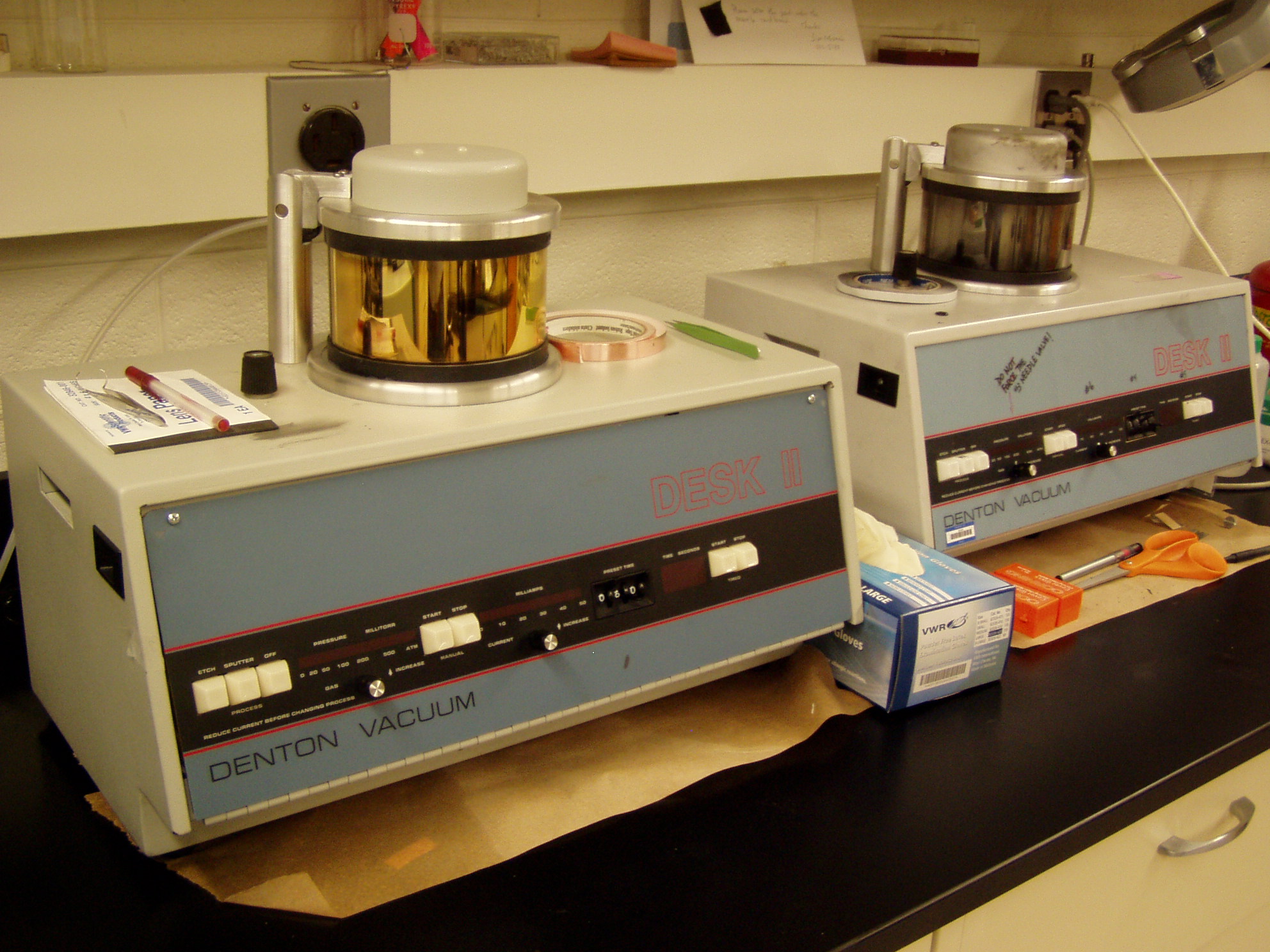
Figure.1 the metal sputtering system.
Seven techniques applied to this
project
- Sample preparation (sputter coating)
- Light microscope
- Backscatter electron imaging
- Secondary electron imaging
- Electron lithography
- Image colorization
- Electron fly simulation
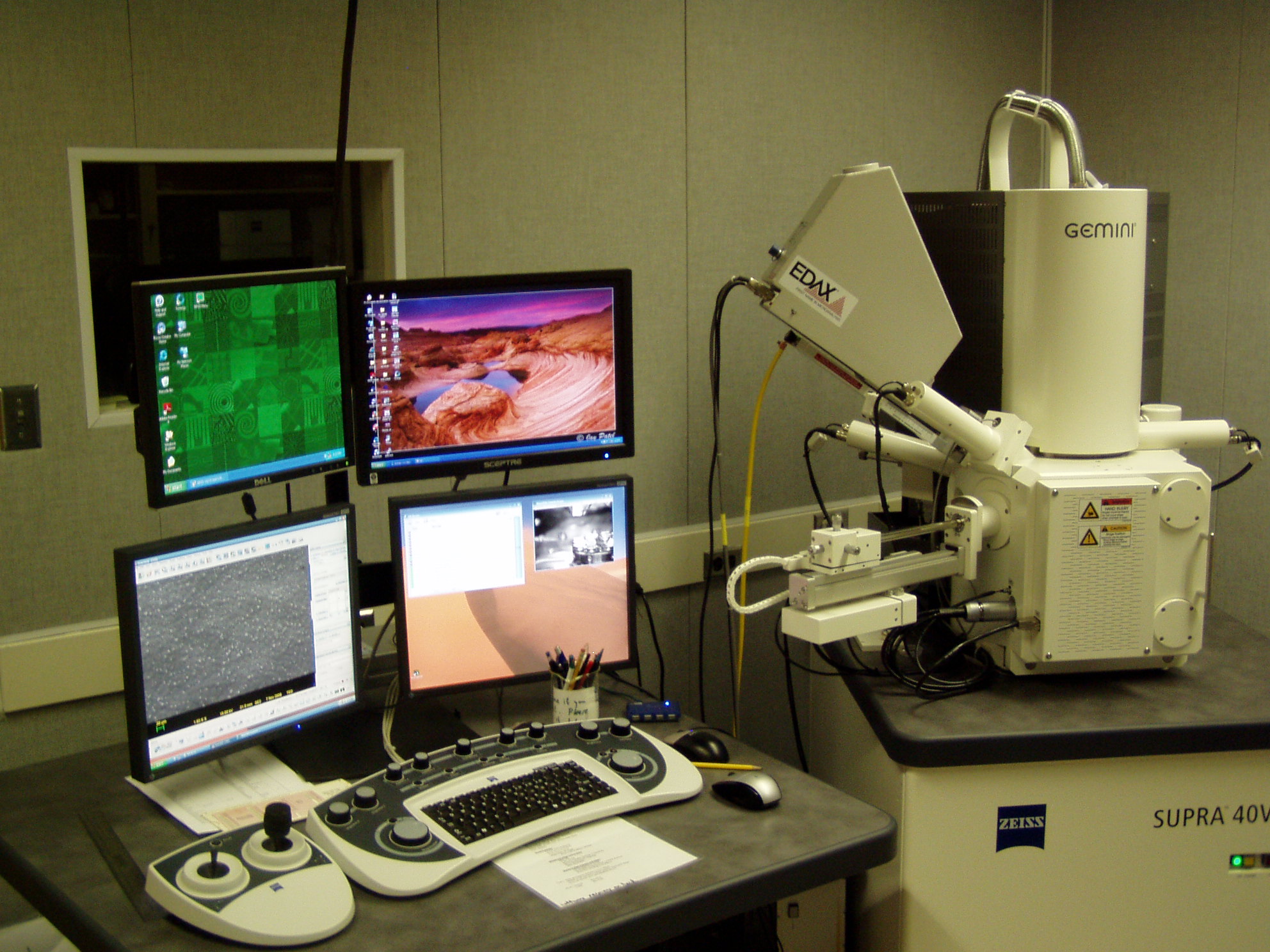
Figure.2 a
Zeiss Supra 40VP (variable pressure capable) SEM