

Biomedical Engineering
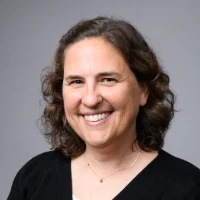
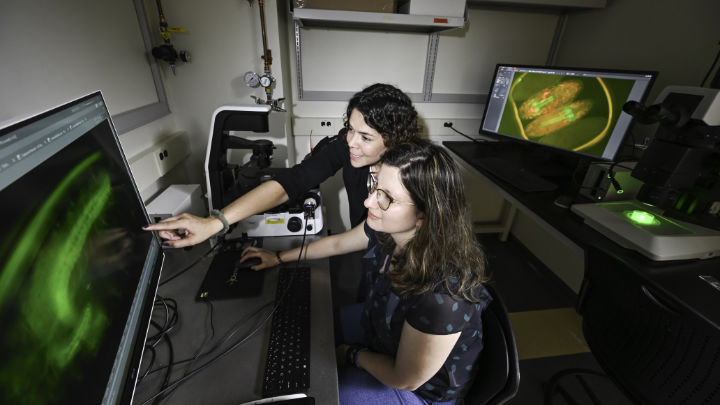
Assistant Professor Marisol Herrera-Perez received a $2 million NIH MIRA grant to investigate the mechanical signals that guide how a single cell becomes a complex organism.

George Kassis, an MD-PhD student in biomedical engineering, shows how an AI-powered robotic arm, which he designed to perform ultrasound in rural areas, can be controlled remotely using VR. (University of Rochester photo / J. Adam Fenster)
Assistant Professor Marisol Herrera-Perez received a $2 million NIH MIRA grant to investigate the mechanical signals that guide how a single cell becomes a complex organism.
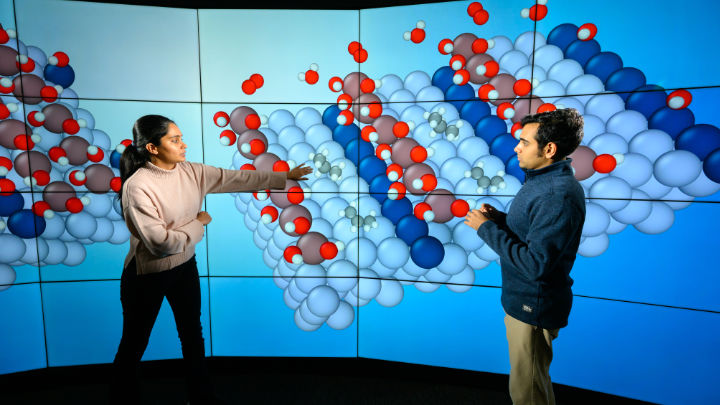
Assistant Professor Siddharth Deshpande and PhD student Snehitha Srirangam developed algorithms that show the key atomic features driving the complex chemistry when nanoscale catalysts turn propane into propylene.

Jiebo Luo, a professor of computer science and the Albert Arendt Hopeman Professor of Engineering, developed text-to-video artificial intelligence models to simulate metamorphosis more accurately.
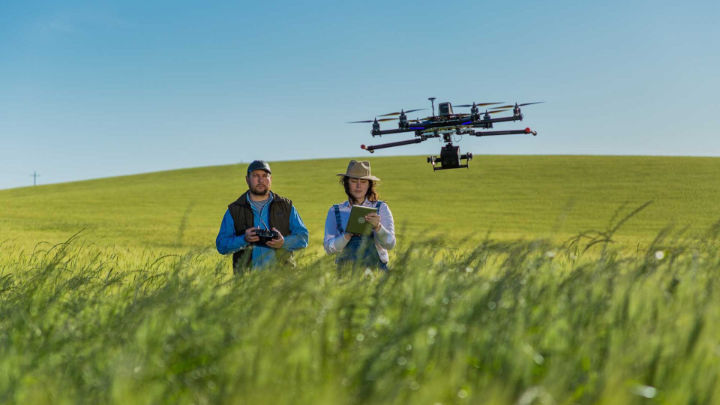
Through a new grant worth up to $7.2 million from DARPA, researchers will develop biologically inspired predictive coding networks for digital image recognition built on analog circuits.
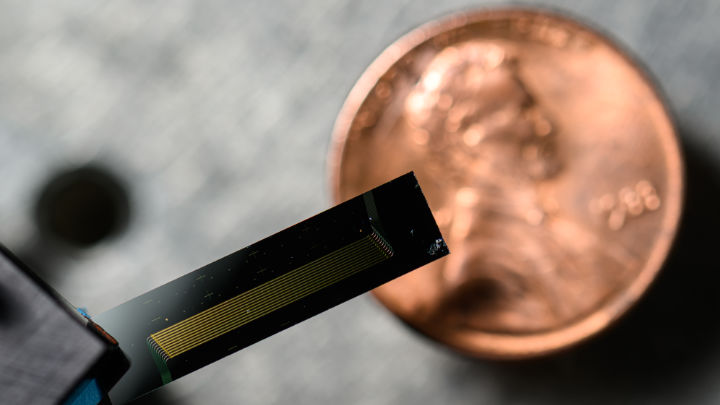
A new chip-scale laser developed by Professor Qiang Lin can conduct extremely fast and accurate measurements by very precisely changing its color across a broad spectrum of light at very fast rates.
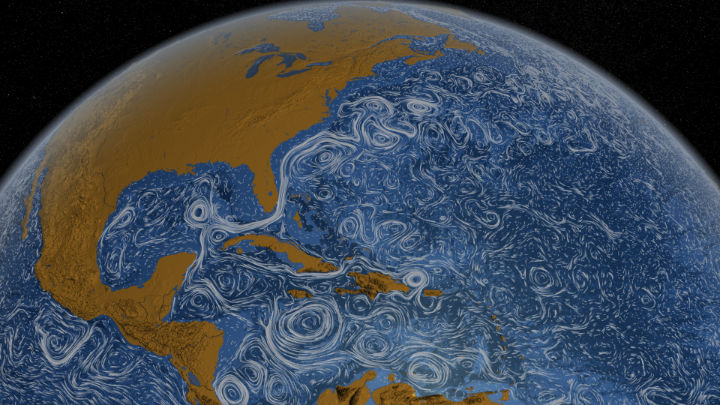
Research by Professor Hussein Aluie used satellite imagery and high-resolution climate model data to upend previous assumptions about how surface winds and ocean weather patterns interact.
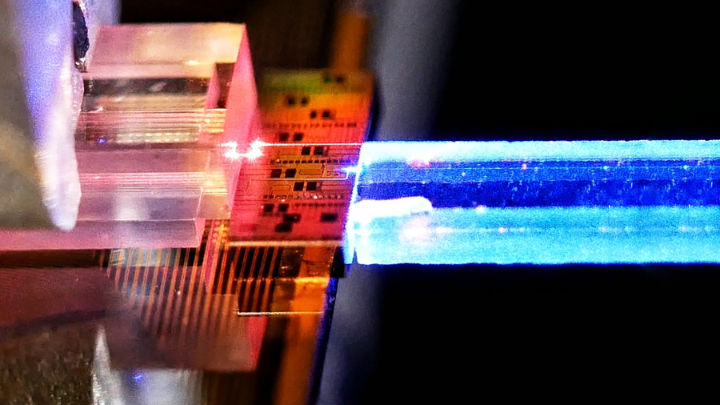
URochester and RIT connected our campuses with an experimental quantum communications network, using single photons to transmit information 11 miles along fiber-optic lines at room temperature using optical wavelengths.