University of Rochester
SEM is a powerful technique to provide topography and composition information of samples. SEM produces images of a sample by the surface with a focused beam of electrons. When electron beam strikes the sample surface, interactions between the sample and the electron beam generate interaction volume with different types of electron signals which will be collected and processed to generate images. The two main types of generated electron signals are secondary electron and backscattered electron.
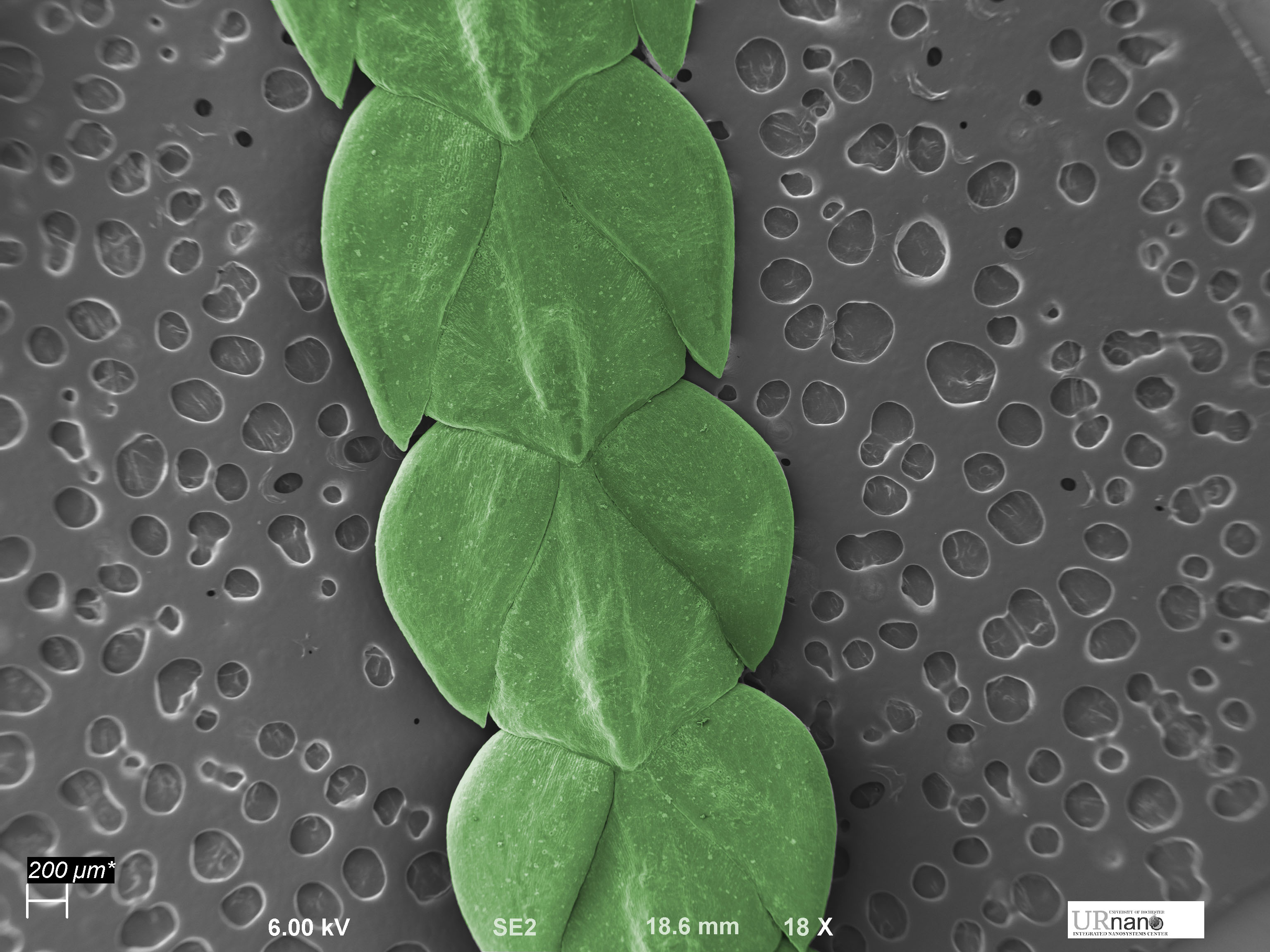
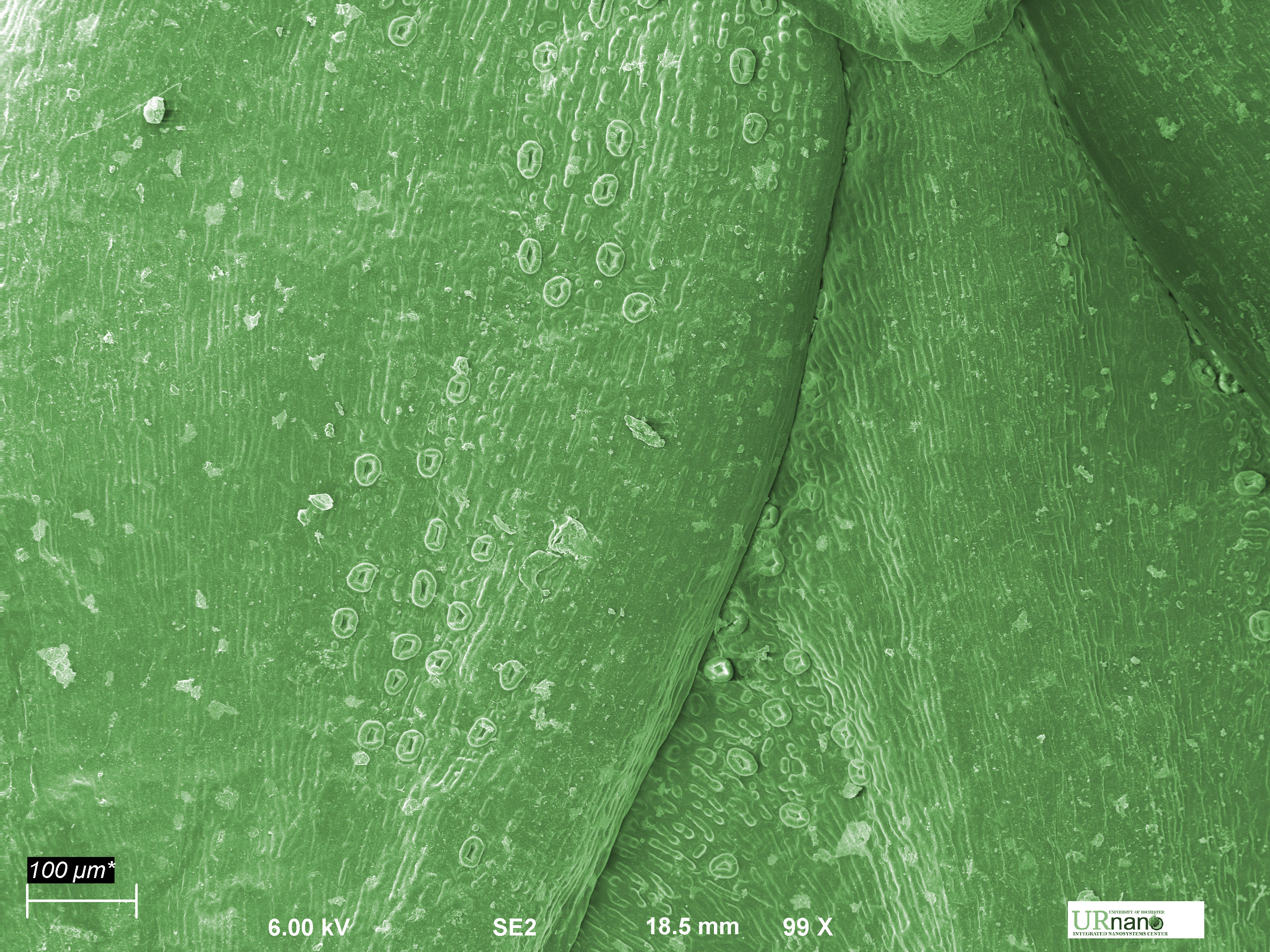
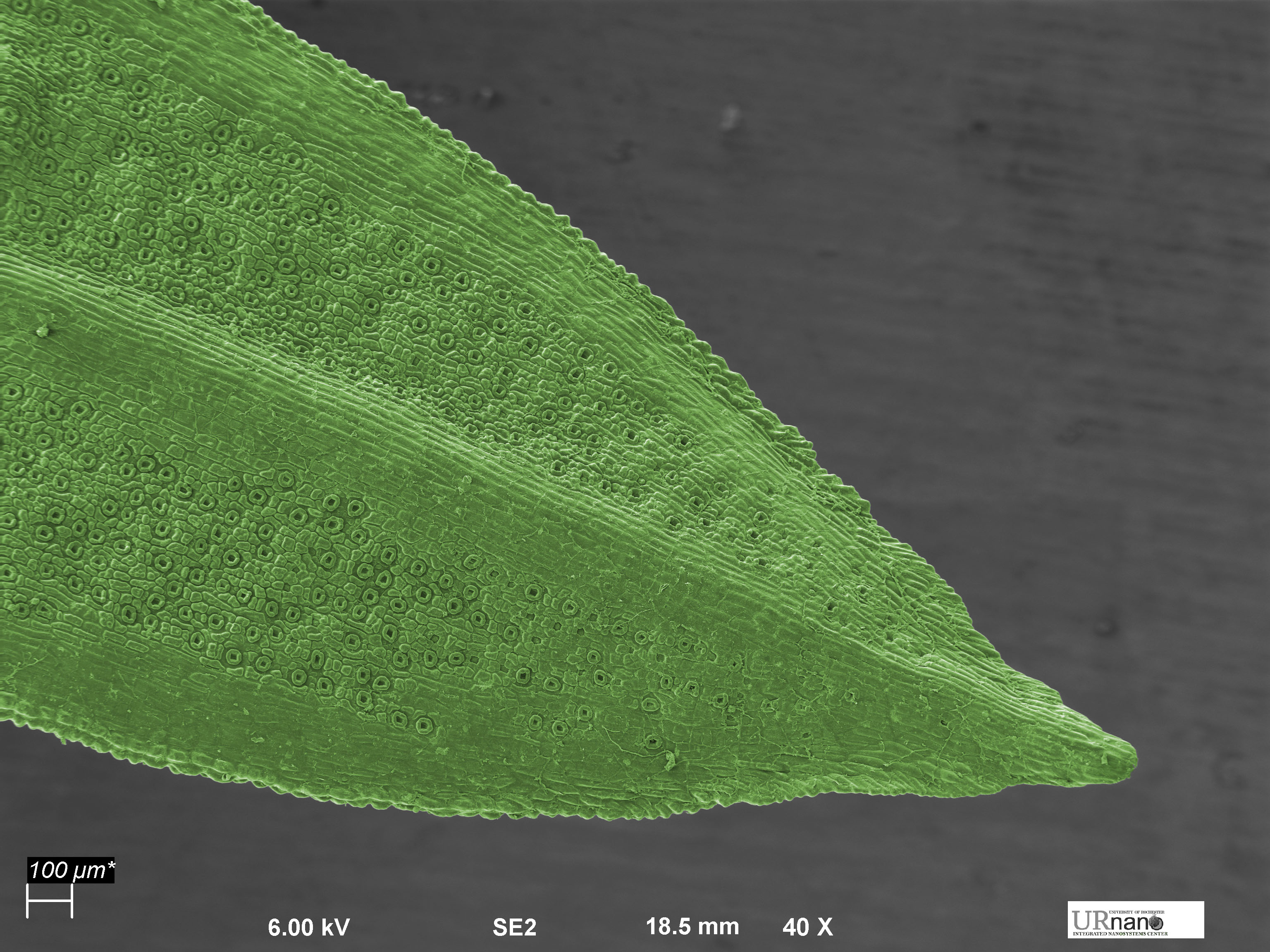
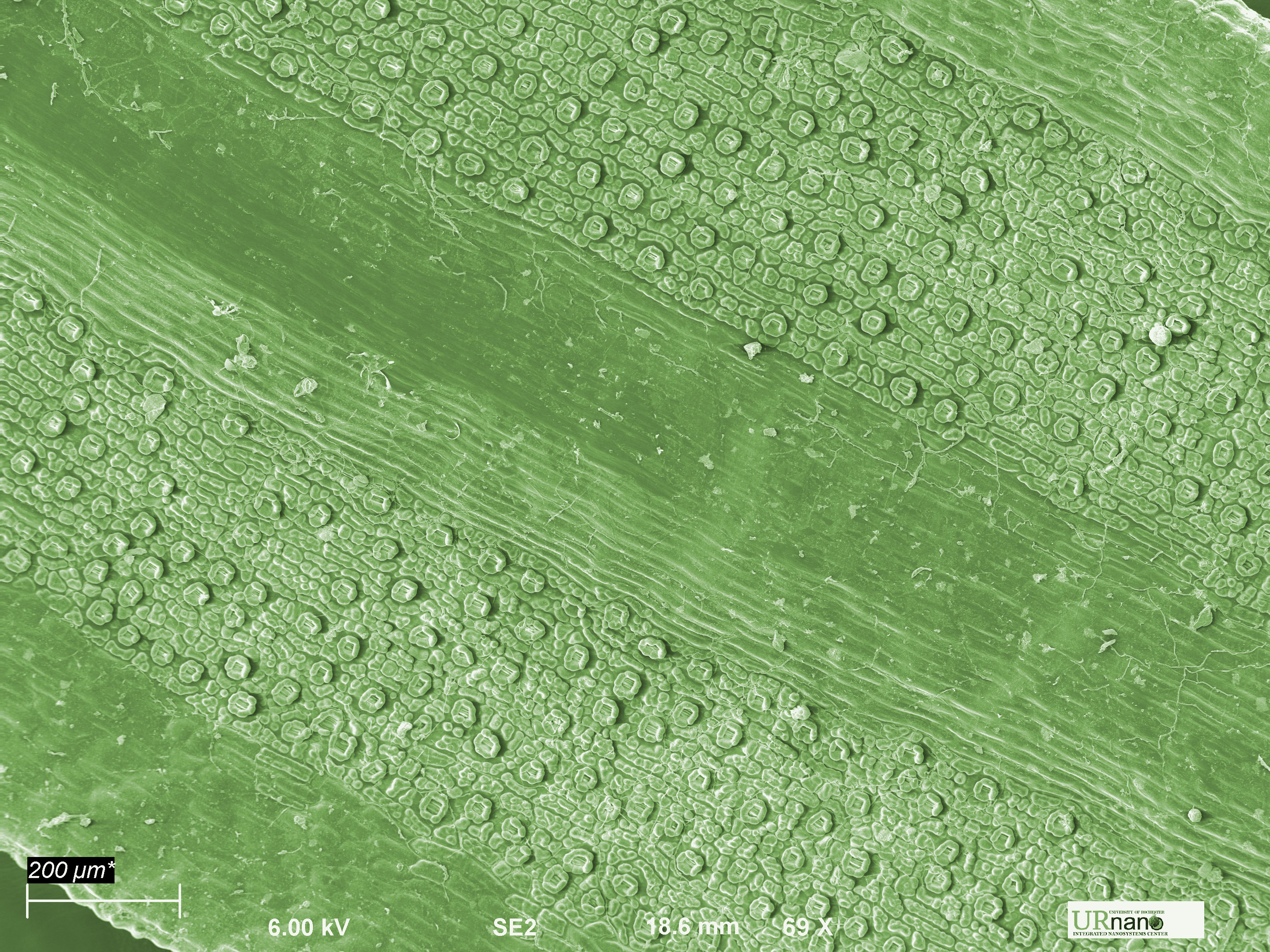
Secondary electrons generate by inelastic collision and ejection of weakly held conduction band electrons. SE2 detector is positioned off the side of the specimen which indicates that it scan the sample laterally, and then increase the efficiency of detecting SE2 signals and provide more detailed surface information. Figure 2 and 3 are SEM images of Arborvitae and Juniper, respectively.
| (a) | (b) |
| (a) | (b) |
In these micrographs, stomata are distributed randomly on both Arborvitae and Juniper sample surface. Stomata are tiny openings that facilitate gas exchange. Stomata are surrounded by guard cells which control opening and closing stomatal pores. Two main functions of stomata are to allow for gaining carbon dioxide for photosynthesis and to limit water loss through evaporation. Sizes of stomata are varied across species. Normally, the end-to-end lengths are varied from 10 to 80µm[3-4]. Since the stomata control the water loss and photosynthesis of plants, I measure the stomata length via ImageJ program.
Figure 3c and Figure 4c are used to do the measurement. The average size of Arborvitae stomata is about 14µm, and Juniper stomata have an average size of 17µm. The relatively small size of their stomata help them reduce water loss in dry climate. Also, the narrow needle leaves make it hard for snow to remain and then reduce snow damage to plants.