
Colloquia & Guest Speakers
High Resolution Optical Imaging of Retinal Function in the Living Eye
Dr. Juliette McGregor, Assistant Professor, Department of Ophthalmology, Department of Biomedical Engineering University of Rochester Presented in person in Goergen 101 and on Zoom
Monday, November 16, 2026
3:30 p.m.
Abstract
By pairing adaptive optics with scanning light ophthalmoscopy it is possible to dynamically correct ocular aberrations to image the light sensitive tissues of the living eye at the cellular scale. Recent advances have allowed us to move beyond structural imaging to capture light evoked, functional signals from photoreceptors and other retinal neurons sending visual information to the brain. I will describe how these imaging modalities can be deployed to accelerate the development of vision restoration therapies for blinding diseases including optogenetics and photoreceptor replacement. Lastly, I will consider how increasing the speed of the adaptive optics loop can offer advantages for functional imaging including improved suppression of temporal noise, and beyond applications in the eye, whether adaptive optics has the potential to expand the field of view of any scanning system by correcting field dependent aberrations as a function of scan position.
Biography
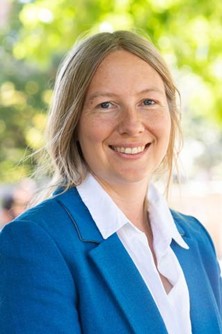 Dr. McGregor earned her undergraduate and masters degrees in Natural Sciences and her PhD in physics from the University of Cambridge in the UK. She pursued postdoctoral studies on the perception of polarized light and advanced microscopy before moving to the USA in 2016 to work with David Williams and William Merigan on high resolution retinal imaging using adaptive optics. In 2021 Dr. McGregor started her own laboratory in the Flaum Eye Institute focused on developing high resolution retinal imaging to advance the pre-clinical optimization of vision restoration therapies. Dr. McGregor is the program director of a National Eye Institute Audacious Goals Initiative Consortium that aims to accelerate the development of photoreceptor replacement therapy toward the clinic. This work lies at the intersection of optical engineering, surgical development, visual neuroscience and cell biology.