methods and materials
Electron microscopes are very powerful tools for visualizing biological samples. However, proper sample preparation is a critical step when imaging hydrated samples under the SEM. Because specimens are observed in vacuum conditions, the samples are normally required to be completely dry so various protocols are available for the preparation of these samples with the ultimate goal of preserving the morphological features of the surface structure and minimizing sample distortion.
Chemical drying agents such as hexamethyldisilazane (HMDS) have been suggested as potential alternative to the expensive and time consuming critical point drying process. HMDS is a reagent in condensation reactions and has the ability to convert alcohols into trimethylsilyl ethers allowing no surface tension. In the hexamethyldisilazane (HMDS) dehydration process fixation followed by dehydration is required. Generally, the samples are fixed with 2.5% glutaraldehyde and 0.1M sodium cacodylate buffer, but since immunofluorescence was performed prior to SEM analysis no further fixing was required. The samples were washed three times in PBS followed by incubation in 1% Osmium tetroxide with 0.1M sodium cacodylate under the hood. The cells were then dehydrated in graded alcohols (50%, 65%, 80%, 95%, and 100%). After the final dehydration step, ethanol was replaced with HMDS in ratios of (1:1), (1:2), (1:3) and 100%. During this procedure, the surface of the samples were kept hydrated with reagent until the final drying step where HMDS was left to evaporate overnight.
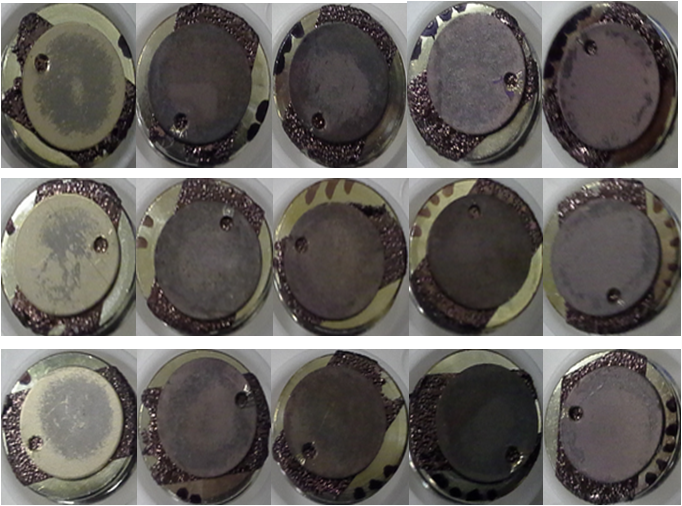
After the HMDS process, the titanium discs were mounted onto a sample stub with carbon tape and placed on the stage of the bell jar of the sputtercoater. Proper attention was given to the top of the bell jar to assure that the lid sat well and sealed properly when closed. The sputtercoater was then turned on and the argon (Ar) valve was opened to ensure flow into the backfill line. The system was then repeatedly pumped down to a pressure of 100mT with a rotary pump, backfilled with Ar gas to a pressure of 300mT, and then pumped down again. After three repetitions the system was pumped down to 100mT. At this level, 15mA of current was run through the cathode for 60 seconds and a gold layer of 60Å per minute was deposited onto the titanium samples by the sputtercoater. After 60 seconds, the sputter solenoid valve and the system were powered off and all titanium discs were ready for SEM analysis.