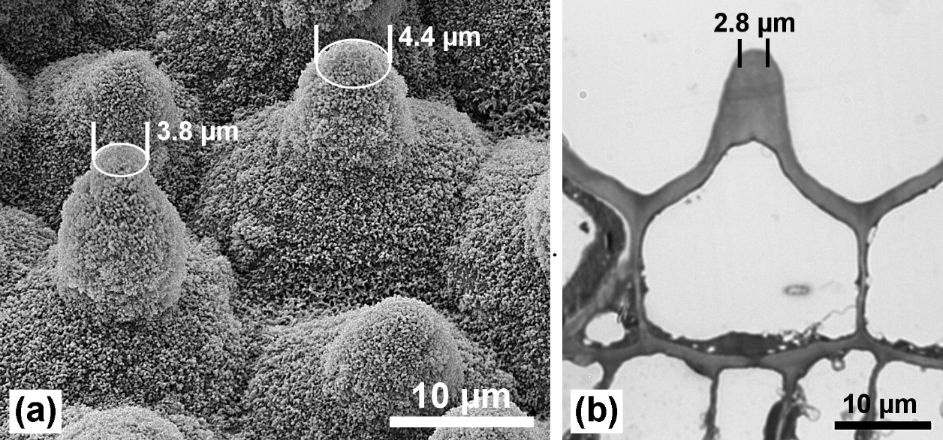
Figure 1.1 Microstructures observed on the surface of a lotus leaf (SEM images)
Lotus
leaves possess excellent
hydrophobic properties which
enable contact angles of >150°. The presence of micro-
and nano-structures on
the surface of the leaf in the form of papillae with varying height and
tip
radius accounts results in low adhesive forces and hence increased
hydrophobicity.
· Sputter Coating
· Secondary Electron Imaging (SEM)
· X-ray Spectometry (EDS)
· Electron Flight Simulation (EFS)
· Atomic Force Microscopy (AFM)
· Light Microscopy