

As a capstone team, we are designing both a public-facing story archive site and a case study website that documents our research, design process, and reflections. Together, these platforms aim to preserve community stories, support future listening work, and show how digital media can be used to connect storytelling, civic engagement, and public humanities practice.

Website
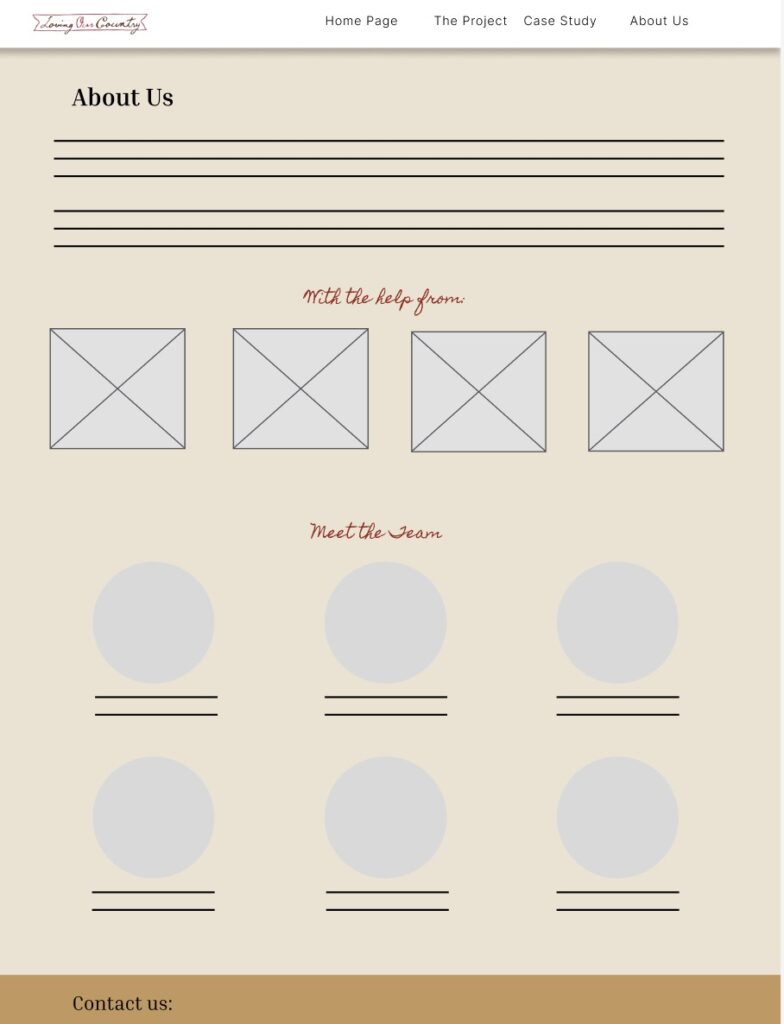
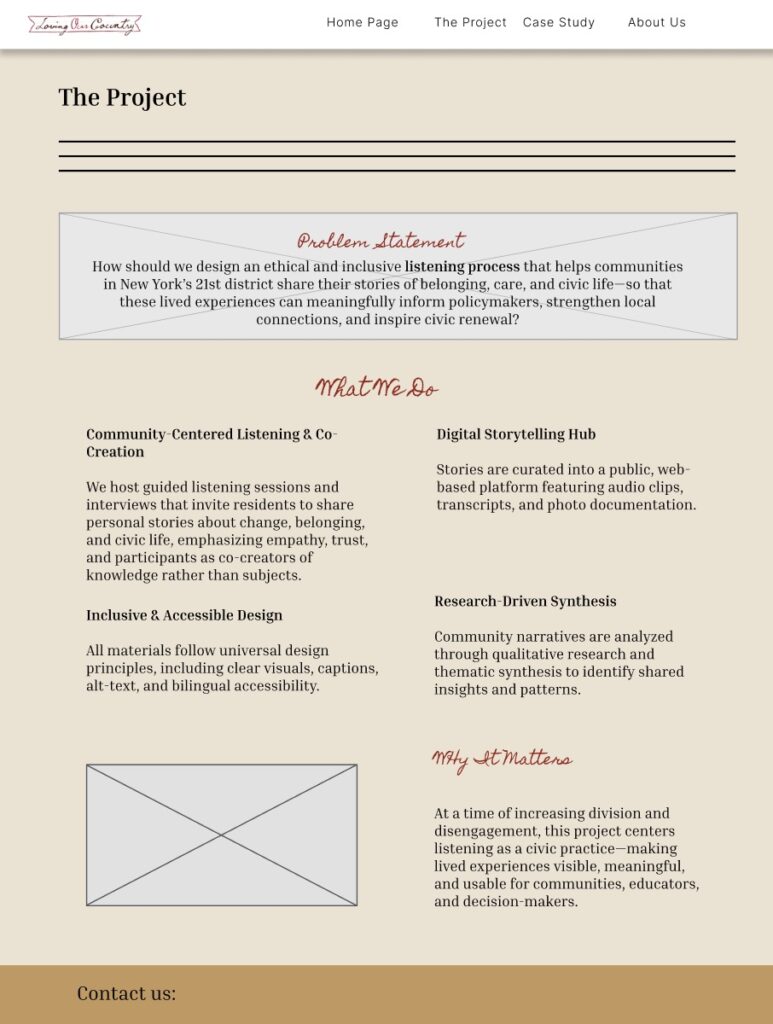
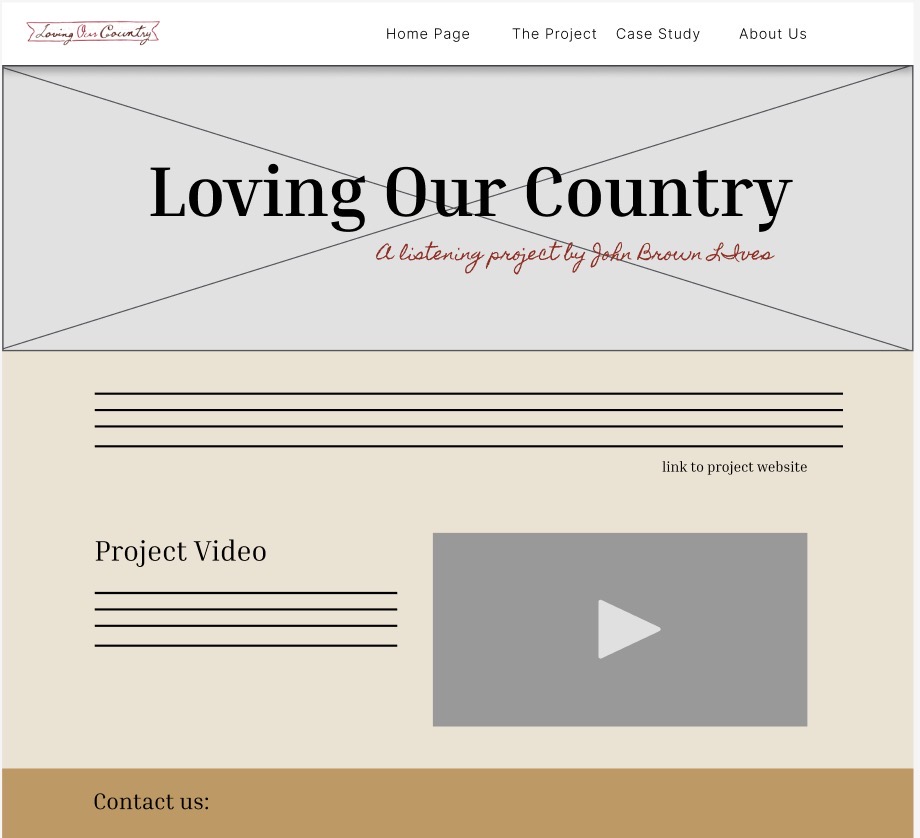

Our final deliverable will take the form of a website that brings together the materials collected throughout the project. The site will include recordings from both listening sessions, including the session held on campus and the session conducted at the Watertown Public Library.
By presenting these recordings in one shared digital space, the website will make it possible to preserve and showcase the full range of stories gathered across both settings. The goal is not only to document these voices but also to create an accessible platform where audiences can engage with the different experiences, perspectives, and reflections shared by participants.
Listening Session Field Guide

In addition to the website, our final deliverable will also include a field guide based on the listening session process and the revisions we made throughout the project. This guide will reflect on how our approach developed over time, including what worked well, what needed adjustment, and how those changes shaped participants’ responses. We hope it can serve as a practical resource for future students, researchers, or community organizers who want to conduct similar projects. The field guide will address how to structure a listening session, follow an effective protocol, guide participants through questions in a thoughtful way, and create an environment where people feel genuinely heard, respected, and comfortable sharing their experiences.
Summary

Over the course of this project, our team has moved from research and planning into public-facing design and implementation. We began by developing interview prompts, consent materials, and the structure of our listening sessions. We then tested these ideas through pilot sessions, which helped us refine both our questions and our facilitation approach.
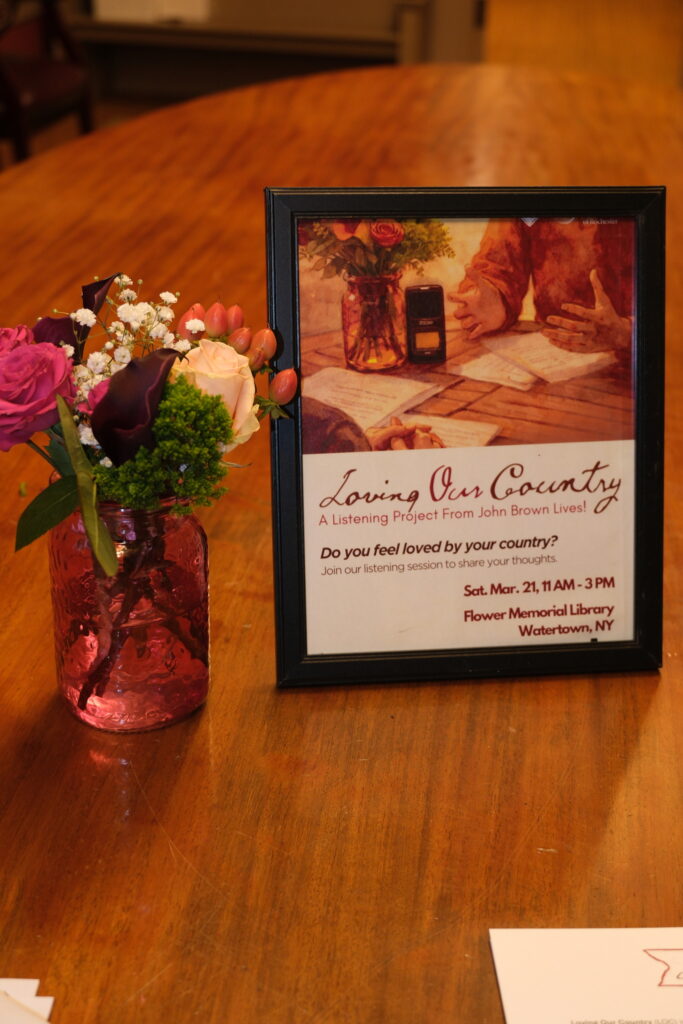
This semester, we have continued building the project through community listening events, visual identity development, poster and outreach design, photo and video documentation, and website planning. We are currently organizing story materials, processing recordings, and building two digital platforms: one to archive community stories for John Brown Lives!, and one to present our capstone process as a digital case study.
Through this work, we are learning how to balance research, ethics, design, and collaboration while creating a project that is both publicly meaningful and sustainable beyond the semester.
Advisors
Stephanie Ashenfelder, Nancy Bernardo, University of Rochester
Community Partners
John Brown Lives! and Echo Lab
We would like to thank John Brown Lives! and Echo Lab for their partnership, guidance, and commitment to this project. Their vision for community listening and civic storytelling has shaped the direction of our work from the beginning. We would also like to give a special thank you to Martha Swan and Andrea Gluckman for their insight, support, and continued collaboration throughout the project.