
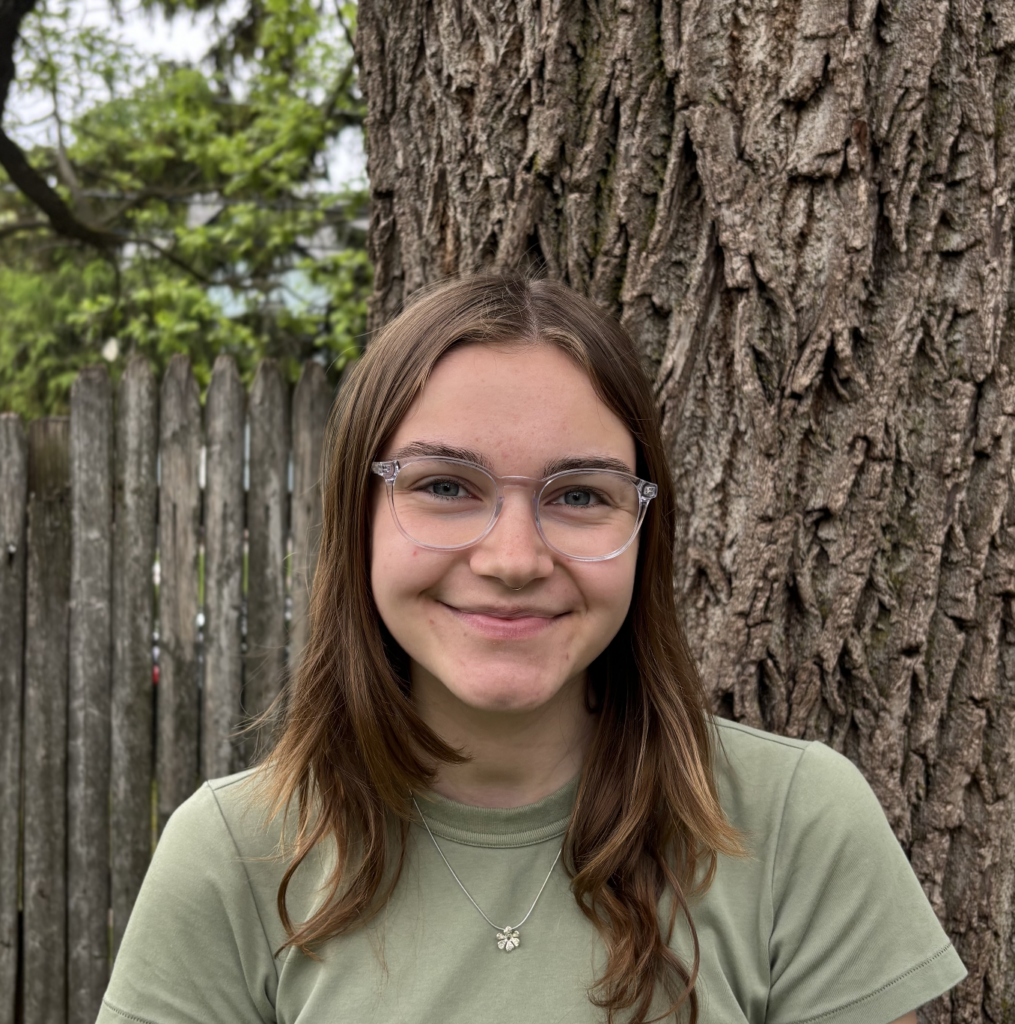
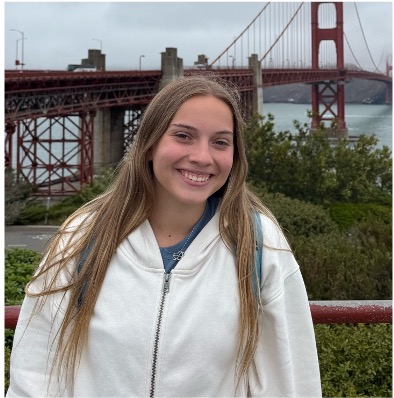
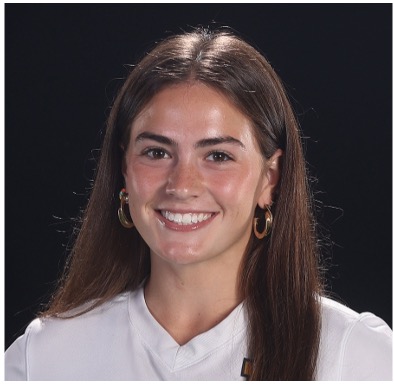
Meet the Team:

Project Overview:
Plastic waste generated on campus at the University of Rochester is substantial, with a sizable portion originating from single-use plastic containers at coffee shops like Starbucks. The creation and application of small-scale recycling equipment can repurpose these single-use plastics to prolong their useful life before going to a final waste disposal system.
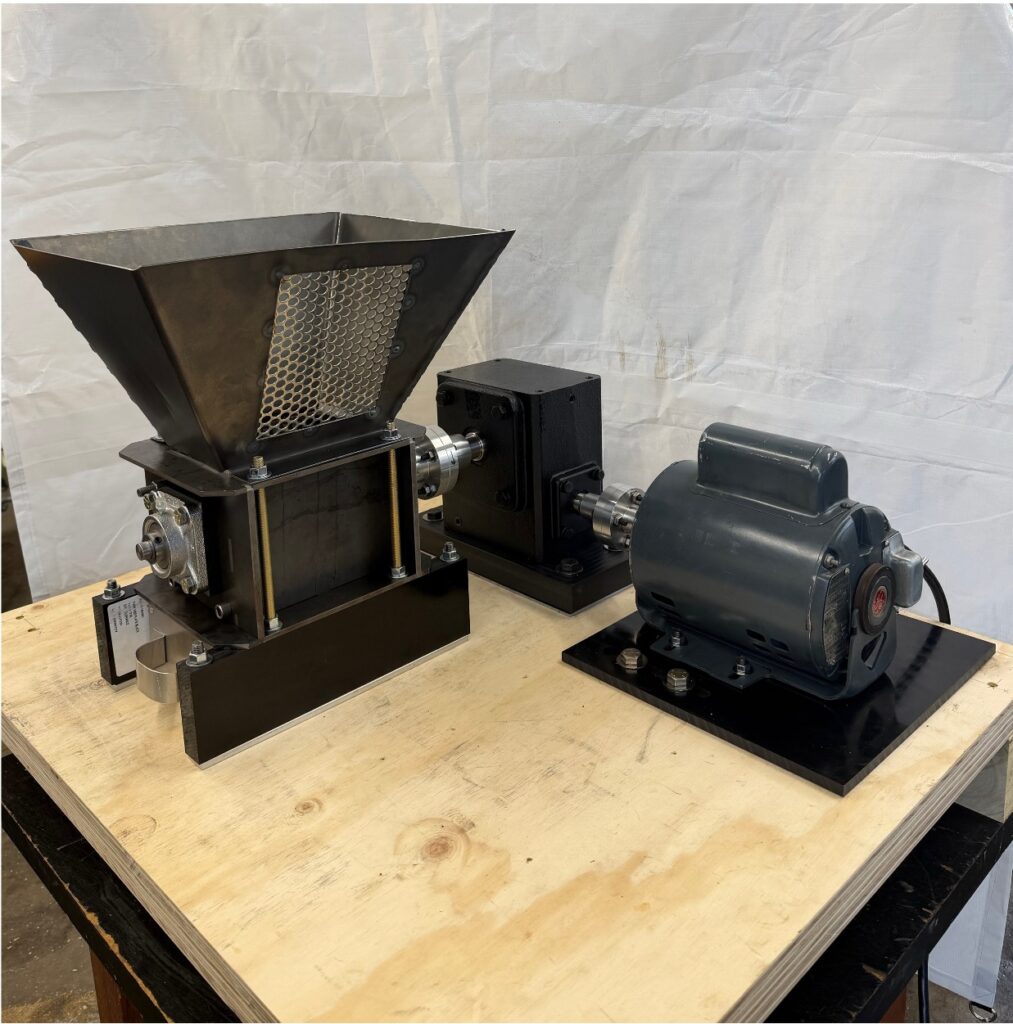
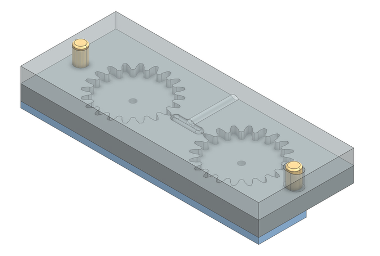
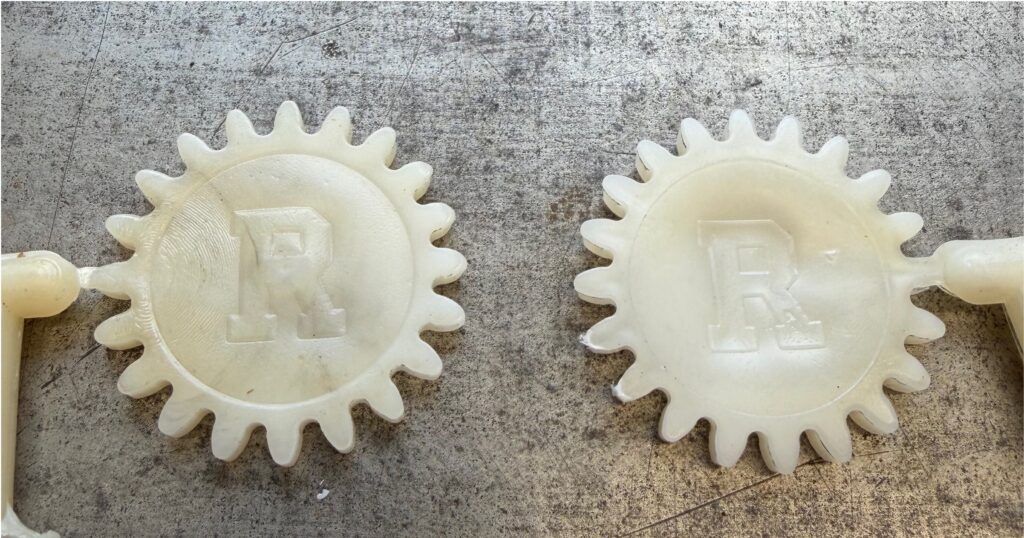
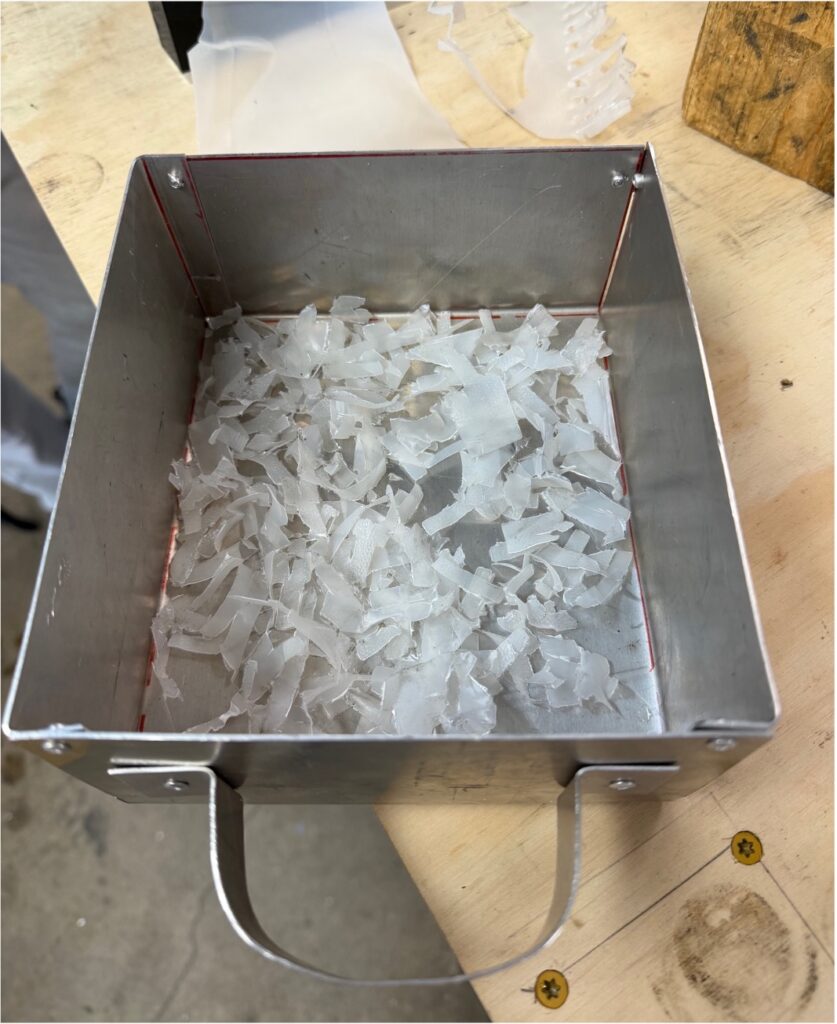
This project utilizes a motorized shredding machine and injection molding equipment to recycle and repurpose high-density polyethylene (HDPE) milk jugs used by the on-campus Starbucks.
Deliverables, Requirements and Specifications:
Deliverables
| Deliverable | Description |
|---|---|
| 1 | Prototype Device |
| 2 | Technical Report with Test Data |
| 3 | 1000 Plastic Items |
| 4 | Theory of Operations Manual |
Requirements
| Requirement | Description |
|---|---|
| 1 | Plastic must come from campus waste |
| 2 | Standard injection molding protocols will be followed |
| 3 | All collected plastic must be recyclable in a similar manner |
| 4 | Safety protocols will be recognized and evaluated by appropriate safety staff |
| 5 | The molded pieces will be formed in one shot based on the injection molder’s shot capacity |
| 6 | Mold material should support the quantity required |
| 7 | Mold needs vents to prevent plastic from burning |
Specifications
| Specification | Value | Units | Description | Method of Evaluation |
|---|---|---|---|---|
| 1 | 1000 | units | Produce by May 4th | Counting |
| 2 | 24 | hours | Maximum time spent injecting molded items | Clock |
| 3 | 5/16 | inches | Maximum shredded particle size | Ruler |
| 4 | 440-490 | °F | Applicable injection molding operating temperature | Temperature |
Designs:
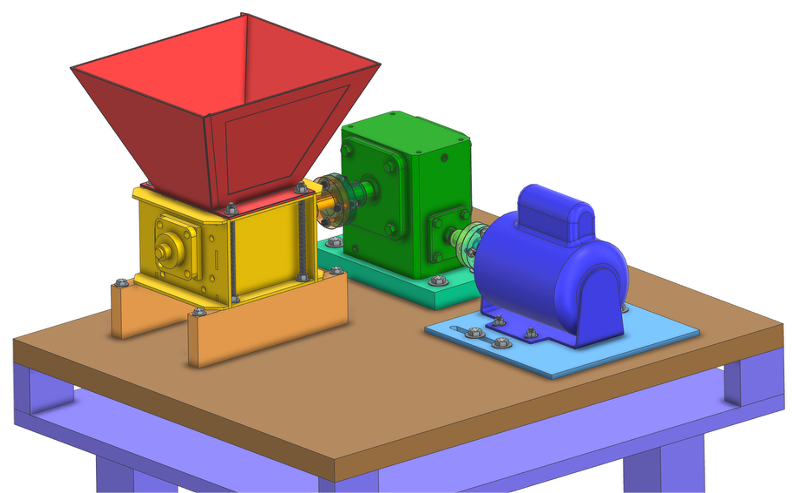
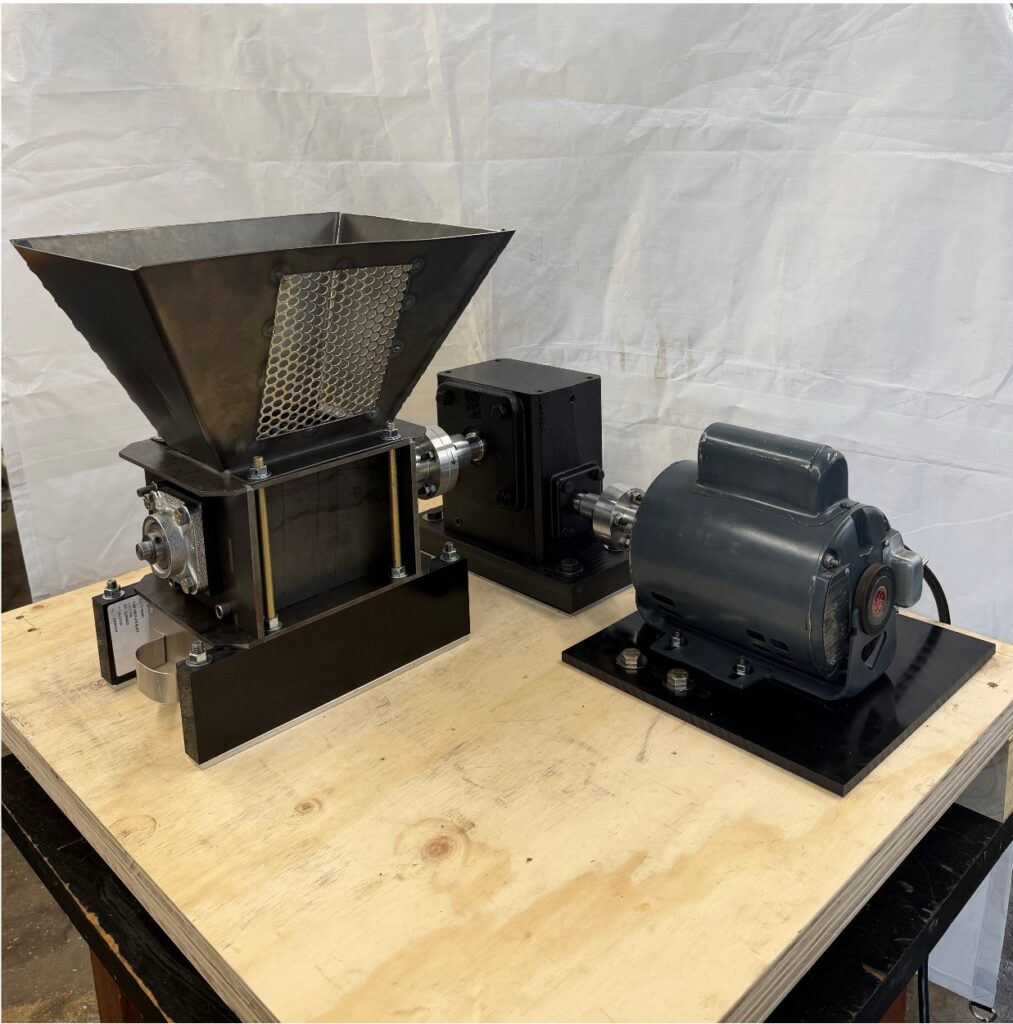
The shredder assembly has four main components:
- Motor (blue)
- Gearbox (green)
- Shredder box (yellow)
- Hopper (red)

Final Products:
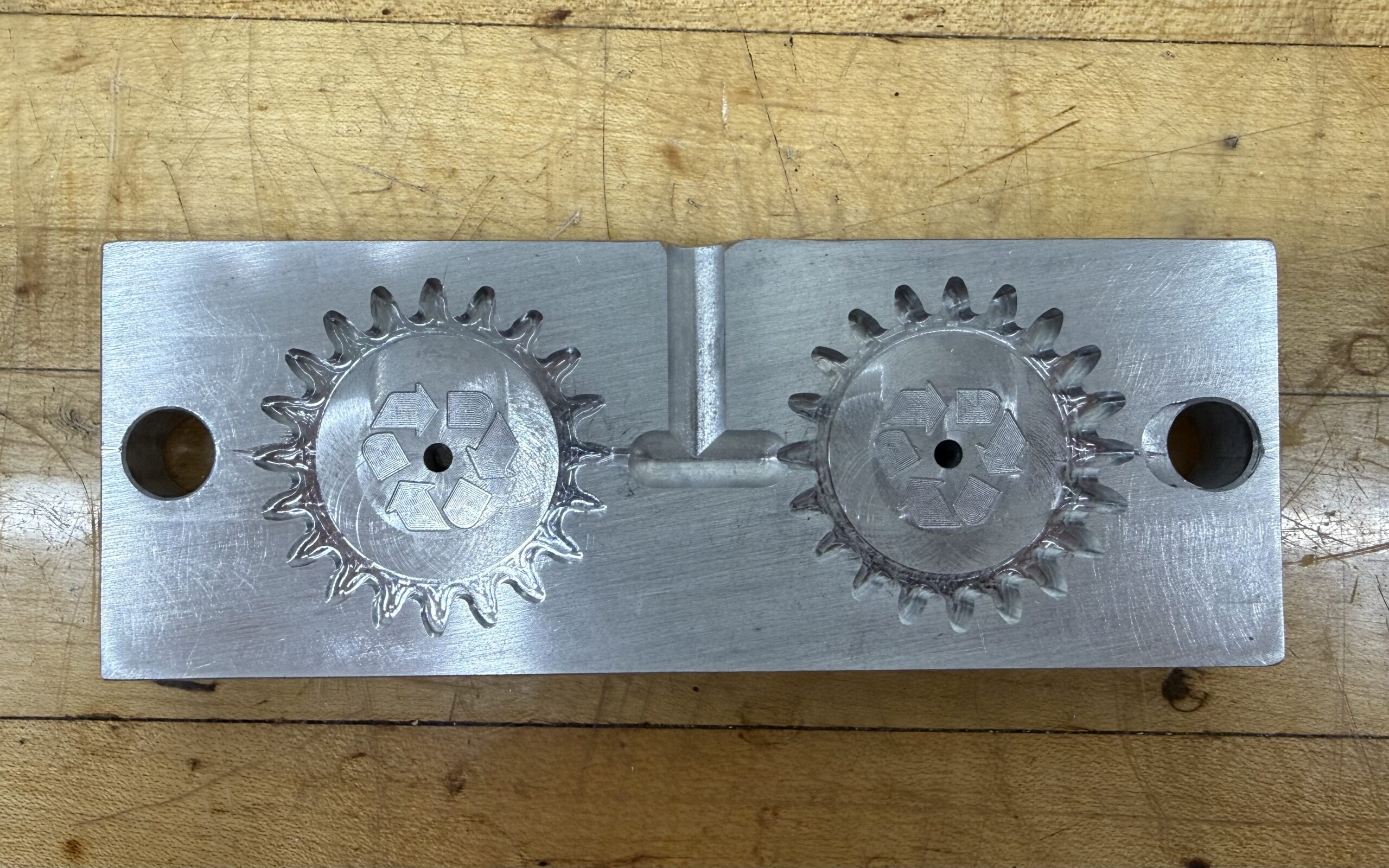
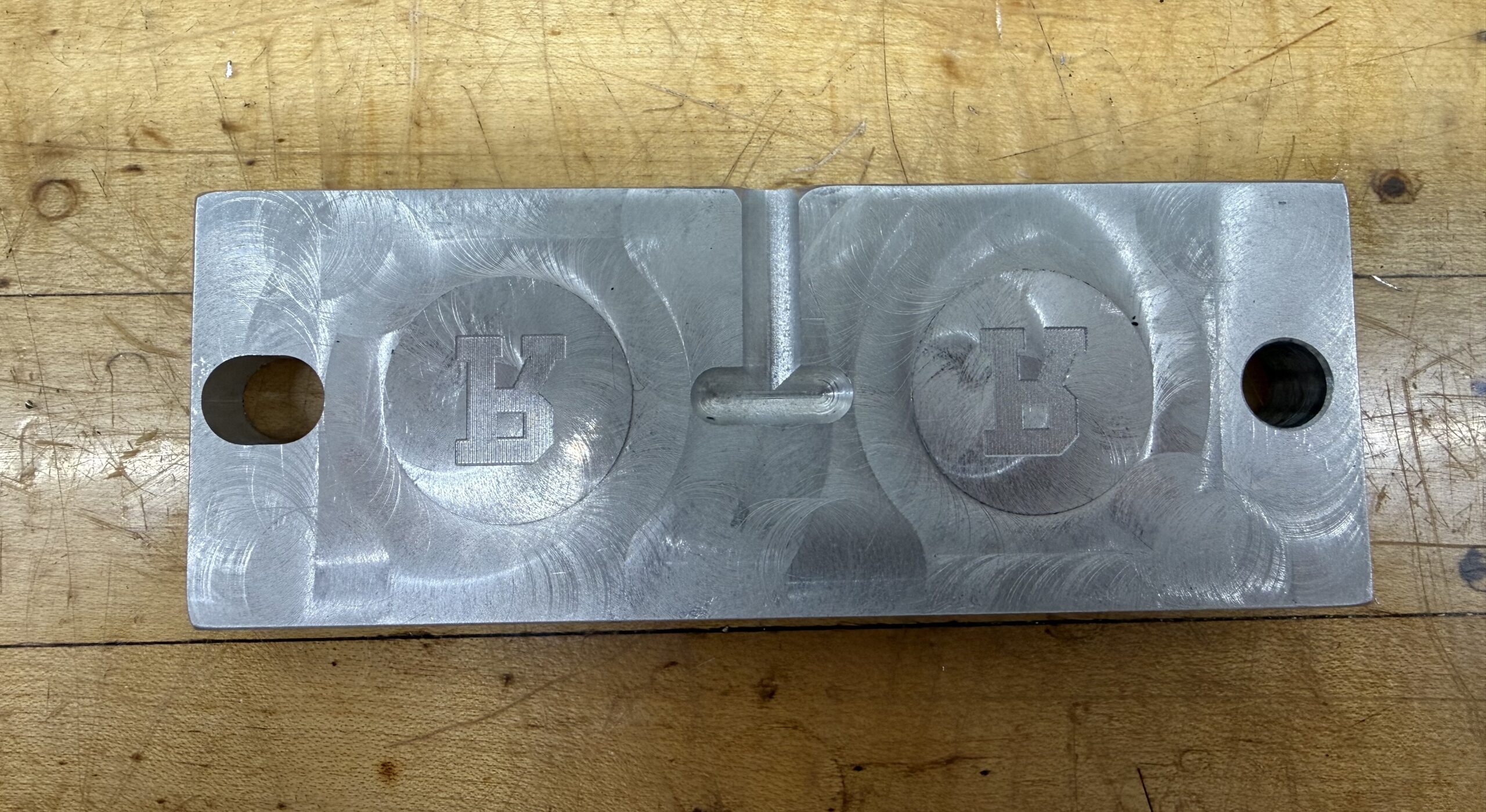
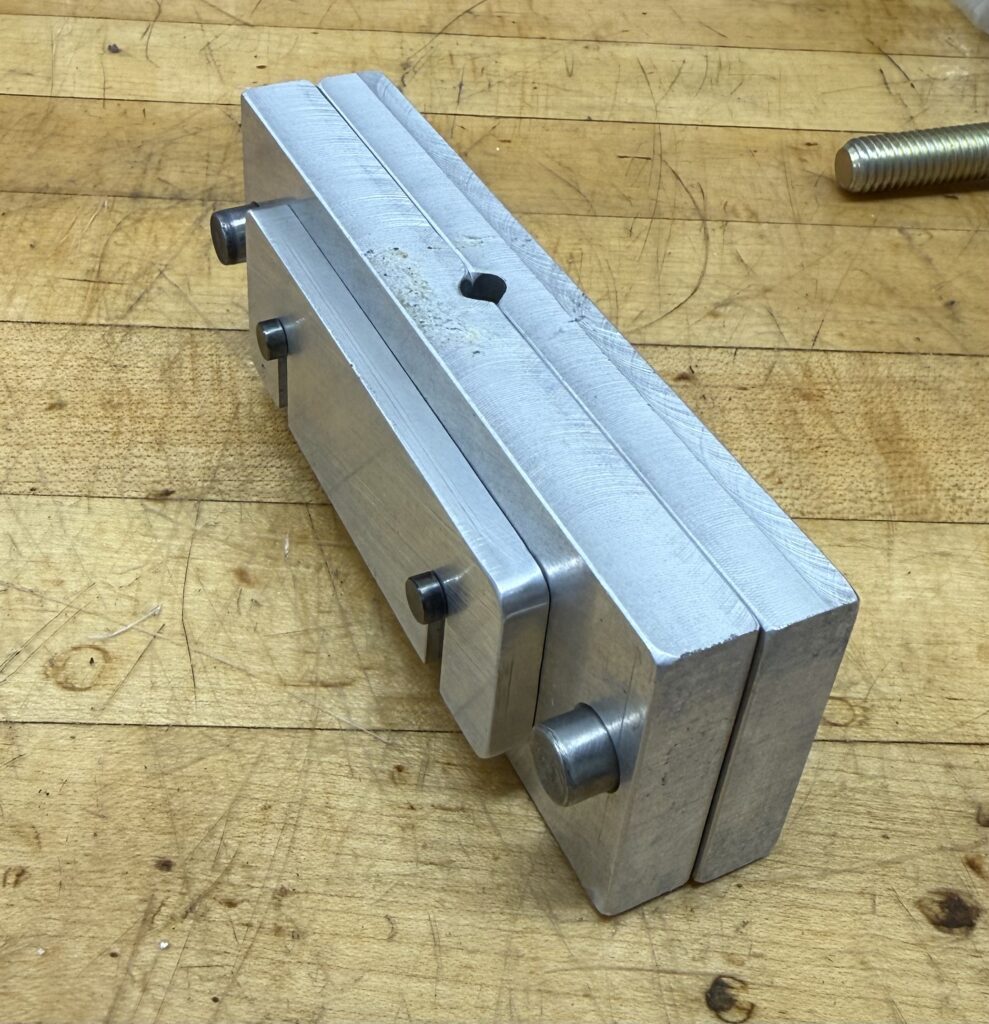
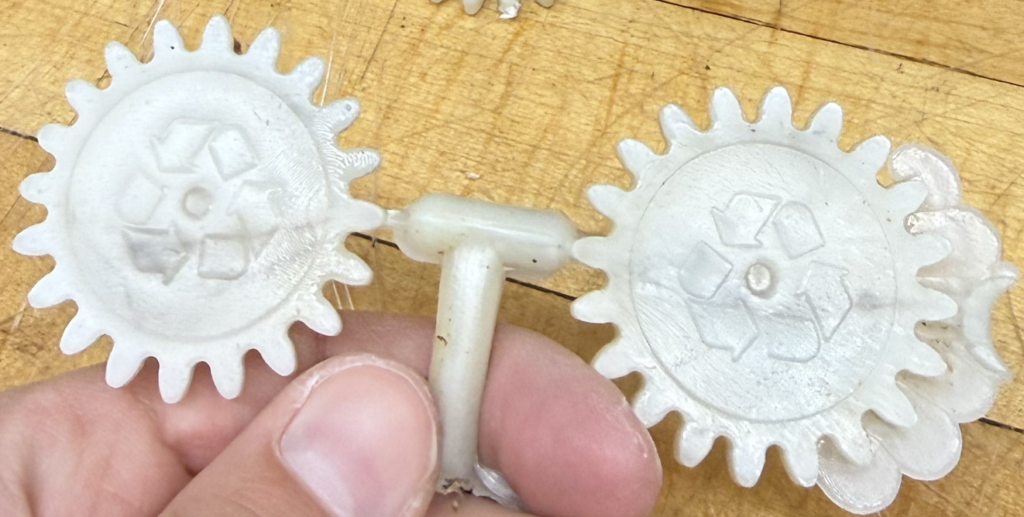
Test Results:
Documentation:
Final Report
Presentation Video
Presentation Slideshow
CAD Drawing Package
Theory of Operations Manual
Acknowledgements:
The team would like to acknowledge Dr. Christopher Muir, Matthew Hook, Chris Pratt, Jim Alkins, Bill Mildenberger, Paul Osborne, and Samantha Kriegsman. We greatly thank them as their assistance to this project was both immense and invaluable.