

Group Members: Shahad Alhassani, Yiduo Liu, Riley Lopus, Mia Strassman, and Jessie Talasco
Supervisor: Dr. Michael Giacomelli
Customer: Dr. Ram Haddas, URMC Motion Laboratories
Problem Statement: Motion analysis laboratories currently lack a reliable, low-latency, adaptable method to trigger unanticipated, reactive movements synchronized with biomechanical data collection during rehabilitation tasks. This limits assessment of reactive neuromuscular control and return-to-play decisions for post-surgical athletes. We aim to build a cueing system that detects movement initiation in real time and delivers unpredictable cues to force reactive movement, enabling a more “real world” valid evaluation of neuromuscular control during rehabilitation.
Customer Scenario:
- URMC Motion Analysis Laboratories
- Team of engineers, technicians, physical therapists and doctors
- Engineers and technicians will be the ones using our device
- Physical therapists will be observing the athlete
- Return to sport protocol
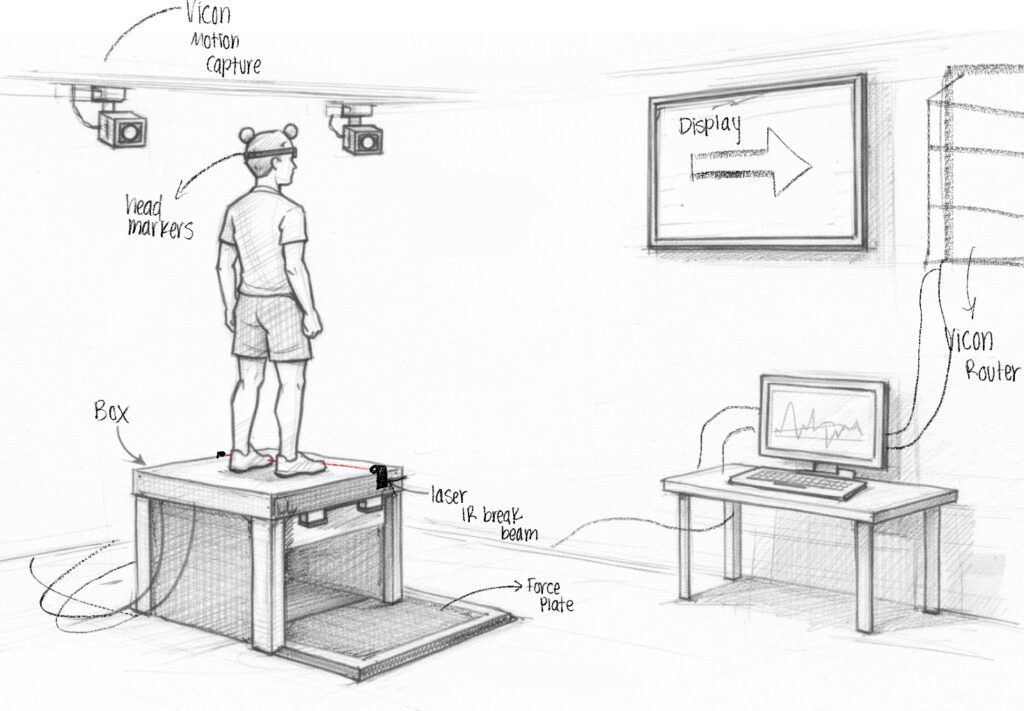
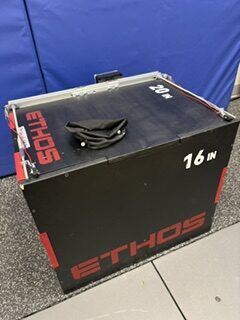
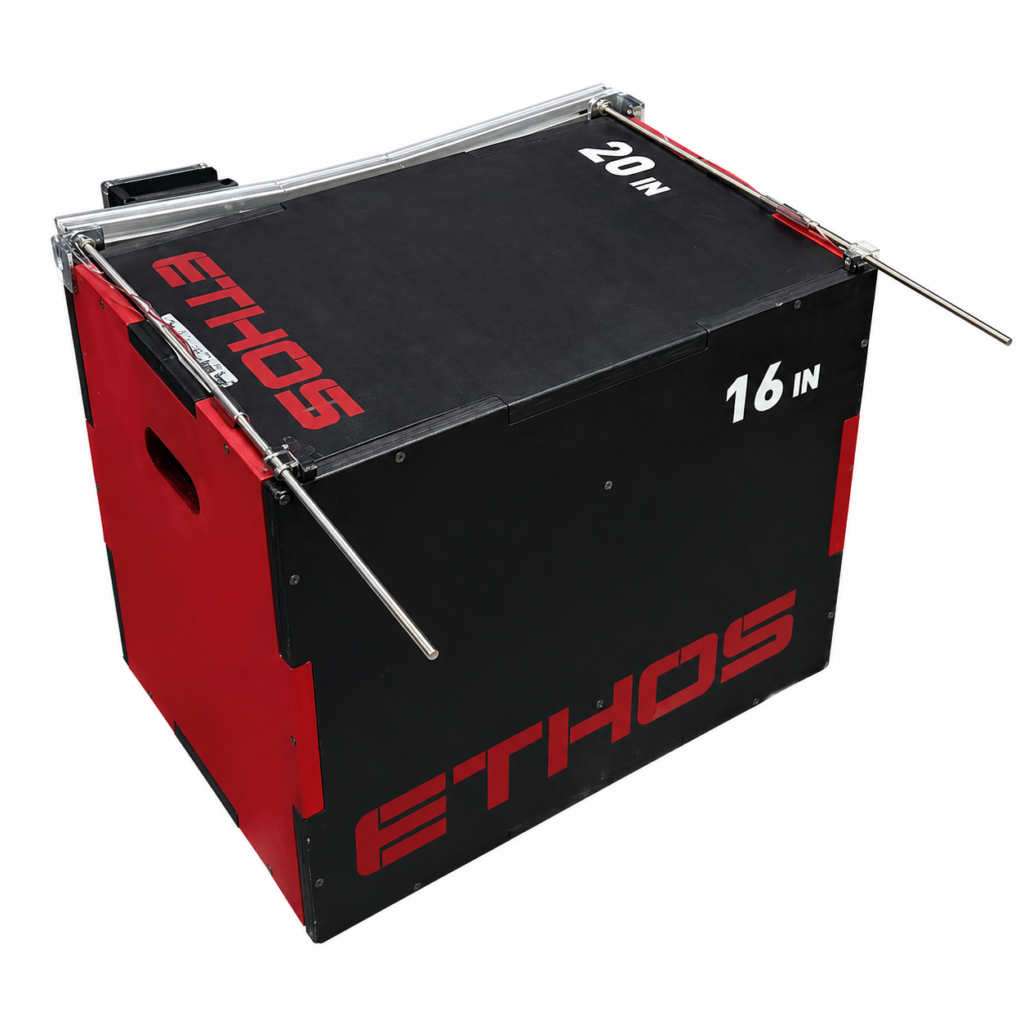
- Box drop jump test
- Eliminate learnability with random cues
Design Overview:
- Internal Sensor
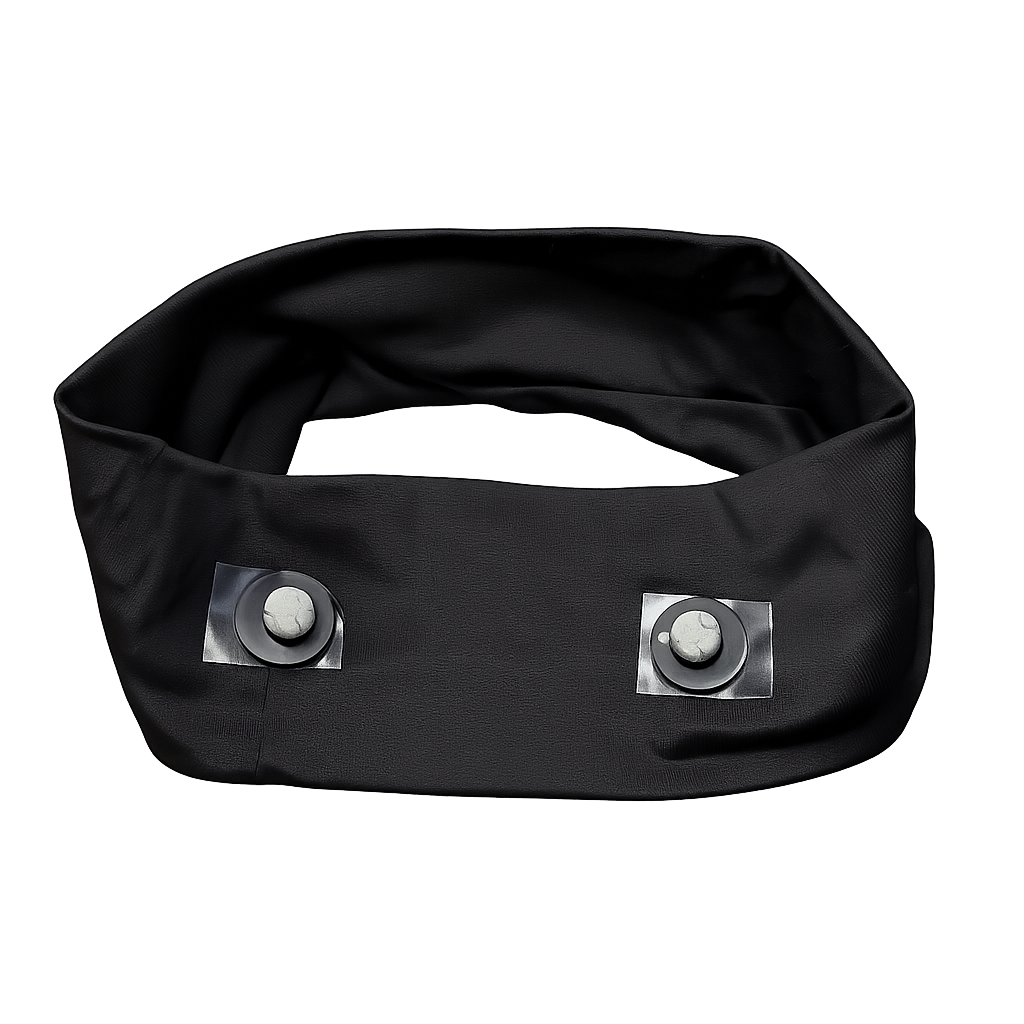
- Headband with 4 reflective markers
- Marker data -> IR camera -> Vicon
- Motion detection via MATLAB
- External Sensor
- IR breakbeam sensor
- 0V when blocked, 5V when light passes
- Rising edge detection via MATLAB
- GUI
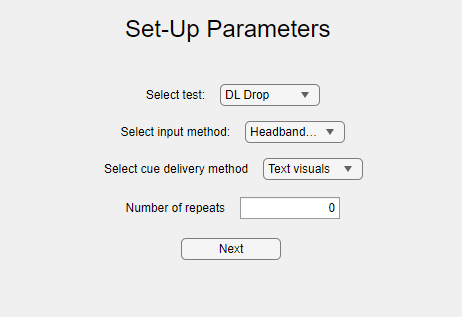
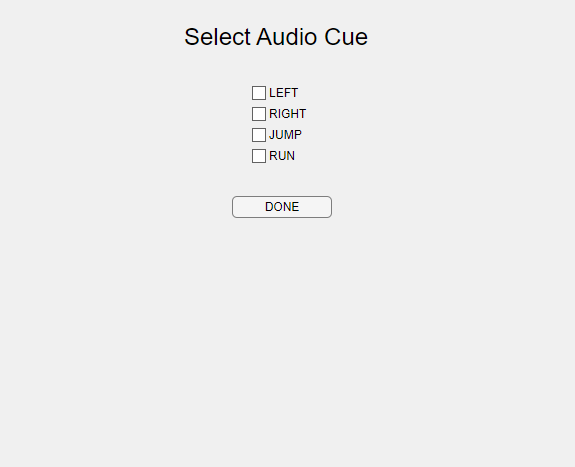
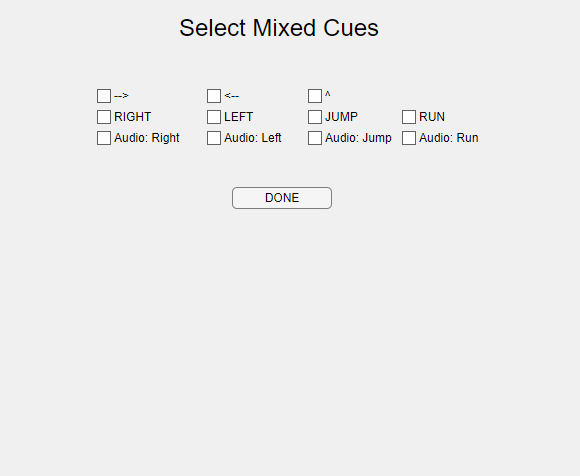
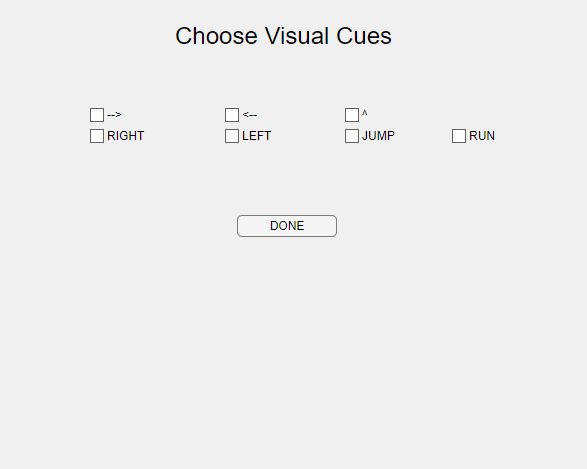
- Choose test type, cue type (visual/audio/mixed), sensor (headband/photogate/both), and number of repeats per cue type
- Cue type and timing (in Vicon Frames) saved to CSV for post processing.
Results:
All cues with all sensor modes delivered in under 54ms from the time both feet leave the box (determined using high speed cameras and frame analysis).
Future Directions:
- Analyze data collected using this system
- Incorporate other cue types (Images/Figures/Realistic Audio/etc)
- Apply to another type of task