
Factors Affecting Pd/C Catalyst Lifespan in a Continuous Reactor
Presented by Emerald Empire: Courtney Palmeri, Jensen Sminchak, Lorraine Tshamekang
Department of Chemical & Sustainability Engineering, University of Rochester
Introduction
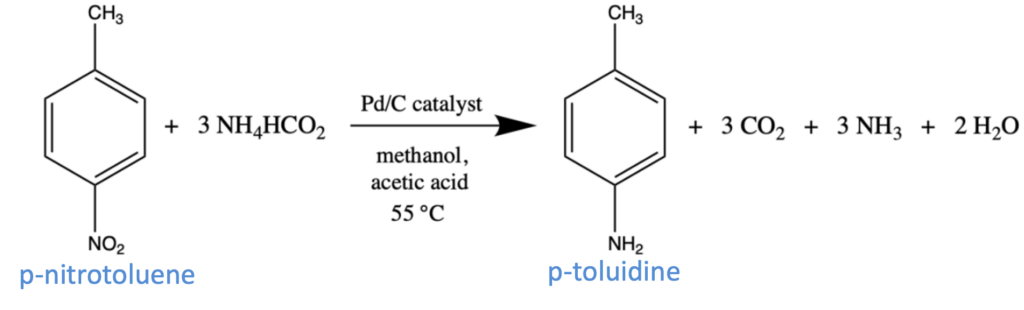
Kodak produces specialty chemicals and inks through batch manufacturing processes. One of the most fundamental transformations in chemical manufacturing is the preparation of aryl amines from nitroarenes via catalytic hydrogenation using noble metal catalysts such as palladium on carbon (Pd/C). This project focuses on transitioning the Pd/C-catalyzed hydrogenation of p-nitrotoluene to p-toluidine from a batch to a continuous process. The continuous process developed by Group Shadow Shutter (2024) served as the foundation for this work. The goal of this project is to identify the key factors influencing catalyst lifespan and reaction conversion while building a continuous reactor design exploring the optimal operating conditions.
Methodology
The continuous reactor was built to carry out the three following investigations on the reaction conversion and catalyst lifetime:
1. Phase #1: Test the effect of oscillation frequency on the reaction conversion
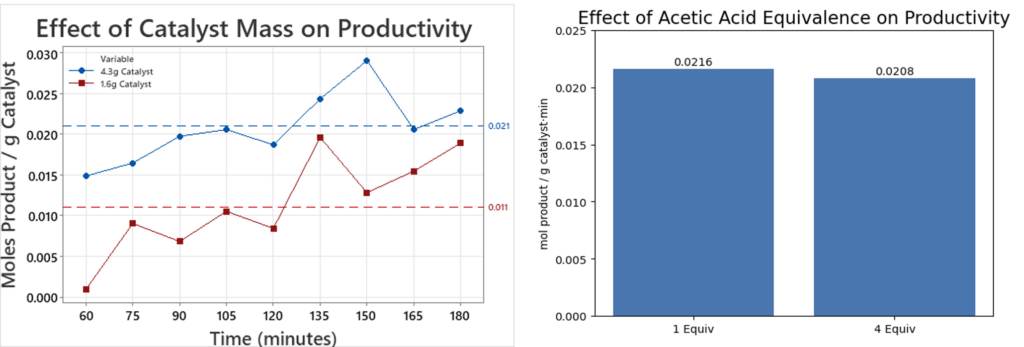
2.Phase #2: Perform a design of experiments to test the effect of acetic acid concentration and catalyst mass on the reaction conversion
| 1.6 g Pd/C | 4.3 g Pd/C | |
| 1 equivalent of acetic acid | ||
| 4 equivalents of acetic acid |
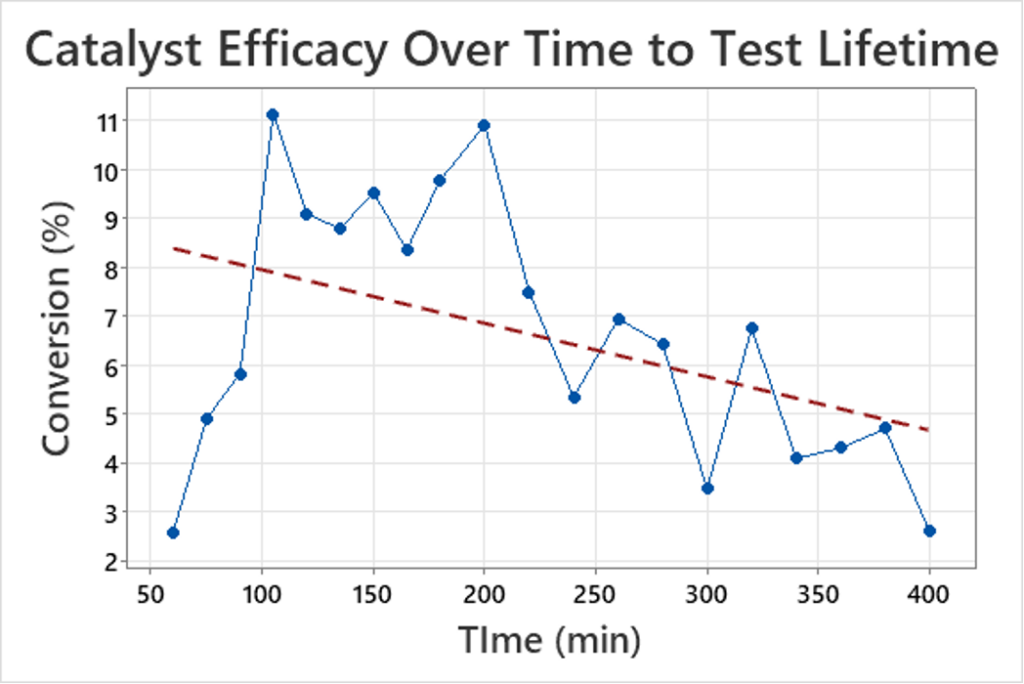
3.Phase #3: Test the catalyst lifetime under the best reaction conversion conditions from the previous two phases
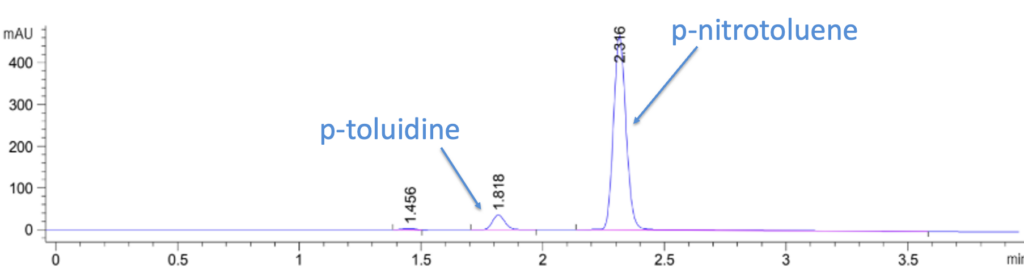
To investigate each of these phases, the concentration of samples taken throughout each trial were determined using High Performance Liquid Chromatography (HPLC).
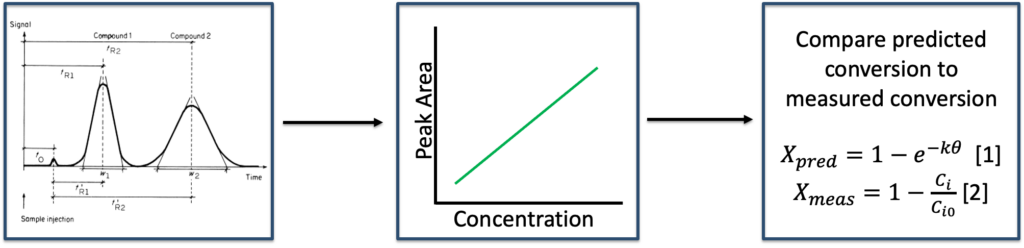
The following data analysis framework was used to calculate the conversion of each trial.
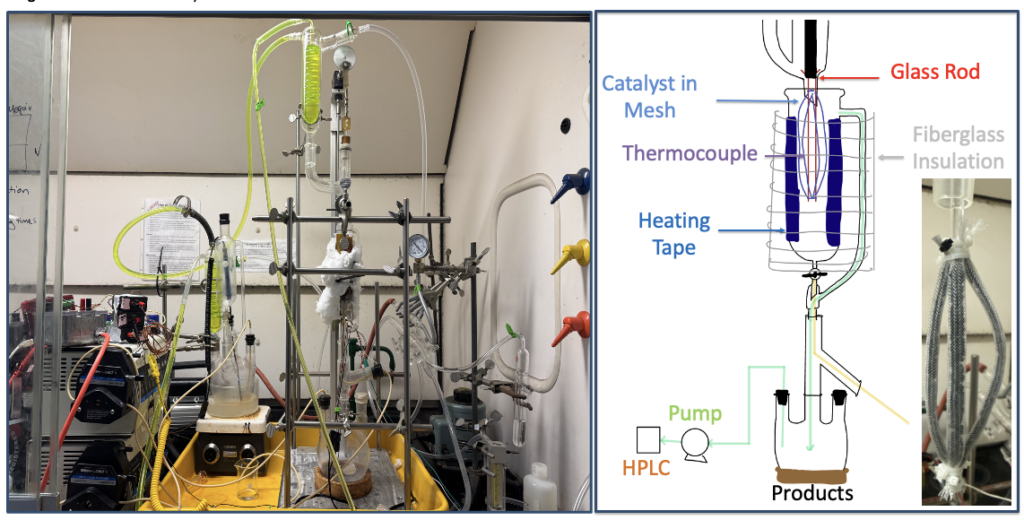
Design & Build
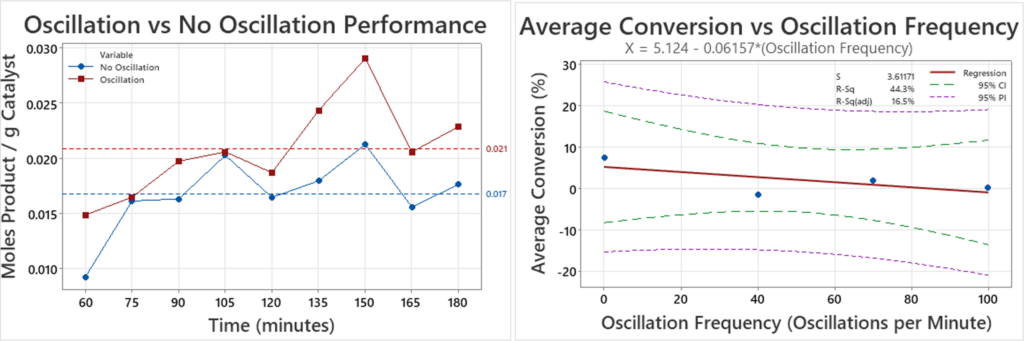
Oscillation Frequency Results
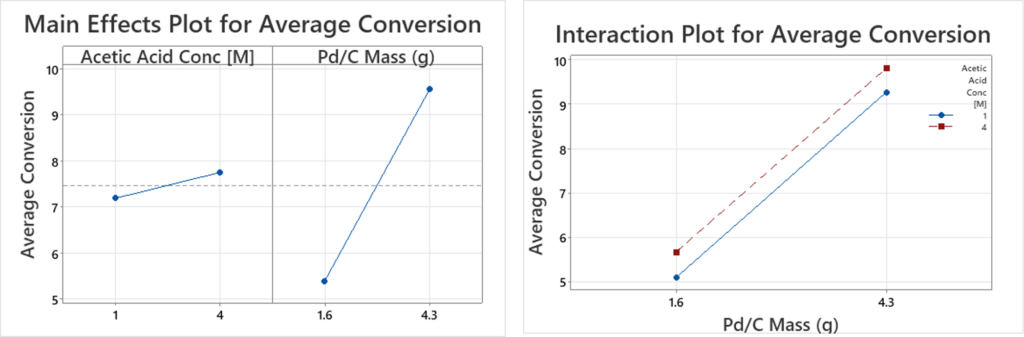
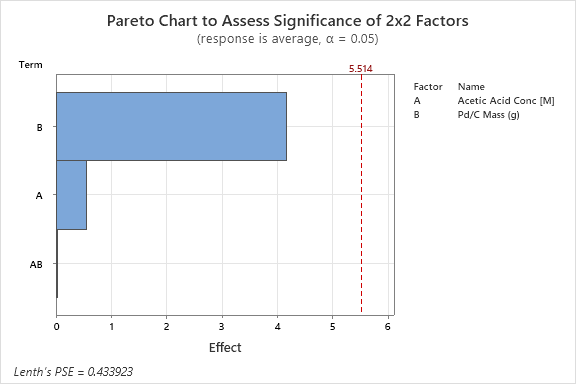
Design of Experiment Results
Operating Conditions & Catalyst Lifespan
| Variable | T-Test | P-Test |
| Oscillation | 2.22 | 0.04 |
| Catalyst Mass | 3.84 | 0.0017 |
| Acetic Acid | -0.037 | 0.97 |
•Oscillation increased conversion by 27% (p = 0.04)
•Increased catalyst mass showed the strongest effect on catalyst productivity (t = 3.84, p = 0.0017)
•Acetic acid equivalence was not significant (p = 0.97), indicating mass transfer and active site availability dominate performance
Conclusions & Future Work
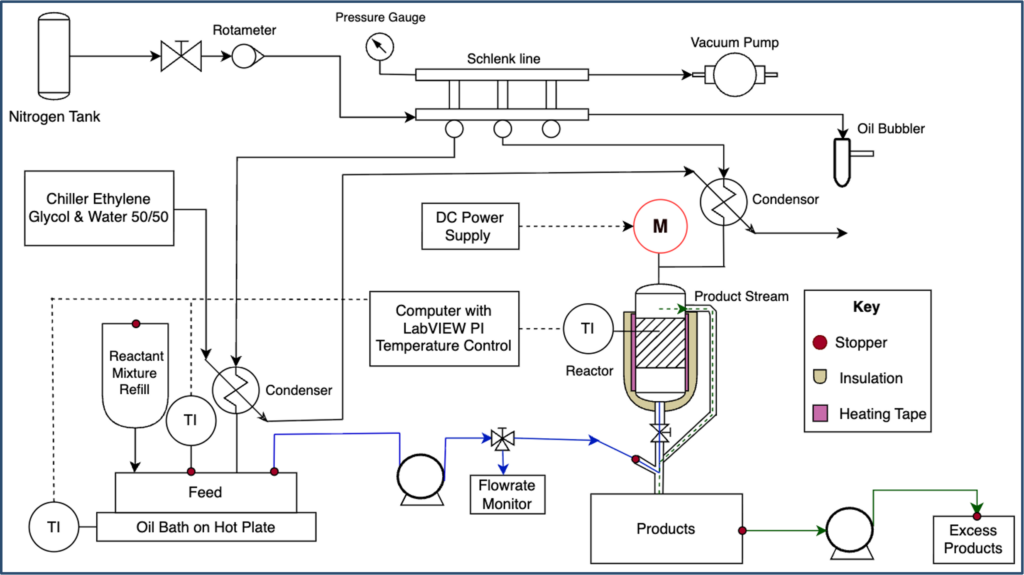
A continuous reactor system with PI temperature control and catalyst oscillation was successfully designed and operated to improve mixing, mass transfer, and catalyst performance. A design of experiments evaluating flow rate, oscillation rate, and catalyst loading identified oscillation as a key factor in enhancing conversion and catalyst lifespan.
•Optimized operating conditions: 58 °C reactor temperature, 2 mL/min flow rate, 5 °C condenser temperature, and 70 RPM oscillation
•Optimized feed recipe: 0.45 M p-nitrotoluene, 1 equivalent acetic acid, and 4 equivalents ammonium formate with ~4 wt% Pd/C (0.04 wt% Pd)
•The Cost Model developed links key variables to operating costs and profit.

•Future work includes investigating methods to increase reaction conversion and catalyst deactivation (such as catalyst surface site analysis), exploring increased residence time of the reactants, and developing a more thorough cost model
Acknowledgements
We would like to thank Professors Lawton, Juba, Kelly and Griffin, and Clair Cunningham and Mason Garlatti for their help and mentorship. We are grateful to our sponsor, Dr. Cleary and to Jeffrey Leffler for the oscillation system. We would also like to thank the Department of Chemical and Sustainability Engineering.