
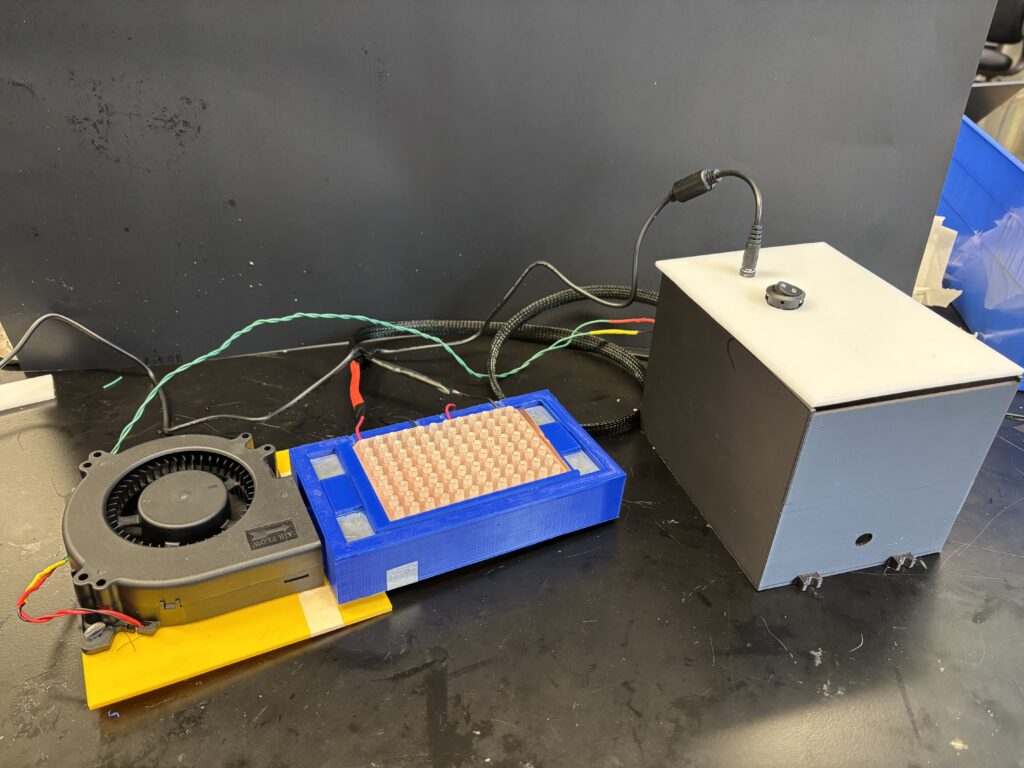
Making Single-Cell Proteomics More Accessible
Unlike DNA and RNA, protein expression cannot be amplified. This makes single-cell proteomics research highly sensative to sample loss.
The cellenONE single cell dispenser offers temperature and humidity control to prevent evaporative losses during cell depositing. Unfortunately the high cost and maintenance fees for the device make it inaccessible to cost constrained labs, limiting the availability of single-cell proteomics research.
With Dr. Kyle Swovick of the University of Rochetser Medical Center, we aimed to create a device to minimize evaporative losses that is compatible with the more affordable Tecan Uno single cell dispenser.
Device Workflow/Use Scenario
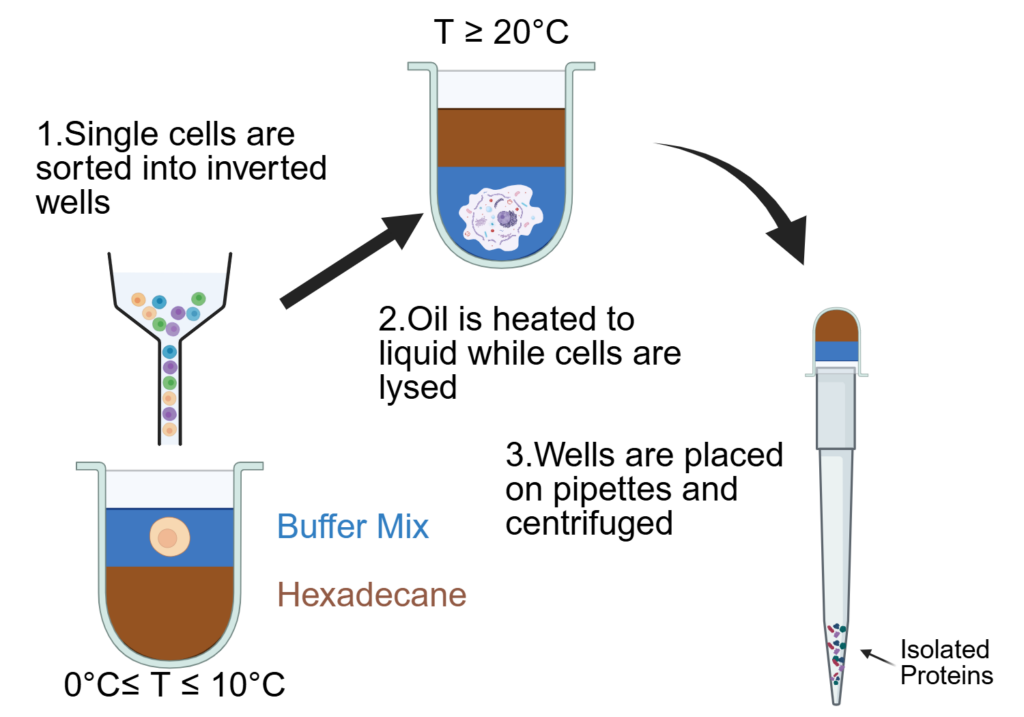
The Tecan Uno workflow prevents evaporation loss by using hexadecane oil to create an immiscible barrier. In order to do this, the oil must be kept solid while cells are dispensed. Once cells are completely deposited, the oil is brought up to liquid where it protects the cell from evaporative loss.
Once the cell is lysed, the wells are centrifuged to transfer contents to pipette tips for further processing and mass spectrometry analysis.
Design
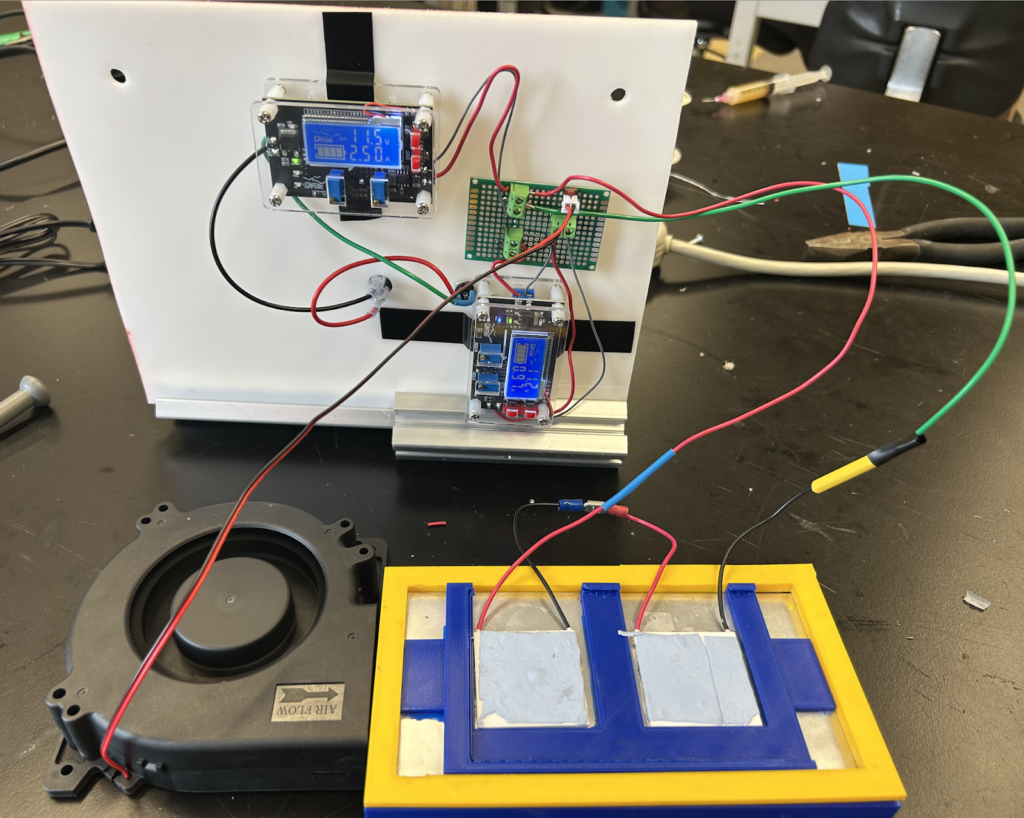
Our device uses Peltier thermoelectric chips to control the temperature as cells are dispensed from the Uno.
The Cooling Array
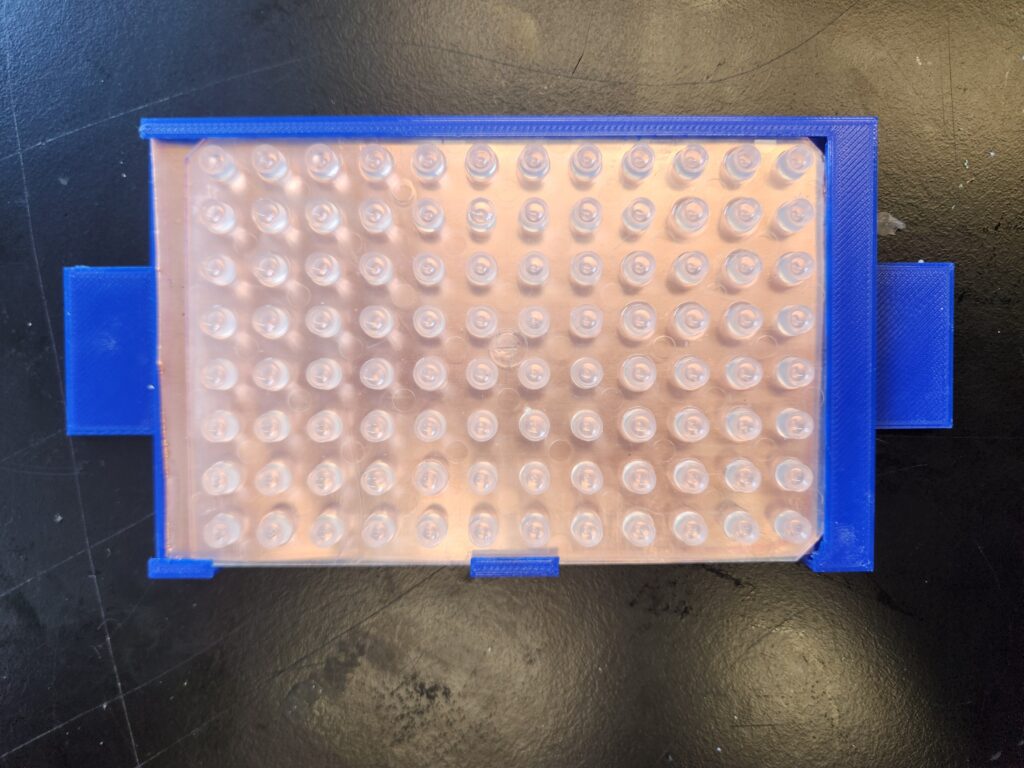
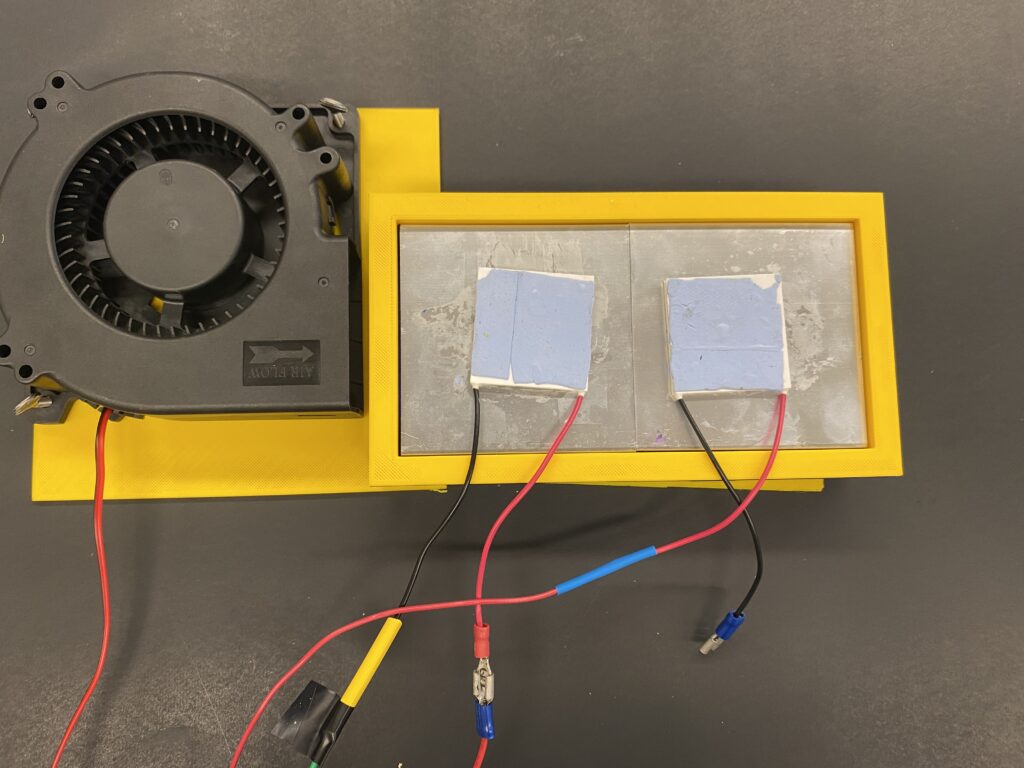
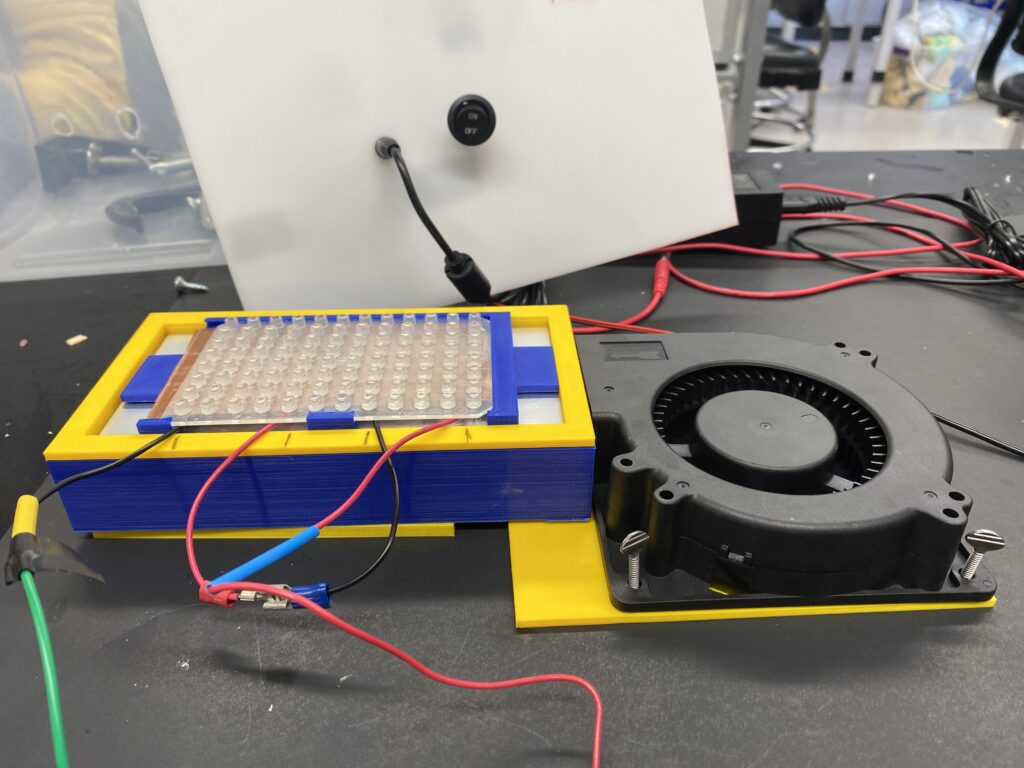
The cooling array is built of two peltier chips that use current to create a temperature differential. An inverted 96 well plate sits ontop of the cold side of the Peltier chips with a thin copper sheet inbetween to more evenly distribute the heat from the chips across the well plate. A 3D printed holder keeps the well plate in place during deposition.
Heat Sinks & Box
To dissipate the heat from the hot side of the Peltier chips, we used two aluminum heat sink fins and a blower fan that circulates air through the fins. The device sits on a 3D printed platform that allows the entire device to fit on the Tecan footprint.
The Circuit
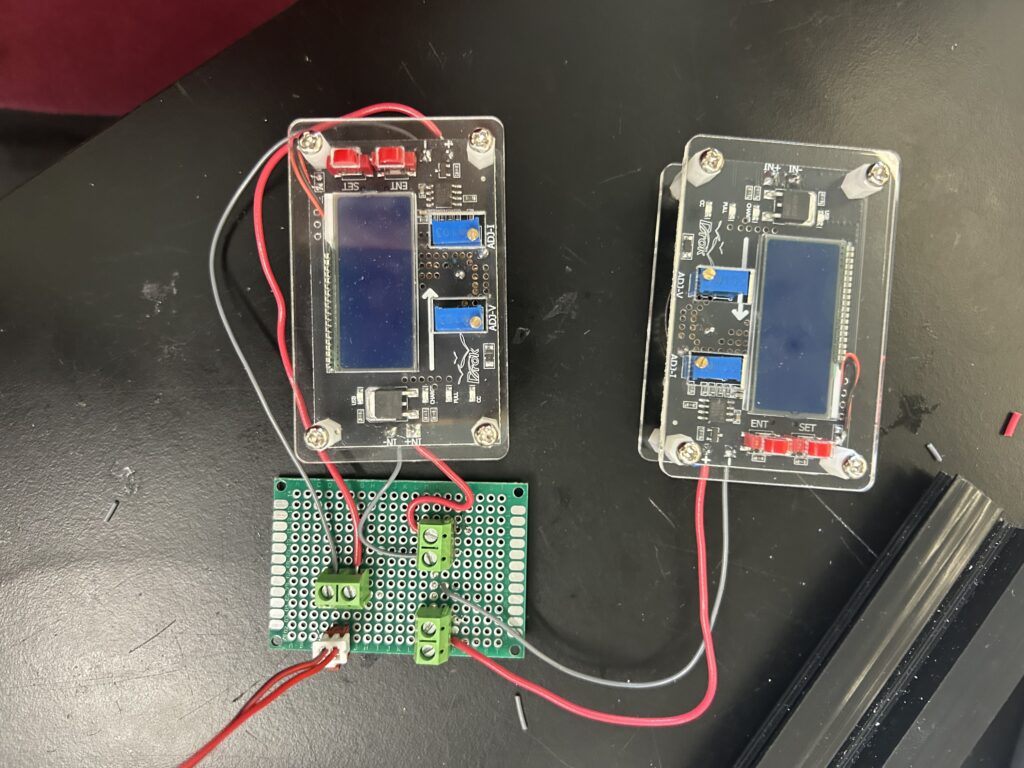
To control the fan and Peltier chips an interface circuit was created. The entire device is powered by a 20 Volt, 3.5 Amp, AC to DC power converter. Two buck converters are used to control the voltage and current to both the fan and chips.
Device Development
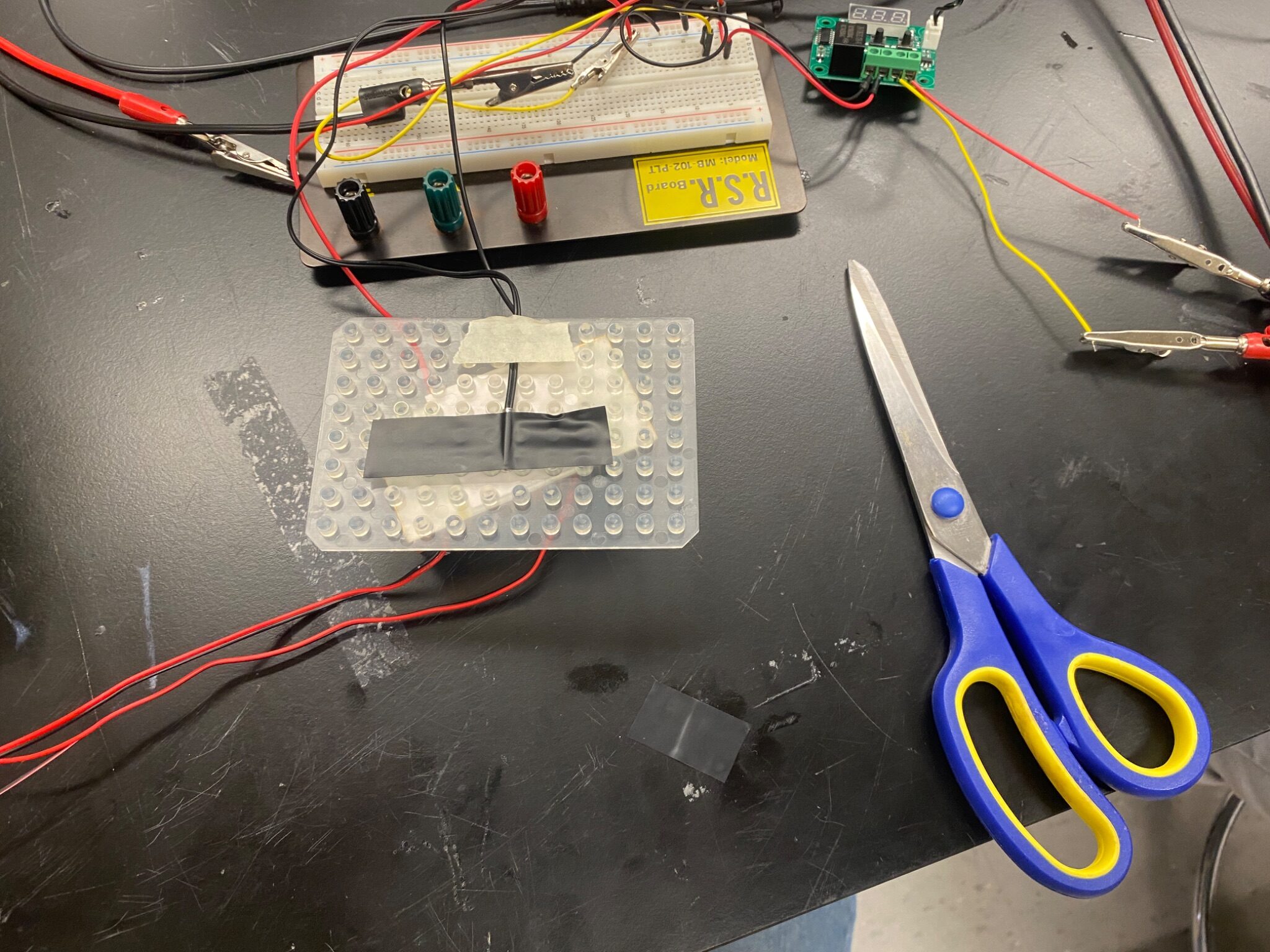
Our device went through many different iterations before we reached the final design.
Initial Design
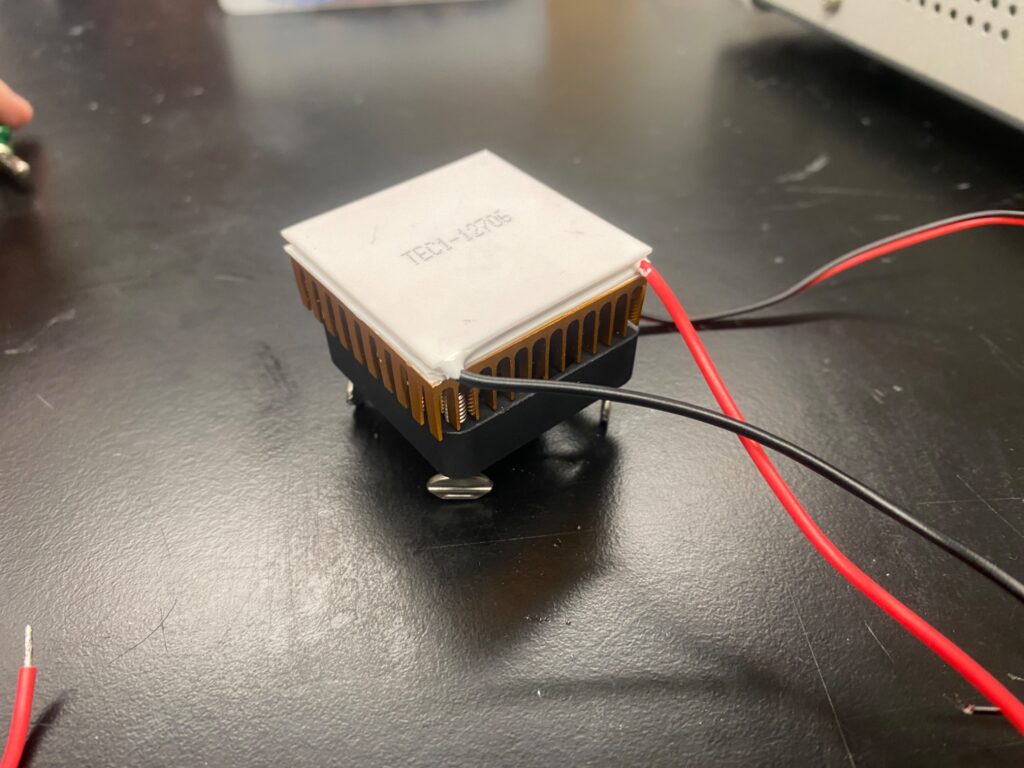
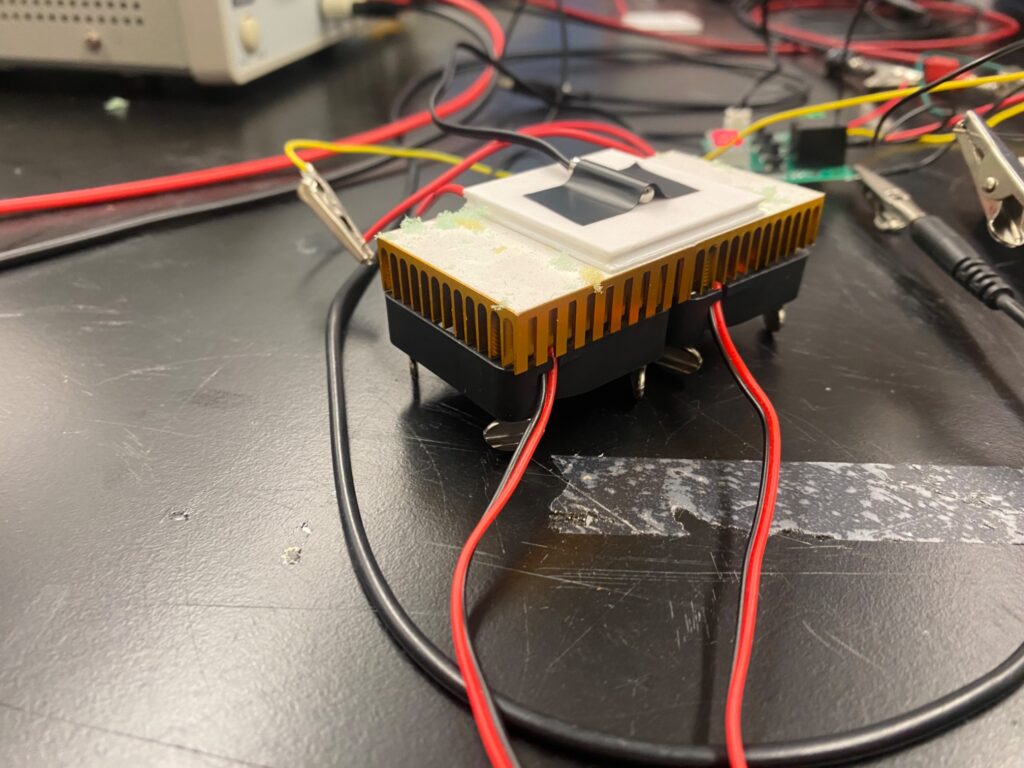
We started with a simple Peltier chip, small copper fin, and fan design. During testing we realized that a single fan was not strong enough to dissipate heat generated, so me moved to a two fan, single chip, design.
Heat Spreader Plate
After initial testing, only the wells directly above the chip reached the desired temperature. We moved forward with an aluminum heat spreader to sit on top chips to disperse the temperature evenly across the decive.
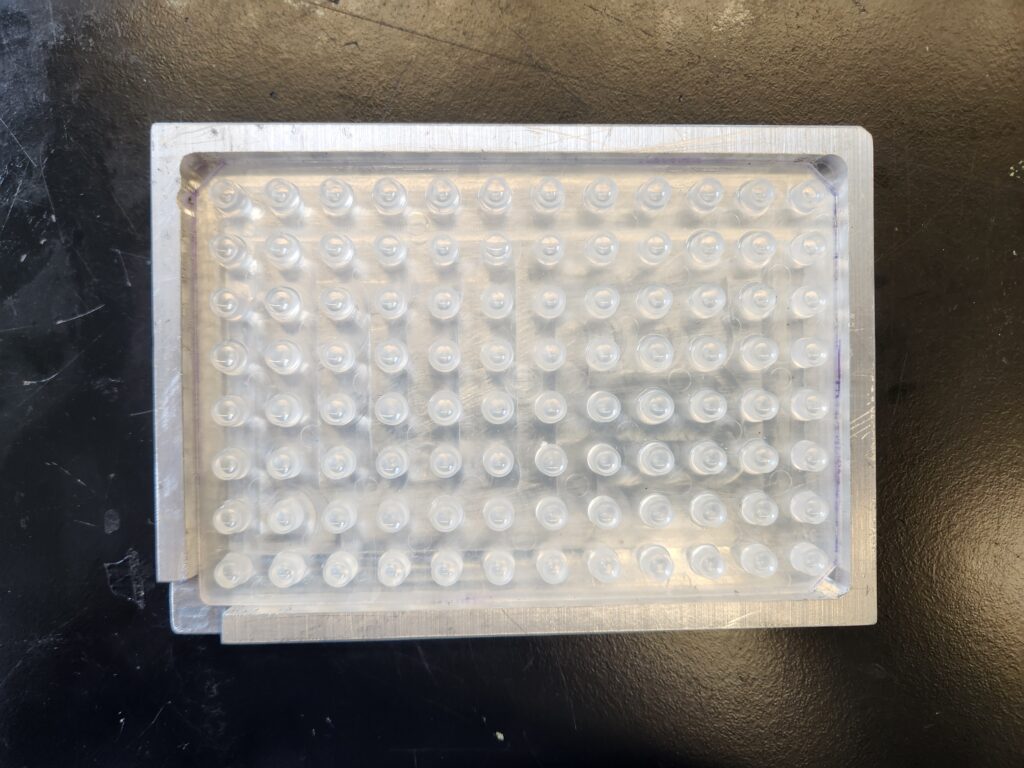
After futher testing we decided on a thin copper sheet as the heat spreader.
Final Design Decision
The device was able get low enough to freeze the oil, but it was not consistent enough to be considered reliable. For the final design we decided to add another Peltier chip and heat sink, as well as get a more powerful fan, to improve the performance.
Future Directions
- Mass production or creating kit with all materials included.
- Be able to comply with different devices and workflows.
- Create a more autonomous system with temperature controller feedback.
People
Team Members
- Caroline Auborn
- Jarvy Chen
- Kathryn Lambright
- Liam O’Donnell
Supervisor
- Dr. Anne Luebke
Customer
- Dr. Kyle Swovick