Skip to content

Optics

Posts Loop

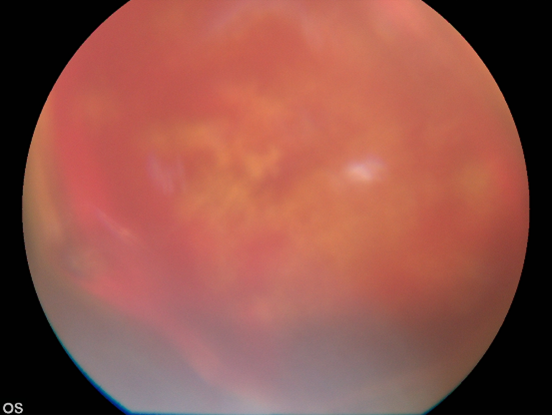
Optical Coherence Tomography for Choroid and Crystalline Lens Study during Accomodation
Myopia, the condition of the elongation of the eye, is an increasingly common visual condition that has the potential to cause a great deal of damage to the eye. While the development and effects of myopia have been studied to a great extent, the exact causes and effects of the condition on people have yet to be fully documented due to different reactions in subjects and variance across the visual systems of different people. As technology advances more detailed study into the exact mechanisms of how the eye accommodates is unlocked. This work details the design and assembly of an optical coherence tomography system integrated with a visual simulator that will be able to achieve higher resolution images (<2μm) than previous systems during active accommodation, which will unlock further study into how the choroid and crystalline lens adjust to the myopic eye.
PlanOpSim InverseMeta
Our project concentrates on using PlanOpSim’s optimization algorithm software to enhance the efficiency and functionality of nanostructured optical devices. Unlike traditional engineering methods, in which a structure is designed and then tested, inverse design begins with a target optical response and uses computational methods to determine the optimal nanostructure to achieve that function. For our first objective, we designed a metasurface capable of displaying two distinct holographic images depending on whether the incident light is in the TE or TM polarization state. For the second, we aimed to design a metasurface that produces specific colors by controlling the interaction of light with carefully engineered nanostructures.