Skip to content

ME Archive

Posts Loop

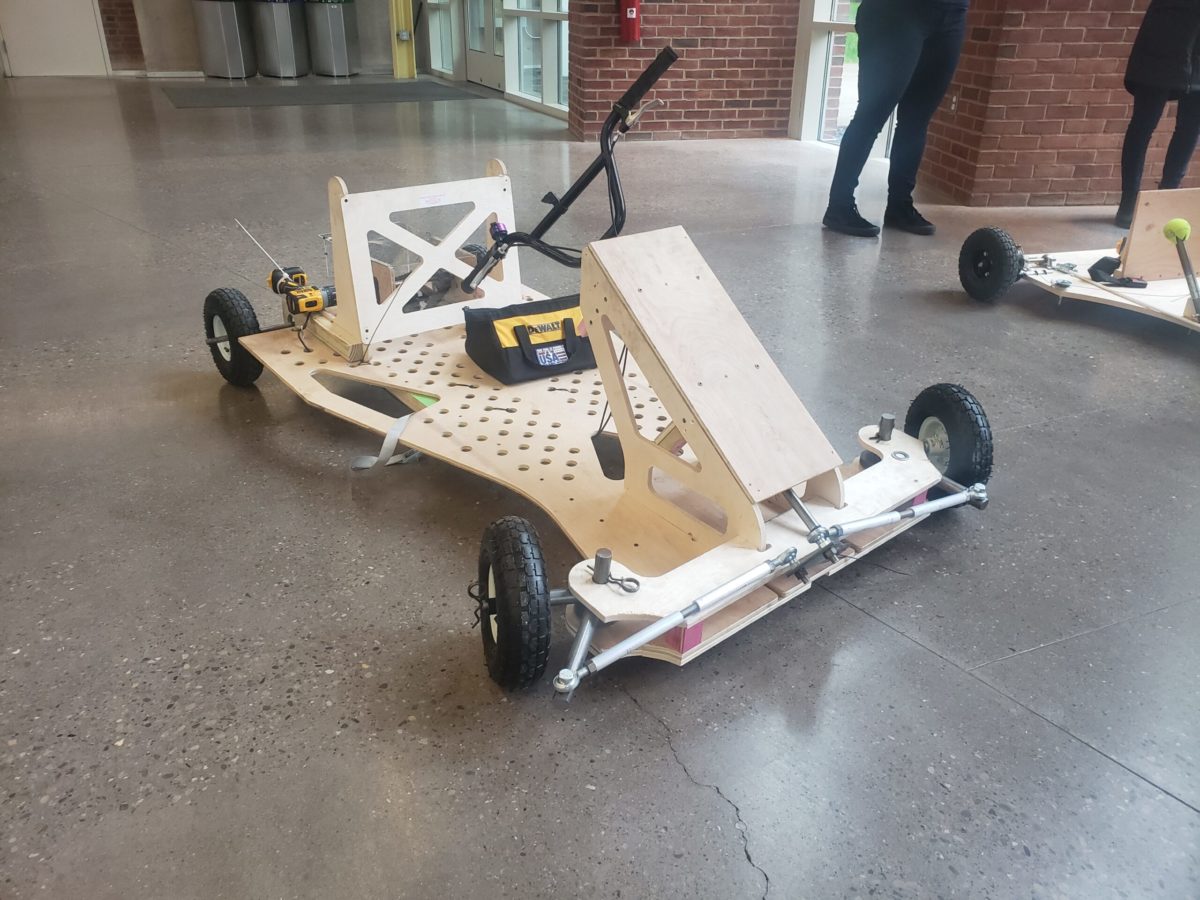
Drill Powered Carts A
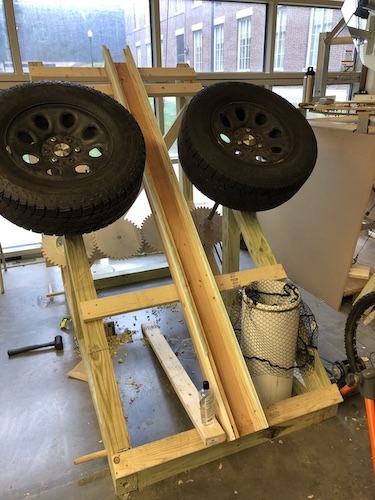
Several problems are being addressed with the project at hand. The main one, however, is a heavily discussed and often times argued about problem: global warming. As of 2019, there are over 276 million vehicles registered in the United States alone. Those carbon emissions add up quickly. If people want to increase the longevity of the earth and allow it to continue long enough to support their kids and grandkids, then it might be time to make a change. This change comes in the form of renewable resources and renewable energy, and that is exactly what the drill powered cart team plans to show throughout the project.
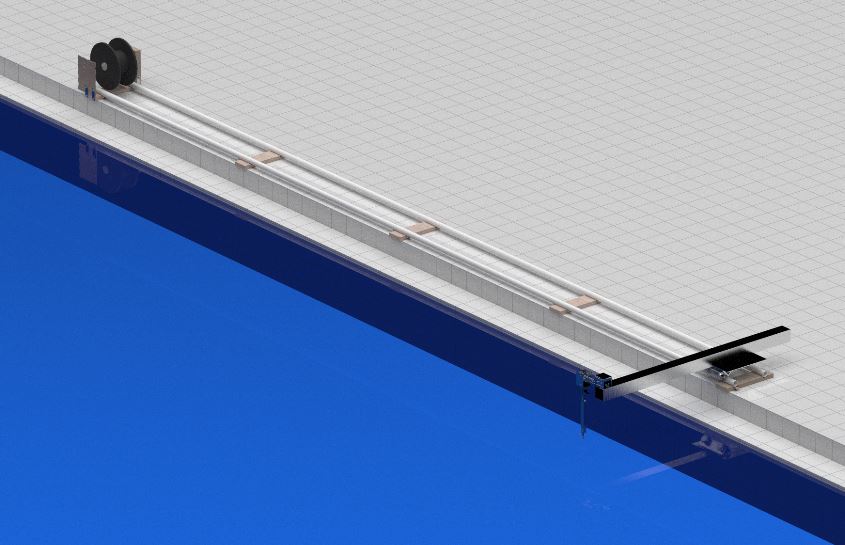
towTankAssm
Water Tow Tank
Tow Tank devices are used in testing boat and aerodynamic models for things like aerodynamic drag and lift. These devices typically cost around $20,000 which is the reason not every school has access to such a device. Here in the University of Rochester, we don't have our own tow tank device, but we do have a swimming pool, and a passion for solving problems. In this post, we are showcasing our prototype for a tow tank that can be assembled and used in the gym swimming pool. The cost of the prototype and the completed final device is less than $1000!
Ugandan Water Project
The main goal of this project is to build, assemble, and successfully test an accelerated testing machine for the India Mark II. In the India Mark II pump, the water gaskets wore off frequently during the pumping of water and needed frequent replacement which proved costly. To counter the problem, the project below proposes an accelerated testing machine composed of a slider-crank mechanism. The mechanism incorporated a flywheel driven by a motor that ensures continuous harmonic motion that replicates pumping mechanisms in the field. The mechanism was designed, simulated and a finite element analysis carried out in CAD software. These are covered in the report along with testing results and recommendations provided for improvement of future designs.​
Turing Machine
Modern mechanical engineers utilize computers but do not fully understand how the computer performs its computations. Understanding the fundamentals will give them a better understanding to the limitation of traditional computing. To address this gap between functionality and understanding, we built a 4ft by 6ft physical 3-bit adder to blow up the tiny processes that go on inside of a computer. Using a system of logic gates, where marbles act as inputs and outputs, our machine is able to add numbers 7 and below to each other and produce an output in binary.
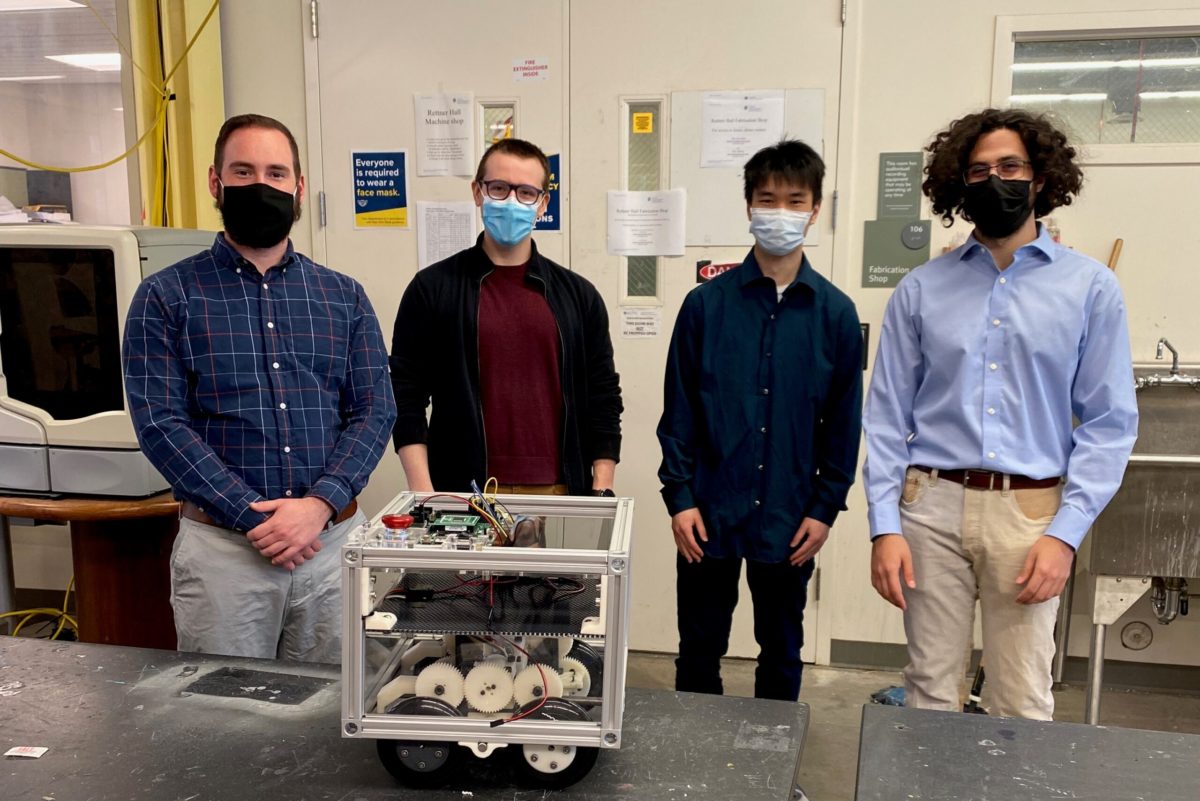
Robotic Steering System
Robotic control is becoming increasingly integral across many disciplines and industries. Understanding the fundamentals of robotic control evolves people's way of life into a more convenient and efficient epoch. Here in University of Rochester, robotics courses enable students to have basic hand-on learning experience over robotic control systems. This robotic steering system team is aiming at designing an inexpensive but reliable, and easy to replicate solution which fits the needs to teach the robotics courses at University of Rochester.
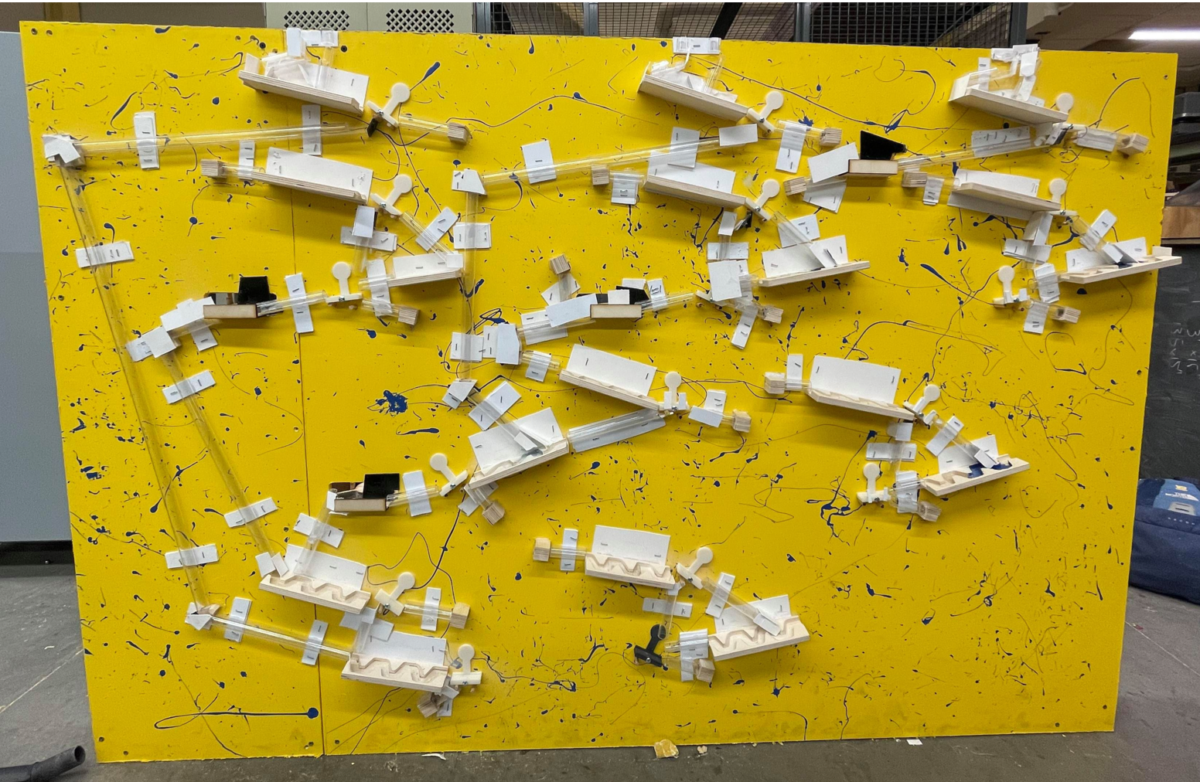
Pittsford Community Library Ball Maze Machine
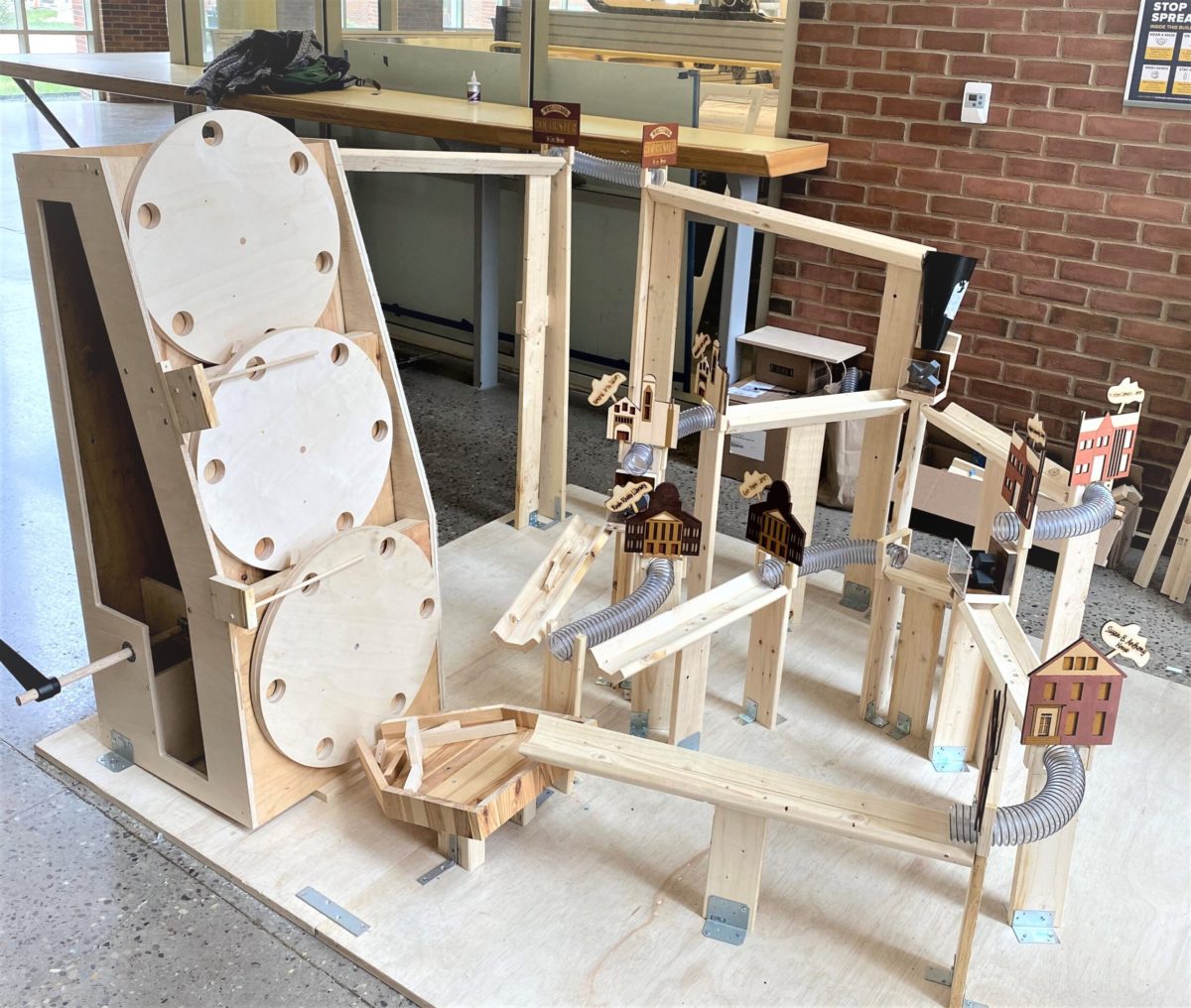
The Pittsford Community Library Team was tasked to design and manufacture an interactive ball maze machine. Upon completion, the model will be moved and displayed within the children's lofted play area of the Pittsford Community Library. The main goal of this project was to deliver a fully functioning ball maze display, decorated with laser cut wooden designs of landmarks across Rochester. Combining elements of STEM and history, the team hoped to create a fun and educational display that children, as well as all library visitors, can enjoy.
Kinetic Sculpture
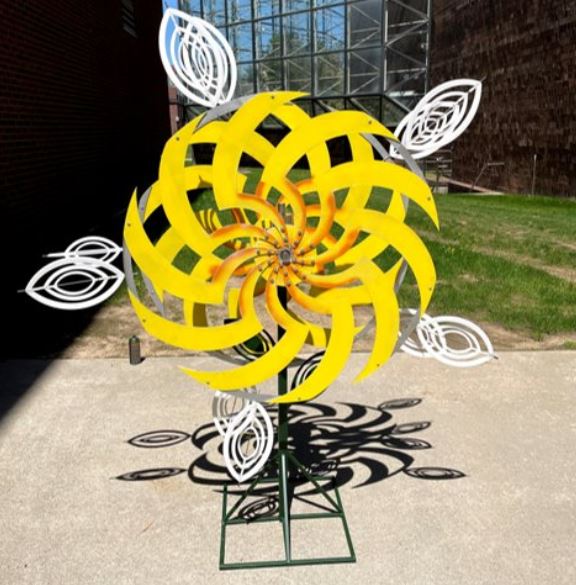
Art and Engineering are two separate disciplines that don't collaborate and intersect as much as they should. There are many mediums that mix both disciplines to allow for a fuller artistic approach to engineering, but these mediums aren't abundant on the River Campus. The Kinetic Sculpture capstone project aims to be the bridge between these departments through kinetic art. The following interactive art piece fuses the concepts of art and mechanics to provide students with a one-of-a-kind experience on campus.
Human Powered Vehicle
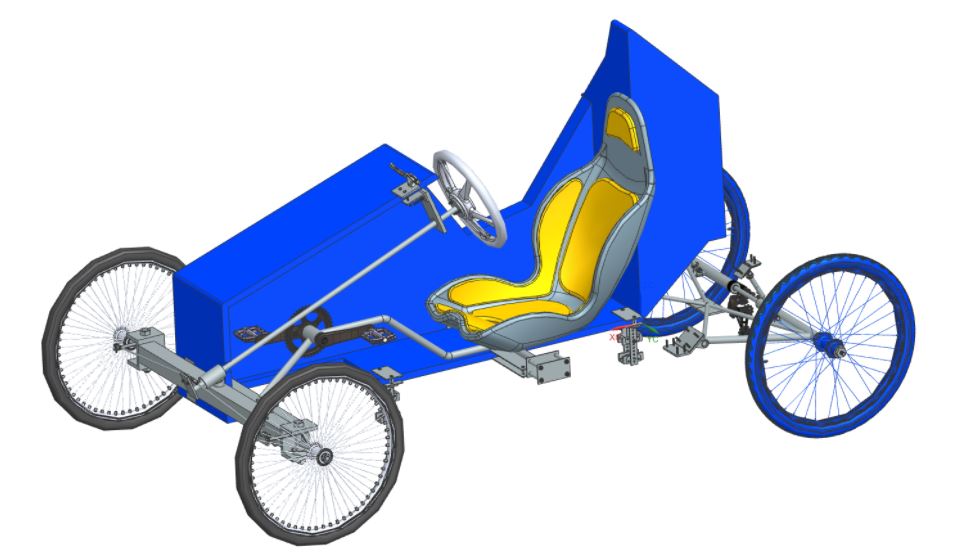
With increasing concerns about the environmental impact of ground transportation, the industry needs alternative solutions that are safe, efficient, and environmentally friendly. One solution to the pollution problem is human-powered vehicles which emit zero greenhouse gas on the road. This project aims to implement a new material technology (fiberglass) into the design of a human-powered vehicle to make it more lightweight, functional, and safe. The test results concluded that fiberglass can indeed be used to manufacture the monocoque of a human-powered vehicle without compromises. The findings of this project will advance the engineering knowledge of fiberglass in this field and enable other engineering teams to use this technology in future designs.